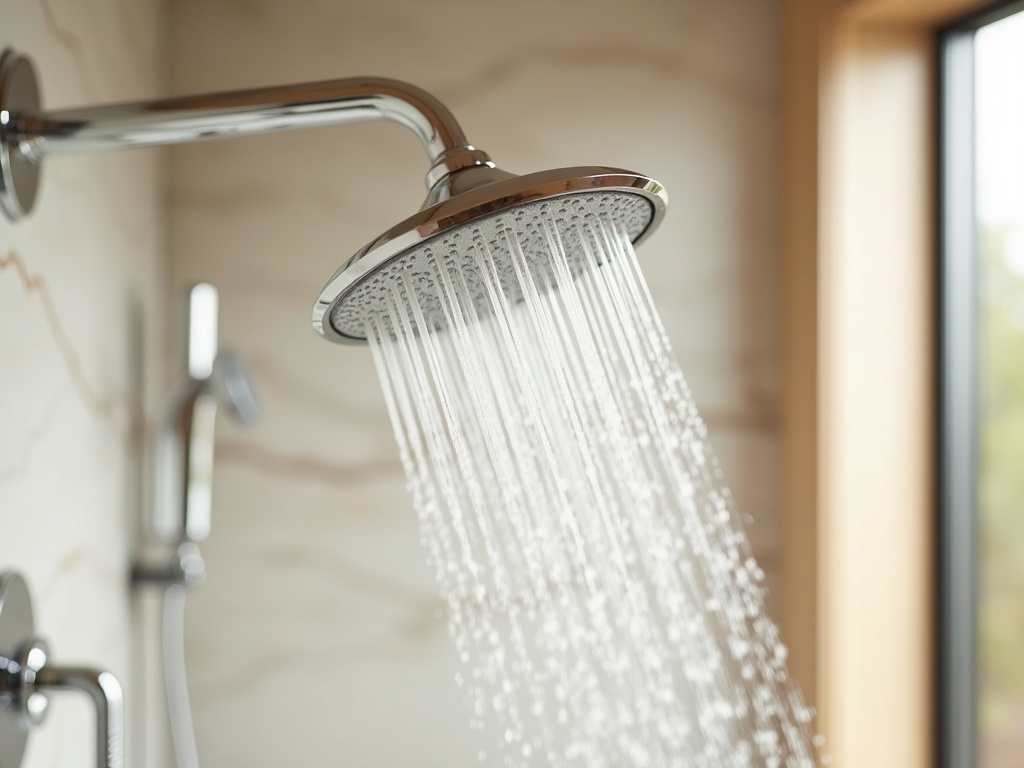
If you've been soaking your shower head in vinegar every few weeks and still watching the spray pattern get worse, you're not doing anything wrong. You're just fighting the water itself, and the water is winning. Here in the Treasure Valley, shower head hard water buildup in Idaho isn't a cleaning problem. It's a water problem, and there's a meaningful difference between the two.
We've tested water in hundreds of homes across Boise, Meridian, Eagle, and Nampa. What we see consistently is water hardness levels that would destroy the average shower head within two to four years even with regular maintenance. At 10 to 15 grains per gallon in Boise and 12 to 17 grains per gallon in Meridian, Treasure Valley homeowners are dealing with some of the hardest municipal water in the region.
2026 Update for Boise Homeowners
Idaho experienced its warmest winter since 1896 in 2025-2026, leaving Boise Basin snowpack at roughly one-third of normal. The City of Boise activated Stage 2 water conservation in April 2026, two months earlier than typical years, and shifted heavier reliance to its 83 groundwater wells in the Veolia Water network. When groundwater spends more time moving through the volcanic basalt geology of the Eastern Snake River Plain, it picks up more calcium and magnesium before it ever reaches your tap. Boise water, already at the high end of "very hard," is running harder in 2026. According to NRCS Idaho snowpack data, Ada County recorded its 4th driest May on record. Meridian homeowners in particular are reporting faster buildup than in previous years, and our field experience confirms it.
Why Idaho's Water Turns Your Shower Head Into a Calcium Brick
The water coming out of your Boise or Meridian tap has traveled through the Eastern Snake River Plain Aquifer, a massive underground system layered through ancient basalt. Basalt is rich in calcium and magnesium, and as groundwater moves through it, those minerals dissolve into solution. By the time water reaches your home, it's carrying a mineral load that USGS water hardness classifications put firmly in the "very hard" category, defined as anything above 10.5 grains per gallon.
Boise city water typically tests between 10 and 15 gpg. Meridian, drawing from slightly different portions of the aquifer, often runs between 12 and 17 gpg. To put that in perspective, water above 7 gpg starts causing noticeable scale buildup. At 12 to 17 gpg, you're dealing with mineral concentrations nearly twice the threshold where scale becomes a real fixture and appliance problem.
At these hardness levels, shower head nozzles begin to constrict visibly within four to six weeks without any treatment. The small rubber or silicone spray ports that produce your shower pattern accumulate calcium carbonate crystals that slowly choke off flow. Most homeowners notice reduced pressure first, then uneven spray, then complete blockage of individual nozzles.
The 2026 Drought Is Making It Worse for Boise Homeowners
In normal years, Boise's water supply is a blend of surface water from the Boise River system and groundwater from the municipal well network. That blend matters because surface water, which has traveled through snowpack and river systems, carries fewer dissolved minerals than groundwater that has percolated through basalt for years.
The 2026 drought eliminated much of that blending. With snowpack at one-third of normal levels, the city has leaned far more heavily on groundwater wells to meet demand. More groundwater in the mix means more mineral contact time, which means harder water at the tap. If your shower head buildup has noticeably accelerated since late 2025 or early 2026, the drought-driven shift in Boise's supply is a likely contributing factor, not just coincidence.
For Meridian residents, the effect compounds. Meridian sources most of its water from the same aquifer system, and the reduced surface water blending that Boise has seen affects the broader Treasure Valley supply picture. The practical result is that the cleaning schedule that used to keep your shower head functional may no longer be working, even if you haven't changed anything.
What Hard Water Actually Does Inside a Shower Head
Most homeowners focus on the visible white or yellowish crust that forms on the outside of nozzles. That's real, and it does restrict flow. But the damage happening inside the shower head body is often worse and far less reversible.
As hard water flows through the internal channels of a shower head, calcium carbonate deposits on every surface it contacts. Those internal flow channels are narrow by design. Studies on pipe scale accumulation show that mineral deposits in water distribution channels commonly reduce effective flow diameter by 35 to 45 percent before the restriction becomes obvious from outside. By the time you notice noticeably reduced pressure from hard water showerhead pressure loss in your Boise home, the internal channels may already be significantly constricted.
Beyond flow restriction, high-mineral water attacks the materials used to build shower heads. Chrome and brushed nickel finishes develop micro-pitting as mineral deposits form and are removed repeatedly. The rubber and silicone seals that prevent internal leaks absorb calcium deposits, become brittle, and eventually crack. Internal components made from zinc alloy or lower-grade brass corrode in high-mineral environments over two to four years. Once pitting has developed in the metal or seals have cracked, acid treatments like vinegar or CLR cannot reverse the structural damage. They remove what's on the surface; they cannot rebuild what's been eaten away.
Why Cleaning Keeps Failing: The Cycle That Never Ends
Vinegar works. CLR works. Overnight soaks do dissolve calcium carbonate deposits, and if you've done one, you've probably seen the satisfying result: a shower head that sprays like new for a few weeks. The problem is what comes out of your pipes the next morning.
At Meridian's 12 to 17 gpg hardness level, a thorough descaling treatment buys you roughly two to six weeks before buildup returns to a level you notice. The math explains why. A 10-minute shower at a standard 2-gallon-per-minute flow rate moves 20 gallons of water through your shower head. At 17 gpg, that's 340 grains of dissolved minerals flowing through the nozzles every single shower. Your descaling removed what was there. It did nothing to change the 340 grains arriving during the next use.
This is the descaling shower head cycle that Treasure Valley homeowners get trapped in: clean, restore, rebuild, clean again. Every cleaning cycle also subjects your shower head to acid treatment, which accelerates wear on chrome finishes and rubber seals over time. The cleaning that's supposed to extend your fixture's life can shorten it if done repeatedly at high frequency. The issue isn't your cleaning technique. The issue is the 12 to 17 gpg water returning immediately after every treatment.
How to Know When Your Shower Head Is Past Saving
Not every shower head with buildup is a lost cause, but there are clear signs that cleaning is no longer the answer and replacement is overdue. Here's what we tell homeowners across Boise and Meridian to watch for:
- Persistent low pressure after a full overnight vinegar soak means internal crystallization has progressed beyond what acid can dissolve. The mineral structure has hardened and compacted in ways that surface treatment can't reach.
- Visible pitting on chrome or brushed finishes, flaking surface material, or cracked rubber seals indicate structural damage. These are replacement indicators, not cleaning indicators.
- Uneven spray that persists after cleaning, with nozzles that spray sideways or not at all, suggests internal channels are permanently deformed or corroded.
- A shower head under two years old showing any of the above signs is a signal about your water, not the fixture. Boise and Meridian water is aggressive enough to destroy mid-grade shower heads in 18 to 24 months without treatment.
The same hard water damaging your shower head is working on your other plumbing fixtures too. The hard water appliance damage that accumulates across a home adds up significantly over five to ten years, and shower heads are often the first visible sign of a broader water quality issue.
The Only Fix That Breaks the Cycle: Treating the Water, Not the Fixture
Shower filters are widely marketed as a solution to mineral deposits and hard water showerhead pressure loss. We want to be direct about what they actually do: shower filters are designed to reduce chlorine, sediment, and some other contaminants. They are not rated or designed to remove calcium and magnesium hardness minerals. A shower filter will not solve a limescale showerhead problem in Meridian or Boise. It addresses different water quality issues entirely.
The only method that actually removes calcium and magnesium from your water before it reaches your shower head is a whole-house water softener. Ion exchange softeners work by replacing calcium and magnesium ions with sodium ions as water passes through a resin bed. The output water tests at 0 to 3 gpg, effectively zero for practical purposes. Water at that hardness level deposits no calcium carbonate anywhere in your plumbing.
The difference in fixture lifespan is significant. At 10 to 17 gpg without treatment, shower heads typically last two to four years in Treasure Valley homes before performance degrades beyond acceptable levels. With softened water, the same fixture can last ten years or more without any descaling maintenance. The same protection extends to your water heater, dishwasher, washing machine, and every other water-using appliance in your home. If you've needed faucet replacement from hard water in your Boise home, a softener would have prevented that cost as well.
We're honest about pricing because we think you deserve to plan properly. A whole-house water softener system installed in a Boise or Meridian home typically runs between $2,500 and $4,500 depending on home size, water usage, and the specific system required. That's a real investment. When you factor in the ongoing cost of replacement shower heads, faucets, water heater maintenance, and cleaning supplies, most Treasure Valley homeowners find the system pays for itself within three to five years.
Frequently Asked Questions
How hard is the water in Boise and Meridian, Idaho?
Boise city water typically tests between 10 and 15 grains per gallon. Meridian water commonly ranges from 12 to 17 grains per gallon. Both are classified as "very hard" by USGS standards, which define very hard water as anything above 10.5 gpg. In 2026, due to heavier groundwater use caused by drought conditions, many Treasure Valley homeowners are seeing readings at the higher end of those ranges.
How often should I clean my shower head if I have hard water in Idaho?
At Boise and Meridian hardness levels, most homeowners need to descale every two to four weeks to maintain reasonable performance. At 12 to 17 gpg, some households find even monthly cleaning leaves them with noticeably reduced flow. If you are cleaning more than twice a month, that is a strong signal that cleaning alone is not a sustainable solution for your home.
Can a shower head filter fix hard water buildup in my Meridian home?
No. Shower head filters are designed to reduce chlorine, sediment, and certain other contaminants. They are not rated or engineered to remove calcium and magnesium, which are the minerals responsible for hard water scale and limescale buildup. True hardness removal requires an ion exchange process, which only a properly installed water softener provides.
How do I know if my shower head is permanently damaged by mineral buildup?
The clearest test is an overnight vinegar soak. If pressure and spray pattern don't recover after a full eight to twelve hour soak, internal crystallization has progressed beyond what acid can reach. Additional signs of permanent damage include visible pitting or flaking on chrome surfaces, cracked or brittle rubber seals, and spray nozzles that deflect sideways or remain blocked after cleaning. At that point, replacement is the right call, and treating your water afterward will protect the new fixture.
Is a whole-house water softener worth it in Boise?
For most Boise and Meridian homeowners, yes. Systems typically run $2,500 to $4,500 installed. The savings come from extended appliance and fixture lifespan, reduced water heater energy costs (scale insulates heating elements, forcing them to work harder), less cleaning product expense, and fewer plumber service calls. Homeowners who have replaced multiple faucets, shower heads, or dealt with water heater sediment issues typically recoup the investment within three to five years. A free water test helps you understand exactly what your water is doing before you commit to anything.
Ready to Stop Cleaning and Start Solving?
We offer free water tests for homeowners across Boise, Meridian, Eagle, Nampa, and the surrounding Treasure Valley. We'll test your water hardness on-site, show you exactly what your fixtures are dealing with, and give you honest options with real pricing. No pressure, no obligation. Just answers.