The Treasure Valley added tens of thousands of new residents over the last several years, and with that growth came a wave of new homeowners buying houses in Meridian, Eagle, Nampa, and Caldwell. Many of those homeowners made careful decisions about their mortgage, their neighborhood, and their schools. Very few of them made a decision about their water, and that oversight is quietly costing them money right now.
Boise municipal water runs between 10 and 15 grains per gallon (gpg) of dissolved minerals. Meridian regularly tests at 12 to 17 gpg. Both numbers put Treasure Valley water well into the "very hard" category according to the U.S. Geological Survey. That classification is not just a label. It describes water that carries enough calcium and magnesium to leave a visible film on your shower doors, a white crust around your faucets, and a slow-building layer of scale inside every appliance that touches your water supply.
The damage is not dramatic. It does not announce itself with a loud failure or a sudden flood. It compounds quietly, year after year, until one appliance fails ahead of schedule, then another, then another. By the time most homeowners connect the pattern to their water quality, they have already absorbed the cost. We want to change that for Treasure Valley families before the repair bill arrives.
Why Treasure Valley Water Is So Hard
Boise draws its water from the Boise River and a network of groundwater wells. Both sources pass through or over the mineral-rich geology of southwest Idaho. As water moves through limestone and sedimentary rock, it picks up calcium carbonate and magnesium. By the time that water reaches your tap, it is carrying a mineral load that accumulates inside your plumbing and appliances every single day.
Idaho officials broke ground in October 2025 on a $20 million modernization of the Ridenbaugh Diversion Dam on the Boise River, a project that will extend the infrastructure's operational life by another century. That investment speaks to how seriously the region takes its water supply. However, modern diversion infrastructure does not change the mineral composition of the water itself. The hardness that originates in the geology of southwest Idaho will still arrive at your home, and your appliances will still bear the consequences.
Residents in newer Meridian subdivisions and Eagle developments often assume newer construction means better water. The pipes and fixtures may be newer, but the water hardness is identical to what flows through a 1980s home in north Boise. The mineralogy does not care about the vintage of your house.
What Scale Does Inside Your Water Heater
Your water heater is the appliance most directly and most expensively damaged by hard water. Every gallon of Treasure Valley water that enters the tank leaves behind a small deposit of calcium carbonate. Research conducted by the Battelle Memorial Institute found that the average electric water heater accumulates roughly 0.4 pounds of scale per year in hard water conditions. Over a 10-year period, that adds up to four pounds of solid mineral crust coating the interior of the tank and the heating element.
That buildup forces the heating element to work harder to transfer heat through the insulating layer of scale. The U.S. Department of Energy notes that scale accumulation causes water heaters to consume up to 25 percent more energy to maintain the same water temperature. On a typical Treasure Valley household energy bill, that inefficiency adds roughly $150 to $200 per year in wasted electricity or gas.
The bigger cost is replacement. A new tank water heater runs $800 to $1,500 installed in the Treasure Valley. A tankless unit runs $1,500 to $3,500 depending on the brand and installation complexity. Hard water cuts the expected lifespan of a tank water heater from around 13 years down to 6 or 7 years. That means Treasure Valley homeowners on hard water without a softener may replace their water heater twice in the same span of time a softened-water household replaces it once.
Your Dishwasher Is Losing the Fight
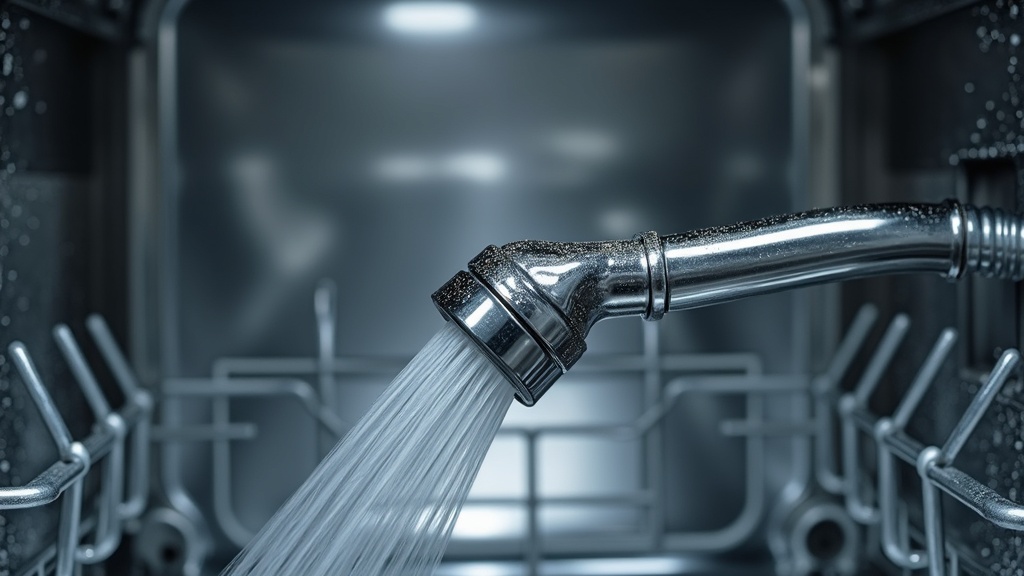
A dishwasher in a Meridian home running at 12 to 17 gpg hardness faces a slow but consistent assault on its internal components. The spray arms that distribute water during each wash cycle have small holes engineered to precise tolerances. Limescale fills those holes over months and years, reducing water pressure and leaving dishes spotted and filmed even after a full wash cycle.
Most homeowners respond by adding more detergent or running hotter cycles. Both strategies accelerate wear on the pump, the heating element, and the door seals. Studies on hard water and appliance lifespan consistently show dishwashers losing 30 to 50 percent of their expected operating life in hard water conditions without treatment.
A mid-range dishwasher in the Treasure Valley costs $600 to $1,200 installed. If hard water cuts that appliance's 10-year lifespan to 6 years, the homeowner absorbs an extra replacement cost of $600 to $1,200 within a decade. That is before accounting for service calls, which typically run $150 to $300 each, and the cost of extra rinse aid and detergent required to compensate for the mineral interference.
Washing Machines and the Mineral Tax on Every Load
Washing machines suffer hard water damage through two separate mechanisms. First, limescale accumulates on the heating element in machines that heat their own water, and inside the drum, hoses, and pump. Second, hard water reacts with laundry detergent to form a soap scum that reduces cleaning effectiveness and leaves a residue on fabric fibers.
That residue stiffens towels and clothing over time, makes whites appear gray, and embeds itself in fabric in a way that accelerates wear. Consumers report using 50 to 75 percent more detergent per load in hard water conditions to achieve the same clean. At current detergent prices in Idaho, that extra usage adds $100 to $200 per year for a family doing laundry five to seven times per week.
Front-loading washing machines are particularly vulnerable because their drum bearings and seals operate in direct contact with process water. Mineral-laden water accelerates bearing corrosion and seal degradation. A replacement washing machine in the Treasure Valley runs $700 to $1,500 installed. Hard water can reduce the expected 10 to 12 year lifespan of a quality machine to 7 or 8 years.
The Appliances You Forget About Until They Fail
Water heaters, dishwashers, and washing machines get most of the attention in hard water discussions. The damage extends further. Coffee makers and pod-style brewers in Boise and Meridian homes accumulate scale in their internal water lines and heating chambers within months of purchase. The warm, slow-moving water inside those appliances is ideal for rapid scale deposition. Most pod coffee makers cost $100 to $250 to replace, and many fail within two to three years in hard water households that do not descale regularly.
Refrigerators with ice makers and water dispensers run Treasure Valley water through narrow supply lines and small valves. Scale accumulation in those lines reduces water flow, strains the solenoid valve, and eventually causes the ice maker to stop producing. Ice maker repairs typically run $150 to $350; replacement of the dispenser assembly can run $400 to $700 depending on the brand.
Even your water-using HVAC components, humidifiers, and whole-house filtration pre-filters take on mineral loads that reduce performance and shorten service intervals. The scale does not discriminate. Any appliance or fixture that handles Treasure Valley water absorbs a portion of the mineral burden.
What Hard Water Appliance Damage Costs Over a Decade
When we add up the realistic costs for a Treasure Valley homeowner running on untreated water at 12 to 17 gpg hardness, the numbers compound quickly.
- Water heater replacement (early, once per decade): $800 to $1,500
- Dishwasher replacement (early) or repeated service calls: $600 to $1,500
- Washing machine early replacement or repairs: $700 to $1,500
- Extra energy costs from scale-reduced efficiency: $1,500 to $2,000 over 10 years
- Extra detergent, soap, and cleaning product usage: $1,000 to $2,000 over 10 years
- Minor appliances (coffee makers, ice makers, etc.): $300 to $800
- Plumbing repairs from scale-narrowed pipes: $500 to $2,000
Conservative estimates from industry research put the decade-long cost of untreated hard water at $5,400 to $11,300 for a typical household. More aggressive estimates, factoring in full appliance replacement cycles, reach $15,000 over 10 years. Against those numbers, a whole-house water softener installed in a Treasure Valley home for $1,200 to $2,500 looks very different. It does not just soften your water. It protects the appliance budget you never wrote down because you did not know you had one.
For more on what a softener costs and what to look for in the Treasure Valley, see our 2026 Idaho Water Softener Cost and Price Guide. And if you have noticed changes in your hair and skin alongside your appliance problems, our article on hard water and hair loss in Boise covers what the same minerals are doing above the waterline.
What Competitors Miss About This Problem
Most water treatment companies in the Treasure Valley lead with fear: your pipes will fail, your water is dangerous, buy a softener today. What they rarely do is walk through the appliance math in enough detail to make the decision obvious for a homeowner who is not already convinced they have a problem.
The gap is specificity. Boise is at 10 to 15 gpg. Meridian runs 12 to 17 gpg. Those are not abstract numbers. At 12 gpg, your dishwasher's spray arm holes will show measurable clogging within 18 months without treatment. At 17 gpg, your water heater's heating element is accumulating enough scale to affect energy efficiency within the first year. When homeowners understand the timeline and the dollar amounts, the conversation stops being about whether to treat their water and starts being about which system makes the most sense for their home and budget.
We approach every free water test as a diagnostic, not a sales call. We measure your actual hardness on-site, walk through what it means for the appliances you already own, and give you an honest picture of where the risk is highest in your specific home.
Frequently Asked Questions
Protect Your Appliances Before It Costs You
TrueWater Idaho offers a free water hardness test for Treasure Valley homeowners. Find out what your water is doing to your appliances before the repair bill arrives.