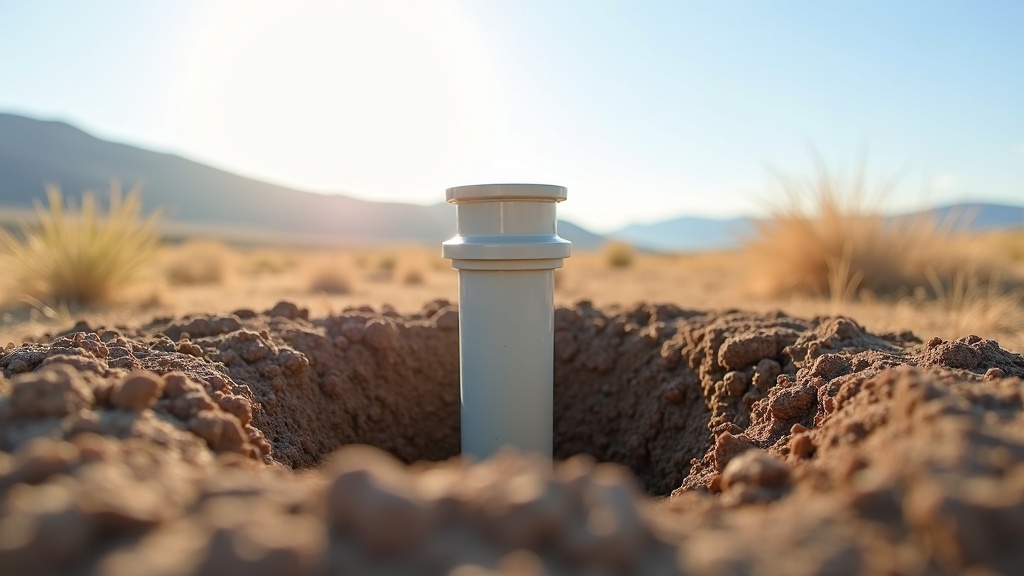
Canyon County's Drought Emergency and What It Means for Your Well
In April 2026, Canyon County declared a drought emergency. By late July, that emergency was still active. KIVI TV reported this week that farmers across the county are absorbing real financial losses: water allotments slashed, fields left unplanted, crops failing in the summer heat. This is not a seasonal blip. The drought has stretched well into the growing season with no clear end in sight.
Here is what most well owners in the Treasure Valley do not realize: the same water source feeding those farm fields also feeds your well. Residential wells in Canyon County and Ada County draw from the Snake River Plain Aquifer, the massive underground reservoir that underlies southern Idaho. That aquifer is already dropping 0.5 to 2 feet per year in parts of Canyon County under normal conditions. Extended drought accelerates that decline.
If your well is shallow, meaning under 100 feet, you are most exposed. Shallower wells are the first to see reduced yield and the first to experience shifts in water quality as the water table drops. Even deeper municipal wells are affected indirectly: when municipal systems pump more aggressively to compensate for surface water shortages, the surrounding groundwater gets drawn down further, concentrating the minerals already present. This summer is exactly the context that makes a current, accurate action plan non-negotiable for every Idaho well owner.
What's Actually in Idaho Well Water
City water in Boise, Meridian, Eagle, Nampa, and Caldwell goes through treatment before it reaches the tap. Well water does not. When you own a private well, you are your own water utility. No regulatory agency is testing your water on your behalf, and no treatment system is standing between the aquifer and your glass.
The Treasure Valley has a specific set of contaminants that show up consistently in well water testing. Nitrates are the most common concern in Canyon County, driven by decades of agricultural activity. Legacy fertilizer and livestock waste have leached into the groundwater, and Idaho DEQ data shows Canyon County has some of the highest nitrate readings in the state among domestic wells. Arsenic occurs naturally from the volcanic geology underlying the region and has been detected at elevated levels in some Treasure Valley wells. Iron comes from the basalt bedrock and shows up as reddish staining and a metallic taste. Hardness runs 12 to 17 GPG in Canyon County wells and 10 to 15 GPG in Ada County, both in the very hard range. Uranium has been detected in some Treasure Valley wells as well. PFAS contamination is an emerging concern, particularly for well owners near Mountain Home Air Force Base and surrounding areas.
Idaho has an estimated 360,000 domestic wells statewide. Unlike city customers, private well owners face no mandatory annual testing requirement. That means many households are drinking water with problems they have never identified.
The Idaho Well Owner's Annual Testing Checklist
Idaho DEQ recommends that private well owners test at minimum once per year. For Treasure Valley wells, we recommend a core panel every year and an expanded panel every few years or after any significant event near your property.
Core annual panel for Treasure Valley wells:
- Coliform bacteria
- Nitrates
- Arsenic
- Hardness
- Iron
- pH
- Total dissolved solids (TDS)
Enhanced panel (recommended if you are near farms, older homes, or a military base):
- PFAS
- Lead
- Uranium
- Volatile organic compounds
Where to test: Idaho DEQ maintains a list of certified labs for private well testing. Your local health district in Canyon or Ada County can also point you to certified options. Mail-in labs like National Testing Laboratories are a convenient alternative. Cost runs from $50 for a basic panel to $300 for a comprehensive screen. Also see the EPA's private wells resource for additional guidance on what to test for and when.
The Six Most Common Problems in Treasure Valley Wells
After testing hundreds of wells across Meridian, Nampa, Caldwell, Eagle, and the broader Canyon County area, we see the same problems come up repeatedly. Here is what to know about each one.
- Hardness (12-17 GPG in Canyon County). This is the most universal problem. Very hard water causes scale buildup inside water heaters, pipes, and appliances. It shortens appliance life and drives up energy bills as scale reduces heating efficiency. See our guide on how to size a well water softener for Treasure Valley conditions.
- Iron. Oxidized iron from the basalt bedrock leaves reddish-brown stains in sinks, toilets, and laundry. It creates a metallic taste in drinking water and causes serious problems for water softener resin if not treated upstream. Read our guide to iron in Idaho well water to understand the different forms iron takes and why they require different treatment approaches.
- Nitrates. Invisible, odorless, and tasteless. Canyon County's agricultural legacy has left nitrate contamination in many wells, and it is particularly dangerous for infants under six months old. Review our guide to nitrate testing if you have any reason to suspect elevated levels.
- Arsenic. Naturally occurring in Idaho's geology, arsenic is a chronic exposure risk with no short-term symptoms. Some Treasure Valley wells have tested above the EPA action level of 10 parts per billion. Learn more in our resource on arsenic in Treasure Valley wells.
- Sulfur and hydrogen sulfide. The rotten egg smell that some well owners notice, especially first thing in the morning, comes from naturally occurring sulfur compounds in Idaho geology. Manageable with the right treatment but often mistaken for a septic issue.
- Bacteria. Coliform bacteria can enter a well after flooding, soil disturbance near the wellhead, or a compromised well casing. Not always visible or detectable without testing. Any nearby construction or flooding event is reason to test immediately.
One drought-specific note: lower water volume means every contaminant listed above becomes more concentrated per gallon. That makes this summer's low-water-table conditions directly relevant to your water quality right now, not just your water quantity.
Treatment Options for Idaho Well Water Issues
The right treatment system depends entirely on what your test results show. There is no single system that covers everything, and installing the wrong one wastes money while leaving the real problem untreated. That said, here is how we approach the most common Treasure Valley well water problems.
Hardness: An ion exchange water softener is the standard solution. For typical Canyon County well flow rates and hardness levels in the 12 to 17 GPG range, most homes need a system sized at 60,000 to 80,000 grain capacity. Sizing matters; an undersized system regenerates too frequently, an oversized one wastes salt.
Iron: Iron must be addressed before the water enters your softener, or it will foul the resin bed and shorten the softener's life significantly. Options include oxidizing filters using Birm or Katalox media, or an air injection system that oxidizes iron before filtration. The right choice depends on your iron type and concentration.
Nitrates: Reverse osmosis at the point of use is the most effective method. A quality RO system under the kitchen sink removes nitrates reliably for drinking and cooking water. Whole-house nitrate removal is technically possible but costly; for most families, a point-of-use RO system is the practical answer.
Arsenic: Reverse osmosis or activated alumina filtration both reduce arsenic effectively at the point of use. The treatment approach depends on your arsenic level and the other chemistry in your water.
Bacteria: UV sterilization is the standard solution and should always be installed as the last stage, after all other treatment. UV light neutralizes bacteria without adding chemicals.
Sulfur: Aeration combined with a carbon filter works for lower hydrogen sulfide levels. Higher concentrations often call for an oxidizing filter system.
For a Canyon County well with typical issues, the comprehensive approach we often recommend is: iron filter first, then water softener, then UV sterilizer, with a point-of-use RO system for drinking water. This layered approach protects every stage of your plumbing and keeps each treatment component functioning at its best.
Free Water Test: Your Starting Point
We offer free on-site water tests for well owners throughout the Treasure Valley, including Meridian, Boise, Eagle, Nampa, Caldwell, Kuna, Star, and surrounding areas. Our on-site test covers hardness, iron, pH, and TDS, and we can have results in about 30 minutes at your kitchen sink.
For contaminants that require lab analysis, including nitrates, arsenic, and bacteria, we help you coordinate with a DEQ-certified lab. We can walk you through what to test for based on your well location, depth, and any surrounding land use.
We want to be direct about one thing: never guess on treatment. The wrong system for your specific water chemistry wastes money, fails to fix the real problem, and can sometimes make things worse. A water softener installed on well water with high iron will foul within months. An RO system sized for municipal water pressure may underperform on a well with lower flow. Testing first is not optional; it is the only way to build a treatment plan that actually works.
Call us at (208) 968-2771 or schedule your free test online. There is no obligation, and you leave with real data about what is in your water.
Get a Free Well Water Test
Find out exactly what's in your water before choosing any treatment system. Our on-site test covers hardness, iron, pH, and TDS in about 30 minutes.
Frequently Asked Questions
How often should I test my Idaho well water?
At a minimum, test annually. You should also test after any nearby construction, flooding, or if you notice a change in taste or smell. For arsenic and uranium specifically, we recommend testing every three to five years since these contaminants shift slowly with geology and water table changes.
What is the hardness of well water in Canyon County?
Canyon County well water typically runs 12 to 17 GPG (grains per gallon), which falls in the very hard to extremely hard range. That is higher than most city water in the region. Boise city water runs about 10 to 15 GPG, and Meridian city water is similar. Private wells in Canyon County tend to sit at the upper end of that scale.
Does the 2026 drought affect my well water quality?
Yes. Lower water table levels concentrate existing contaminants because there is less water volume diluting them. Surface contaminants can also reach your aquifer faster when the protective soil layers above it dry out and crack. Shallow wells under 100 feet are most at risk during extended drought conditions like Canyon County's current emergency.
Can I use a regular water softener on my well water?
A standard ion exchange softener handles hardness well, but well water with iron or bacteria needs additional treatment first. Iron fouls the softener resin and shortens its life significantly. Bacteria require UV sterilization, which must always be installed after all other treatment stages. Always test before choosing your system so you know exactly what you are dealing with.