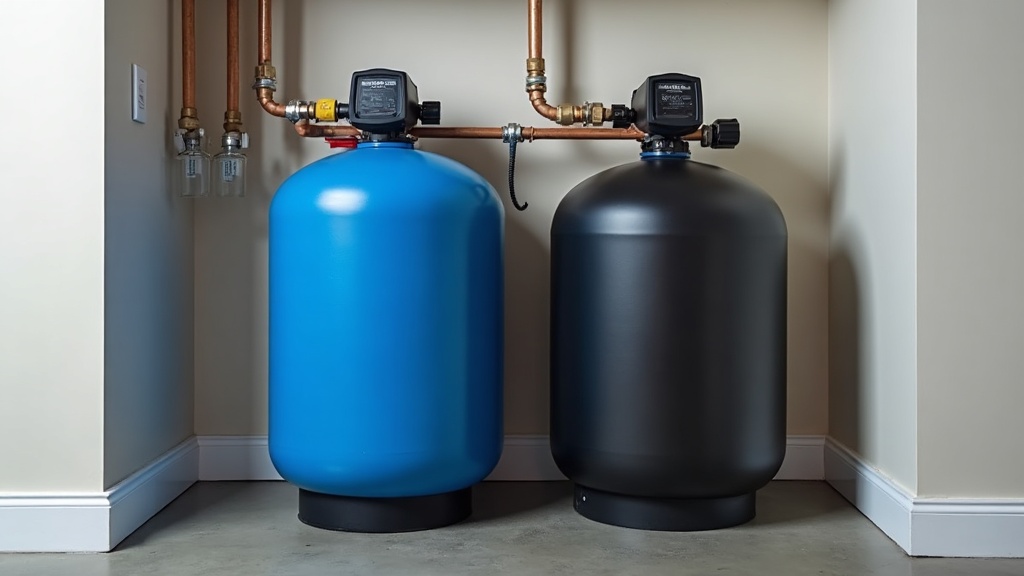
If you get your water from a private well in the Treasure Valley, sizing a water softener is a different job than it is for city water customers. City water is tested, treated, and delivered at fairly consistent hardness levels. Your well is not. Hardness can vary by season, by depth, by how your neighbors are using their wells, and now, because of Idaho's historic 2026 drought, by how much mineral concentration is happening as groundwater tables drop across Ada and Canyon counties.
That drought matters more than most people realize. Idaho recorded its lowest snowpack since 1896 this past winter. Less snowmelt recharging the aquifers means the same dissolved minerals are sitting in less water, and well tests that came back at 18 GPG in 2023 are now returning readings of 22 GPG or higher in some rural Ada County and Canyon County locations. If your softener was sized two or three years ago, it may already be undersized for what your well is producing today.
And then there is the longer-term picture. The Idaho Department of Water Resources issued a groundwater moratorium for Canyon County in March 2026, freezing new well permits in much of the area. If you are on a well right now, you are likely on that well permanently. That makes your softener less of a convenience appliance and more of a long-term infrastructure decision. Getting the sizing right matters, and we want to walk you through exactly how to do it.
Why Well Water Is Different From City Water
City water customers in Meridian or Boise are working with a relatively predictable baseline. The utility tests regularly, adjusts treatment, and publishes annual quality reports. Well owners are working with a private source that changes based on geology, seasonal recharge, nearby agricultural activity, and even how much water you have pumped out of the aquifer over time.
The biggest variables with Treasure Valley well water are hardness, iron, manganese, and pH. Hardness in Canyon County wells routinely runs 18 to 25 GPG, with some outliers pushing above 30 GPG. That is nearly double what Boise city water delivers (10 to 15 GPG) and meaningfully higher than even rural Ada County wells, which typically range from 15 to 22 GPG. Iron is common in the region's deeper wells and creates a separate sizing complication we will cover below. Manganese shows up alongside iron in many Canyon County and southern Nampa-area wells. And pH affects both how aggressive the water is on your pipes and how well a softener resin holds up over time.
Seasonal drift is real, too. Spring recharge from snowmelt can dilute hardness slightly. By late summer, especially in a drought year like 2026, minerals concentrate. A softener calibrated for your spring test may be running short by August. We have seen this pattern repeatedly across the homes we serve from Caldwell to Star.
The Four Numbers You Need Before Sizing Anything
Before you look at a single grain capacity spec sheet, you need four numbers from a proper well water test. Do not estimate these and do not rely on a neighbor's test.
- Hardness in GPG (grains per gallon). This is the primary sizing input. Labs may report it in mg/L or ppm; divide by 17.1 to convert to GPG. A result of 300 mg/L works out to about 17.5 GPG.
- Iron in mg/L (milligrams per liter). Even small amounts of dissolved iron require you to adjust your sizing calculation upward. At 2 mg/L, many softeners begin struggling within two to three years if not sized to account for it.
- Manganese in mg/L. Manganese fouls resin similarly to iron and should be factored in the same way. Canyon County wells with iron often carry manganese alongside it.
- pH. A pH below 7.0 means your water is acidic, which accelerates resin degradation in standard softeners. Low-pH well water also tends to leach copper and lead from older plumbing. A pH above 8.5 can indicate high bicarbonate content that affects how the softener performs. Ideal range for softener operation is 6.5 to 8.5.
If you have not tested your well recently, we offer a free water test for Canyon County and Ada County homeowners. Given the 2026 drought conditions, we strongly recommend a fresh test even if you tested a year or two ago.
The Sizing Formula (And Where It Breaks Down)
The standard softener sizing formula is straightforward:
Daily grains = Number of people x 75 gallons per person per day x water hardness (GPG)
Most manufacturers recommend sizing your softener to regenerate no more than once every three days, so you multiply daily grains by 3 to get the minimum grain capacity you need.
That formula works fine for city water. For well water with iron, you need the iron multiplier: add 4 GPG to your hardness number for every 1 mg/L of iron in your water. Iron binds to softener resin and occupies capacity that would otherwise go to calcium and magnesium. Ignoring iron in your calculation is one of the most common reasons softeners fail prematurely on well water.
Worked Example 1: Rural Ada County, Family of Four
A family of four in rural Star, Idaho. Well test shows 19 GPG hardness and 1.5 mg/L iron.
- Iron adjustment: 1.5 x 4 = 6 GPG added
- Adjusted hardness: 19 + 6 = 25 GPG
- Daily grains: 4 people x 75 gpd x 25 GPG = 7,500 grains per day
- 3-day capacity needed: 7,500 x 3 = 22,500 grains minimum
- Recommended system: 32,000 grain (gives buffer for hardness drift and seasonal variation)
Worked Example 2: Canyon County, Family of Five
A family of five near Caldwell. Well test shows 24 GPG hardness and 2.5 mg/L iron.
- Iron adjustment: 2.5 x 4 = 10 GPG added
- Adjusted hardness: 24 + 10 = 34 GPG
- Daily grains: 5 people x 75 gpd x 34 GPG = 12,750 grains per day
- 3-day capacity needed: 12,750 x 3 = 38,250 grains minimum
- Recommended system: 48,000 grain (bumped up from the 40K range given Canyon County's known hardness volatility)
Notice how iron pushes both families into a significantly larger system than raw hardness alone would suggest. This is where the formula breaks down if you skip the iron test: you size for 19 GPG and buy a 24K system that is already working at its limits on day one.
For more on how iron specifically affects well water treatment, see our full guide on iron in Idaho well water.
Grain Capacity and Salt Use: The Numbers That Determine Your Annual Cost
Water softeners are sold by grain capacity: 24,000 / 32,000 / 48,000 / 64,000 / 80,000 grains. The number represents how many grains of hardness the resin bed can remove before it needs to regenerate with salt.
Here is why undersizing is expensive in the long run. An undersized softener regenerates more frequently. Each regeneration cycle uses salt. Salt costs roughly $6 to $10 per 40-pound bag in the Boise area right now. If a properly sized 48K system regenerates every three days (using about 8 to 10 lbs of salt per cycle), you are using roughly 100 to 120 lbs of salt per month. An undersized 24K system on the same water may regenerate daily, using 60 to 70 lbs per week, or 250+ lbs per month. That is two to three times the salt cost, plus accelerated resin wear.
As a rough Idaho well water guide:
- 24,000 grain: 1-2 people, city water hardness (under 15 GPG), minimal iron. Not appropriate for Canyon County well water.
- 32,000 grain: 2-3 people, rural Ada County well water, low iron (under 1 mg/L).
- 48,000 grain: 3-5 people, Canyon County or rural Ada County with moderate iron (1-3 mg/L). Most common correct answer for Treasure Valley well homes.
- 64,000 grain: 4-6 people, Canyon County high-hardness wells (22+ GPG), moderate to high iron.
- 80,000 grain: Large households, high-hardness wells above 25 GPG with significant iron, or homes with high water usage (irrigation tie-ins, livestock water, commercial use).
See our 2026 Idaho water softener cost guide for current pricing on each system tier.
When Your Well Water Needs More Than a Softener
A standard water softener is an ion exchange device. It swaps calcium and magnesium ions for sodium ions. That process works well for hardness and low levels of dissolved iron (generally under 2-3 mg/L of ferrous iron). Above that threshold, the iron begins oxidizing inside the resin tank, fouling the resin bed, and the softener starts losing capacity faster than it should.
Some Canyon County wells we test come back at 4, 5, or even 8 mg/L of iron. At those levels, a softener alone is not the answer. The correct sequence is an iron filter installed before the softener, removing the majority of the iron before it ever reaches the resin. The softener then handles residual iron and hardness without getting overwhelmed.
Common pre-treatment options for Canyon County and rural Ada County well water include:
- Oxidizing iron filters (Birm, Katalox, Pyrolox media): work well for iron and manganese, require no chemicals in many cases
- Air injection systems: use dissolved oxygen to oxidize iron before a standard filter catches it, good for high-iron, high-manganese wells
- Greensand filters: effective for combined iron and manganese removal, require potassium permanganate regenerant
If your well test shows iron above 3 mg/L, plan for a two-stage system. If it is also showing manganese above 0.05 mg/L, you will want a system specifically rated for manganese removal. We can help you determine the right sequence after we see your test results.
Flow Rate and Your Well Pump: The Sizing Factor Nobody Mentions
Every water softener has a service flow rate (SFR), measured in gallons per minute (GPM). This is the maximum flow the softener can handle while still providing treated water. If your household demand exceeds the SFR, you get pressure drops, hard water bypassing the resin bed, or both.
Most residential Idaho well pumps deliver somewhere between 5 and 15 GPM depending on pump size, well depth, and age. A modest 1 HP pump in a deeper Canyon County well might push 7 to 8 GPM at the surface. A newer 1.5 HP pump in a shallower Ada County well might hit 12 to 14 GPM.
The softener's SFR needs to match or exceed your pump's output. A 32K grain softener with a 7 GPM SFR on a 12 GPM pump will cause pressure problems every time two or three fixtures run simultaneously. Match the flow rate first, then confirm the grain capacity is adequate for your hardness and household size.
This is particularly relevant for homes with irrigation systems tied into the well. If you run a softener on the main line and then run sprinklers at 15 GPM through that softener, you will get pressure drops and you will be wasting regeneration capacity on lawn water. Consider a bypass for outdoor irrigation when your well serves the whole property. The EPA's groundwater guidance covers whole-home treatment considerations that are worth reviewing for well owners making infrastructure decisions.
Quick Reference: Well Water Hardness by Treasure Valley Location
| Location | Typical Hardness Range | Water Source | Notes |
|---|---|---|---|
| Boise city | 10-15 GPG | City (surface blend) | Relatively soft; softener optional for many households |
| Meridian city | 12-17 GPG | City (groundwater blend) | Varies by zone; south Meridian tends higher |
| Eagle city | 14-18 GPG | City (groundwater) | North Eagle wells run harder than city supply |
| Nampa city | 3-4 GPG | City (surface water blend) | Notably soft; one of the softest supplies in the valley |
| Rural Ada County | 15-22 GPG | Private well | Wide range; test before sizing. Drought year readings trending higher. |
| Canyon County (wells) | 18-25+ GPG | Private well | Some outliers above 30 GPG. High iron common. Pre-treatment often needed. |
| Caldwell / Nampa rural | 20-28 GPG | Private well | Agricultural area; nitrate and iron risk alongside hardness |
| Star / Middleton | 16-22 GPG | Private well | Fast-growing area; well depth variation affects hardness significantly |
Note: these ranges are based on tests we have conducted and regional data from the Idaho Geological Survey's groundwater records. Your individual well may fall outside these ranges. Always test before sizing.
Get Your Well Water Tested Free
Before you invest in a softener or replace the one you have, know exactly what you are working with. We offer a free water test covering hardness, iron, manganese, pH, and more. We will walk you through the results and give you a sizing recommendation specific to your well.