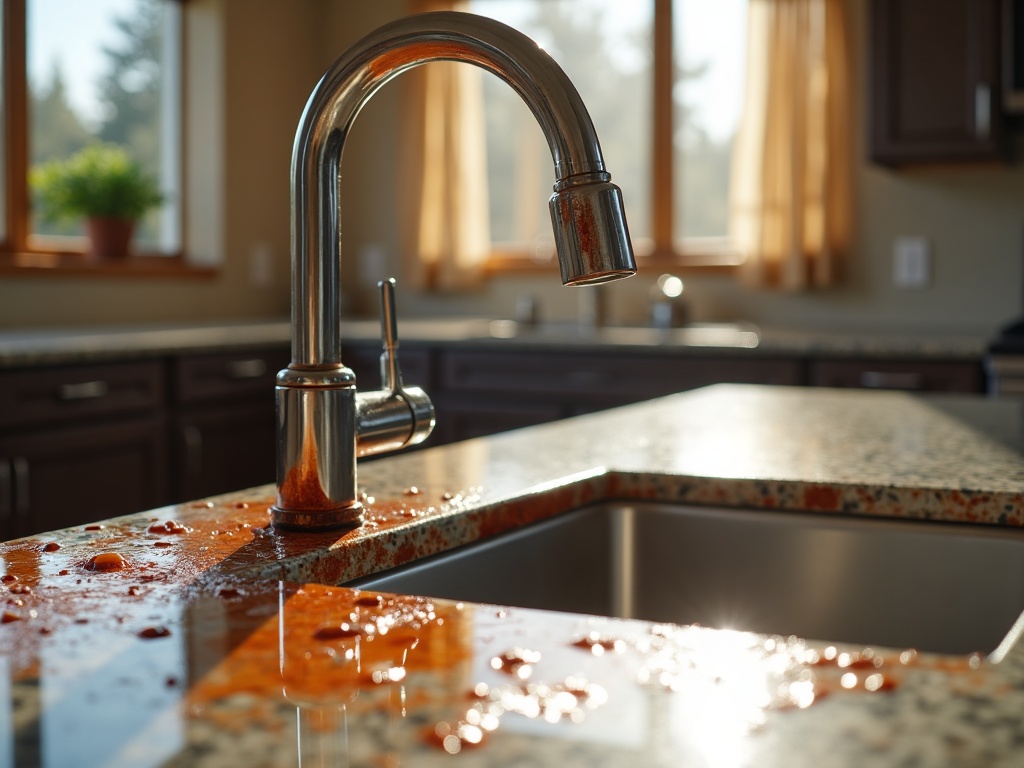
Orange ring in the toilet, rust streaks on laundry, metallic taste in the morning coffee. These are the most common complaints we hear from well owners across Canyon County, Caldwell, Nampa, and rural parts of the Treasure Valley. Iron in well water is one of the most treatable problems in residential water quality, but it is also one of the most misdiagnosed. The type of iron you have determines which treatment actually works, and buying the wrong system first is an expensive mistake.
We work with homeowners every week who have already purchased a water softener or a basic filter that did nothing because the wrong iron type was assumed. A proper water test costs nothing when you work with us, and it tells you exactly what you are dealing with before a dollar is spent on equipment.
In March 2026, the Idaho Department of Water Resources imposed a five-year moratorium on new groundwater permits in southern Canyon County due to aquifer sustainability concerns. We covered the details of what that means for local well owners in our Canyon County well water testing article. The short version: when aquifers are stressed and water tables drop, existing wells begin pulling from deeper, more oxygen-depleted zones underground. That is exactly the environment where ferrous iron dissolves readily into groundwater. Existing well owners in Canyon County, Nampa, and Caldwell should be testing annually, not every five years.
The IDWR also documented an 86,756 acre-foot water shortfall during the 2025 irrigation season, meaning the Snake River Plain aquifer is being asked to deliver significantly more than it receives from snowpack recharge. Deeper drawdown means more iron exposure for well owners in this region. This is not a temporary condition.
Why Idaho Well Water Has an Iron Problem
The Snake River Plain is underlain by volcanic basalt, and basalt is loaded with iron-bearing minerals. As rainwater and snowmelt percolate slowly through these rock layers, they move through zones with little to no dissolved oxygen. In those anaerobic conditions, iron dissolves out of the rock and into the groundwater. By the time that water reaches a well pump, it can carry iron concentrations far above the EPA's 0.3 mg/L aesthetic standard.
Canyon County and rural Nampa and Caldwell well owners consistently see higher iron levels than households served by city water in Ada County. City water systems treat for iron at the plant. Private well owners are responsible for treating it themselves. The same volcanic geology that drives iron also produces the hard water the Treasure Valley is known for: Boise groundwater typically runs 10 to 15 grains per gallon of hardness, and Meridian groundwater often runs 12 to 17 grains per gallon. If your water is hard, it almost certainly came through iron-rich geology on its way to your well.
One more thing to know: iron in Idaho wells almost always occurs alongside manganese. The EPA secondary maximum contaminant level for manganese is 0.05 mg/L. Manganese causes its own set of staining and taste problems, and it requires a somewhat different treatment approach than iron. If you are testing for iron, test for manganese at the same time.
The Four Types of Iron in Well Water
This is where most homeowners and even some water treatment companies get it wrong. There are four distinct forms of iron, and the treatment that works for one will fail completely for another. Misdiagnosis is the most common reason iron treatment systems underperform.
- Ferrous iron (clear-water iron): This is fully dissolved iron. The water looks completely clear when drawn from the tap. It only turns orange after it contacts oxygen, which happens when it sits in your toilet bowl, touches your laundry, or dries on a surface. Ferrous iron is the most common form found in deep Treasure Valley wells and requires oxidation before it can be filtered out.
- Ferric iron (red-water iron): This iron has already oxidized before it reaches your tap. The water pours orange, brown, or cloudy. You can see it immediately. It is suspended as fine particles and can be filtered directly, though the filter media must be matched to particle size.
- Colloidal iron: Ultra-fine iron particles held in suspension by electrical charge. The water appears yellow or turbid rather than clearly orange. Standard backwashing filters will not capture it because the particles are too small. Colloidal iron is the hardest type to treat and typically requires coagulation or specialized media. It is less common but often the culprit when standard iron filters produce disappointing results.
- Iron bacteria (Gallionella, Leptothrix): These are microorganisms that metabolize iron and form slimy red, orange, or brown biofilm inside toilet tanks, around well casings, and in plumbing. The water often has a musty, swampy, or oily odor in addition to iron staining. Iron bacteria are not removed by filtration. The well must be shock-chlorinated to kill the biofilm, and a disinfection system (chlorine injection or UV) may be needed to prevent regrowth.
Wrong diagnosis means wrong treatment and wasted money. A standard iron filter installed on a well with iron bacteria will have the biofilm clogging the media within weeks. A water softener installed on a high-iron ferrous well will have its resin fouled and need replacement far ahead of schedule. Test first.
Signs You Have an Iron Problem in Your Well
Most Canyon County and Treasure Valley well owners know something is off before they ever test. The signs are hard to miss once you know what to look for.
- Orange or rust staining in toilets, bathtubs, and sinks. These stains become permanent if left untreated for extended periods.
- Rust-damaged laundry: orange or brown streaks that appear after washing and do not come out. White fabrics go gray or brown over time.
- Metallic taste in drinking water, coffee, tea, and food cooked with tap water. This is the ferrous iron you are tasting before it oxidizes.
- Slimy red, orange, or brown gel inside the toilet tank or around the well cap. This is a strong indicator of iron bacteria rather than dissolved iron.
- Clogged irrigation heads and sprinkler nozzles from iron scale deposits in the lines.
- Water that clears up after running for a few seconds, then returns to orange. This usually indicates the iron is in the well or casing, not the plumbing.
The EPA secondary standard for iron is 0.3 mg/L. This is not a health-based limit. It is an aesthetic standard, meaning concentrations above this level cause the taste, odor, and staining problems listed above. Even concentrations modestly above 0.3 mg/L leave visible orange staining over time.
How to Test for Iron in Your Well Water
Do not purchase a treatment system before testing. The type of iron you have and its concentration determine which system will actually work. Without that information, you are guessing, and guessing with iron treatment is expensive.
- At-home test kits: Useful for a quick screen to confirm iron is present and estimate concentration. They will not distinguish between ferrous and ferric iron reliably, and they will not detect colloidal iron or iron bacteria.
- DEQ-certified lab testing: The most accurate option. Idaho DEQ maintains a list of certified drinking water laboratories. The EPA Safe Drinking Water Act page is a useful reference for understanding what to test for and why.
- TrueWater free water test: We test for iron, manganese, hardness, pH, and TDS at no cost and with no obligation. If the results point to iron bacteria, we will let you know you need a bacterial analysis and where to get one. We serve Canyon County, Ada County, and all of the Treasure Valley.
If you have a sulfur or musty smell alongside iron staining, do not wait for a basic test. That combination strongly suggests iron bacteria, which requires bacterial analysis and a different treatment path entirely.
Treatment Options for Iron in Idaho Well Water
The right treatment depends on iron type, iron concentration, whether manganese is present, and whether iron bacteria are involved. Here is how we think through it.
- Low iron (below 3 mg/L, ferrous only): A water softener can handle this as a secondary function through ion exchange. At this level, the iron load is low enough that resin fouling is not a significant concern. This is the exception, not the rule, for Canyon County well owners.
- Moderate iron (3 to 10 mg/L): An oxidizing backwash filter using manganese greensand, Birm, or Katalox Light media is the standard approach. The filter oxidizes dissolved ferrous iron to ferric iron, then captures the particles during the filter cycle. Backwashing regenerates the media. These systems handle both iron and manganese when properly sized.
- High iron (above 10 mg/L): Air injection or aeration ahead of filtration is the most effective approach. Compressed air is introduced into the water stream to oxidize the iron before it reaches the filter tank. This is the setup we most commonly recommend for Caldwell, rural Nampa, and deeper Canyon County wells. Equipment runs $800 to $2,500 depending on system design, with installation typically adding $300 to $800.
- Iron and manganese together: The treatment system must be rated for both. Manganese requires a higher pH for effective oxidation and removal than iron does. A properly matched system handles both; a mismatch leaves one untreated.
- Iron bacteria: Shock chlorination of the well is the first step, breaking down the biofilm that has accumulated. After that, a chemical feed system using chlorine injection or a UV disinfection system prevents regrowth. Filtration alone will not resolve iron bacteria, and adding a filter without addressing the bacteria source will result in rapid media fouling.
- Whole-house vs. point-of-use: A whole-house system treats water at the entry point, protecting pipes, water heater, appliances, laundry, and every fixture in the home. A point-of-use reverse osmosis system protects only the single tap where it is installed. For iron problems at typical Idaho well concentrations, whole-house treatment is the appropriate solution.
Iron Filters vs. Water Softeners: Which Do You Need?
This is the question we field most often from Treasure Valley well owners, and the confusion is understandable because both systems look similar and both deal with "bad water."
Water softeners work by ion exchange: calcium and magnesium ions that cause hardness are swapped for sodium ions on a resin bed. Softeners can incidentally remove low-level ferrous iron, generally up to 3 to 5 mg/L, because iron also carries a positive charge that gets captured by the resin. The problem is that at higher iron concentrations, the iron fouls the resin, reducing softening effectiveness and dramatically shortening the resin's service life. A softener running on 8 mg/L iron will need resin replacement in a fraction of the normal time.
Iron filters are specifically engineered for iron and manganese removal through oxidation and filtration. They do not soften water. Many well owners in Canyon County and rural parts of the Treasure Valley need both systems: an iron filter first in line to handle the iron and manganese, followed by a water softener downstream to address hardness. The iron filter protects the softener resin from fouling. Both systems work better and last longer when they are not trying to do a job they were not designed for.
For more on the softener decision specifically, see our article on reverse osmosis vs. water softeners for Idaho homes.
What to Expect From the TrueWater Free Water Test
We test for iron, manganese, hardness, pH, and total dissolved solids at no cost and with no obligation. We bring the equipment to your home, run the test, and review the results with you on the spot. The results tell us exactly which type of iron you have and at what concentration. From there, we recommend the system that is matched to your actual water chemistry, not a one-size-fits-all package.
We serve Canyon County, Ada County, and all of the Treasure Valley, including Caldwell, Nampa, Boise, Meridian, and Eagle. To schedule or ask a question, call us at (208) 968-2771 or use our online scheduling form.
Frequently Asked Questions
Is iron in well water dangerous to drink?
Iron itself is not classified as a health hazard at concentrations typically found in Idaho wells. The EPA's 0.3 mg/L limit for iron is a secondary standard based on aesthetics (taste, color, staining), not health risk. That said, iron bacteria can indicate broader microbial issues worth testing for, and most people simply choose not to drink orange-colored or metallic-tasting water.
What causes orange staining in my toilet and sinks?
Oxidized ferric iron deposits on any surface it contacts when it is exposed to oxygen. Even a concentration of 0.5 mg/L leaves visible staining over time as water sits and evaporates. Treating iron at the source with a whole-house system stops new staining from forming and protects your fixtures long-term.
My water looks clear but I still have staining. Is that iron?
Yes. Ferrous iron is fully dissolved and completely invisible when drawn from the tap. It only oxidizes to orange when it contacts air, which happens when water sits in your toilet bowl, dries on a surface, or soaks into fabric. This is the most common form of iron in deep Treasure Valley wells, and it is what most Canyon County homeowners are dealing with when they report staining but clear water.
Can I use a Brita filter to remove iron?
No. Standard activated carbon pitcher filters are not designed for iron removal. Iron will quickly foul the carbon media, reducing the filter's effectiveness for everything else it is supposed to handle. For iron removal, you need a system specifically rated for it: an oxidizing backwash filter, an air injection system, or a dedicated iron-reduction system sized for your water chemistry.
How do I know if I have iron bacteria vs. regular iron?
Look inside your toilet tank. Iron bacteria form a slimy, gel-like deposit that is red, orange, or brown. It is distinct from simple rust staining in that it has a gelatinous texture rather than a dry crust. A musty, swampy, or oily odor accompanying iron staining is another strong signal. A water test that includes bacterial analysis will confirm it. Iron bacteria require shock chlorination of the well, not filtration. Do not install a filter without addressing the bacteria source first.
Not Sure What's in Your Well Water?
Iron problems are fixable, but the fix depends on knowing what type of iron you have and at what concentration. Our free water test covers iron, manganese, hardness, pH, and TDS, with no cost and no obligation.
Serving Canyon County, Ada County, and all of the Treasure Valley.