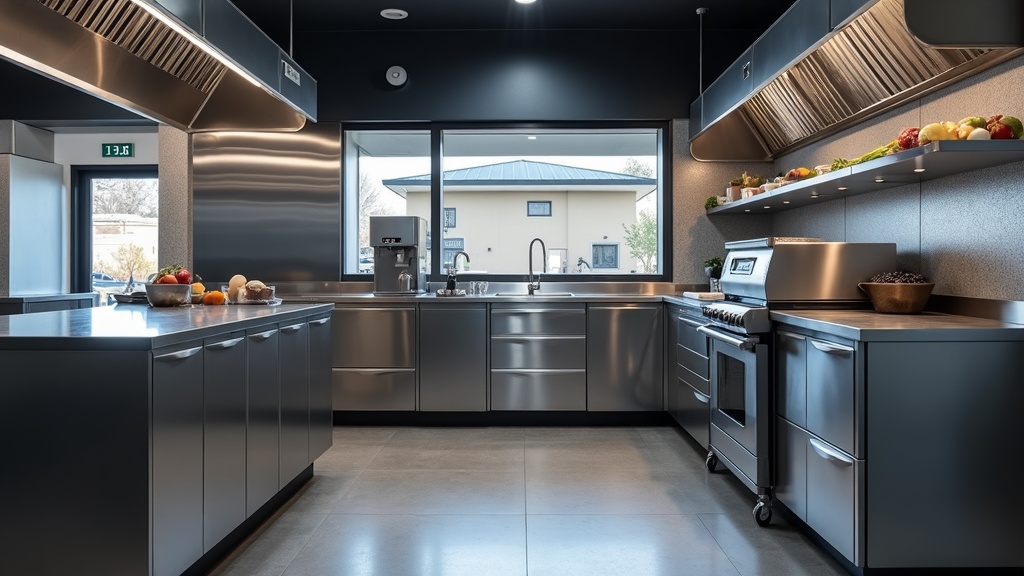
Restaurants Are Going High-Tech on Inspections, But Missing the Basics
Walk into any food industry trade show in 2026 and you will hear the same pitch: AI-powered compliance software is the future of restaurant inspections. Platforms like FoodDocs, Jolt, and Operandio now offer real-time HACCP dashboards, automated corrective action logs, digital temperature monitoring, and inspection checklists that update automatically when local health codes change. About one in three restaurant operators has adopted some version of this technology, and adoption is accelerating fast.
In the Treasure Valley, that pressure is real. Central District Health conducts unannounced inspections, posts results publicly, and the scores show up on Yelp within days. A single critical violation can follow your restaurant for months online. So it makes sense that owners are investing in compliance tech, digital SOPs, and training platforms to shore up their scores.
Here is the problem: the best inspection app in the world will not fix what is coming out of your pipes. Thousands of dollars in software subscriptions, and most restaurants in Boise and Meridian are still running untreated water through equipment that is quietly building toward its next inspection failure. The AI can log your sanitizer concentration. It cannot change the chemistry of your water.
The Water-Specific Checklist Health Inspectors Actually Use
Health inspectors are not just checking food temperatures and hand-washing logs. There is an entire water-focused section of the inspection that most operators underestimate. Here is what they are looking at:
- Potable water supply from an approved, tested source
- Hot water availability at hand sinks, with a minimum of 100°F
- Backflow prevention devices installed and maintained on all water connections
- Sanitizer solution concentration within required ranges for chlorine or quaternary ammonia
- Ice machine sanitation, including visible scale, slime, or biofilm inside the unit
- Equipment contact surfaces free of mineral buildup that could harbor bacteria
Notice what is not on that list: hard water. Inspectors do not cite you directly for water hardness. But almost every item above can be compromised by it. Hard water does not fail you on paper. It fails you through your equipment, your sanitizer, and your ice machine, all of which are on the checklist.
How Hard Water Creates Inspection Violations You Never See Coming
Boise and Meridian pull water primarily from the Snake River Plain aquifer. Depending on your specific location and the season, that water runs between 6 and 15 grains per gallon (GPG) of hardness, driven largely by calcium and magnesium. That range puts the Treasure Valley well above the "moderately hard" threshold and into territory where commercial kitchen equipment takes a beating year over year.
Here is how it shows up as inspection risk:
- Ice machines: Calcium scale accumulates on evaporator plates and inside the bin. Scale creates a surface where slime and biofilm develop, which is exactly what an inspector photographs. A dirty ice machine is one of the most common critical violations in Treasure Valley restaurants.
- Dishwasher rinse temperature failures: Scale buildup on heating elements forces the unit to work harder to reach required rinse temperatures (typically 180°F for high-temp machines). When the element is insulated by scale, the water may not reach temperature, and your dishes are not sanitized, which is a violation.
- Sanitizer chemistry: Hard water minerals react with both chlorine and quaternary ammonia sanitizers, reducing their effective concentration. You may be dosing correctly and still testing below required levels because the calcium is neutralizing your sanitizer before it can do its job.
- Clogged aerators and faucet flow: Hand sinks with restricted flow from scale-clogged aerators can fail the hot water availability check, even if your water heater is functioning perfectly.
The energy cost is real too. Just 1/16 of an inch of scale on a heating element increases energy consumption by roughly 15 percent. That is waste you are paying for every month before the inspection violation ever happens.
The Equipment That Fails First and What It Costs Boise Restaurants
The restaurants most exposed to hard water damage are ghost kitchens and operators who moved into older Meridian or Boise commercial spaces without inheriting any water treatment infrastructure. The previous tenant left behind scale in the pipes, on the heating elements, and inside the ice machine, and the new operator is starting behind from day one.
Commercial ice machine lifespan is typically cut nearly in half in hard water environments without treatment. A unit rated for 10 years may need replacement in five. Commercial dishwashers run $3,000 to $15,000 to replace, and descaling service calls are frequent and expensive. More importantly, a failed ice machine or dishwasher during an unannounced inspection means a violation that gets posted publicly on Central District Health's website, and Yelp aggregates those scores automatically.
For a restaurant working thin margins, the math is straightforward: untreated water costs more than treated water, both in equipment replacement and in reputational damage from inspection scores.
What Water Treatment Fixes Before the Inspector Arrives
A commercial water softener installed at the main water supply line removes calcium and magnesium before they ever reach your equipment. For most commercial kitchens in the Treasure Valley, this is a single point-of-entry installation that protects every piece of water-connected equipment in the building.
Here is what changes on your inspection checklist when you are running softened water:
- Ice machines stay cleaner between service cycles, with far less biofilm risk
- Dishwasher heating elements maintain efficiency and reach required sanitizing temperatures consistently
- Sanitizer solutions achieve correct concentration because the minerals are no longer competing with your chemistry
- Hand sink aerators maintain flow and hot water reaches the tap without restriction
Water softeners are not classified as food contact surface modifications under Idaho food code, so installation does not require a permit or an amended floor plan submission. For ghost kitchens or shared commissary spaces where a whole-building softener is not practical, point-of-use filtration options can protect specific equipment like your ice machine or dishwasher directly.
The technology investment that actually moves your inspection score is not the AI compliance platform. It is the pipe under your sink.
Frequently Asked Questions
Find Out What Your Kitchen Water Is Actually Doing
TrueWater Idaho offers a free commercial water assessment for Treasure Valley restaurants, ghost kitchens, and food service operations. We test your water, walk your equipment, and show you exactly where hard water is putting your inspection score at risk. No obligation, no pressure.