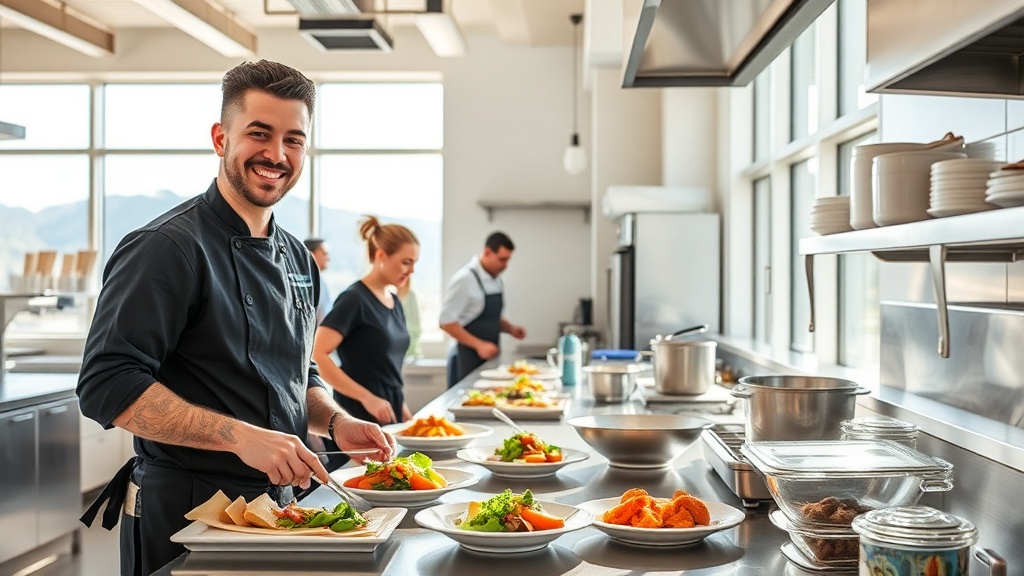
Boise's restaurant scene has exploded over the past five years. The number of food-service establishments in Ada County grew by nearly 18 percent between 2021 and 2025, according to Idaho State Tax Commission data, and downtown Boise now competes with cities twice its size for culinary recognition. That growth has brought new pressure on operators: rising food costs, staff shortages, tighter margins. What most owners have not thought to audit is the one ingredient that flows through every station in their kitchen, every day, at essentially zero cost per gallon.
Water touches every part of a food service operation. It is in your espresso. It is in your ice machine. It runs through your dishwasher, your steam equipment, your prep sinks. And in the Treasure Valley, that water arrives at your building carrying dissolved minerals at levels that quietly degrade equipment, alter flavor, and create compliance headaches most owners do not discover until something breaks or a health inspector flags it.
The Boise Restaurant Boom and the Costs Nobody Talks About
The trend among Boise and Meridian restaurateurs right now is operational efficiency. Food cost inflation has pushed food-to-revenue ratios well above traditional benchmarks for many operators, and the response has been a sharp focus on waste reduction, equipment longevity, and labor productivity. Consulting firms that work with Idaho food-service businesses report that the fastest-growing line item in restaurant budgets is equipment repair and replacement.
Hard water scale is one of the leading causes of premature equipment failure in commercial kitchens. The EPA does not regulate water hardness because it poses no direct health risk, but the economic impact on commercial operations is well documented. A commercial dishwasher running on 14-grain water accumulates scale at a rate that can reduce heating element efficiency by 30 percent within 18 months. An ice machine producing cloudy or flaky ice is almost always a water quality problem, not a refrigerant problem.
Treasure Valley municipal water, sourced from the Boise River watershed and the Snake River Plain aquifer, typically tests between 10 and 17 grains per gallon depending on location and season. That range sits firmly in the hard-to-very-hard category. For a home, that is an inconvenience. For a restaurant running a dishwasher through 200 covers a night, it is a capital expense waiting to happen.
How Hard Water Affects the Food and Drink You Serve
The flavor impact of Boise tap water is not a minor nuance. It is the difference between a cup of coffee that showcases the roast and one that tastes flat or bitter regardless of what you paid for the beans. Specialty coffee shops in Boise already know this. Most of the well-reviewed independent cafes in the downtown and North End neighborhoods use filtered or treated water specifically because they have tested the difference and found it significant.
For restaurants beyond coffee, the water quality effects include:
- Ice that carries a faint mineral taste into cocktails and fountain drinks
- Pasta and rice cooked in hard water that absorbs slightly differently, affecting texture
- Sauces and reductions where mineral content can concentrate and produce off-flavors
- Steam table water that leaves scale deposits requiring frequent cleaning
- Produce washing where chlorine content affects some vegetables' cell structure over time
None of these are catastrophic in isolation. Together, they represent a quiet drag on the quality of everything coming out of your kitchen, and in a market where Boise diners have more options than ever before, the margin for mediocrity has narrowed.
Equipment Lifespan and the Real Cost of Ignoring Water Quality
A commercial dishwasher in a mid-volume Boise restaurant represents a $6,000 to $15,000 capital investment. A commercial espresso machine can run $8,000 to $20,000. Ice machines for full-service restaurants typically cost $3,000 to $8,000. These are not appliances you replace every few years. Or they should not be.
Scale buildup from hard water is the primary cause of heating element failure in dishwashers and the leading cause of service calls on espresso equipment. The USGS water hardness research confirms that scale accumulation in pipes and heating elements reduces efficiency and accelerates wear. In a commercial setting, the math is straightforward: a water softener system for a restaurant costs between $2,000 and $5,000 installed, and it routinely extends the service life of connected equipment by three to five years while reducing energy consumption by 20 to 30 percent in heating applications.
Many Treasure Valley restaurant owners who have invested in commercial water treatment report the decision paid for itself within the first year through reduced service calls alone. The TrueWater Idaho team has worked with food-service clients across Boise, Meridian, and Nampa to size and install appropriate treatment systems, and the pattern is consistent: the payback period is short, and the downstream benefits accumulate for the life of the equipment.
Health Code Compliance and Water Quality Documentation
Idaho food safety regulations require that food-service operations maintain equipment in a sanitary condition and document cleaning and maintenance procedures. While the Idaho Division of Environmental Quality and the Southwest District Health Department do not mandate specific water hardness levels, they do inspect dishwasher function and sanitation chemical concentrations. Hard water interferes with both.
Sanitizing rinse agents and detergents are formulated for specific water chemistry ranges. Hard water reduces the effectiveness of quaternary ammonium sanitizers and can cause chlorine-based sanitizers to bind with minerals instead of providing effective antimicrobial action. If a health inspector finds that your dishwasher is not achieving proper sanitizing temperatures or concentrations, the root cause may be your water rather than your equipment or procedures, but the citation goes on your record either way.
Maintaining documentation of your water treatment system, including softener service records and water test results, provides a defensible record during inspections. Several Boise-area food-service operators have found that proactive water quality management has simplified their compliance process considerably.
What to Actually Do About It
The first step is knowing what you are working with. Water hardness varies across the Treasure Valley, and even within Boise, readings can differ meaningfully between locations served by different distribution zones. A free water test from TrueWater Idaho takes about 20 minutes and gives you the exact hardness, pH, and chlorine levels at your specific address.
From there, the right solution depends on your volume, equipment configuration, and space constraints. Options for commercial food-service settings typically include:
- Point-of-use carbon and sediment filtration for coffee stations and bar equipment
- Commercial water softeners for dishwashers, steam equipment, and ice machines
- Reverse osmosis systems for applications requiring near-zero mineral content
- Combination systems that treat water differently for different use cases in the same kitchen
There is no single answer for every operation, which is why the conversation starts with understanding your water and your specific equipment load. What is consistent across every Boise and Meridian food-service business we have worked with is that addressing water quality is never a cost; it is always an investment with a measurable return.
Frequently Asked Questions
Get Your Free Water Test
TrueWater Idaho tests your water for free, no strings attached. We serve Boise, Meridian, Eagle, Nampa, and the entire Treasure Valley.