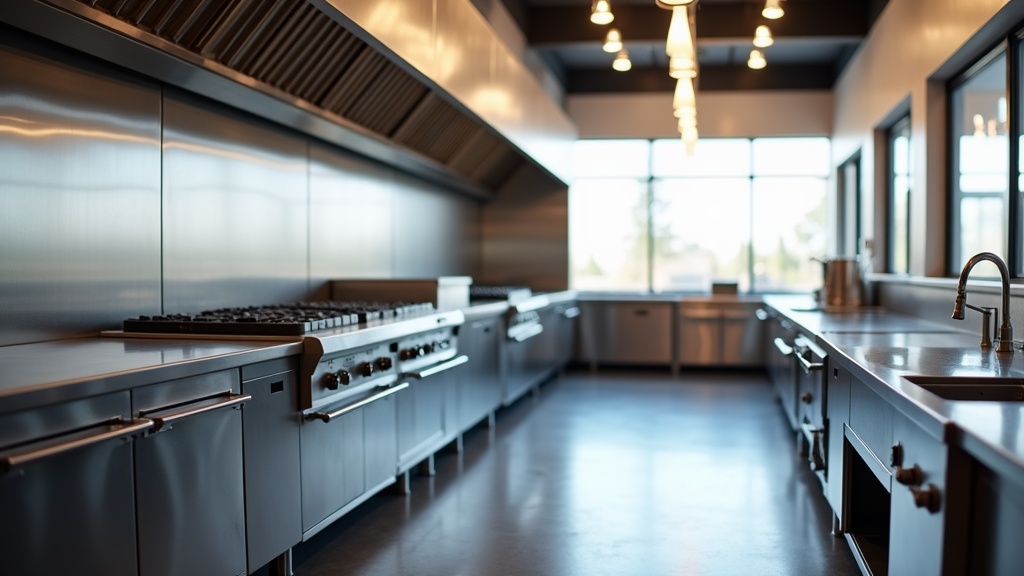
The Treasure Valley restaurant scene is on a serious growth run. More than 20 new restaurants are set to open across the Boise metro in 2026, including The Capital Grille and Culinary Dropout at The Village at Meridian's expansion, plus several national chains planting their first Idaho flag right here. That is exciting for the local food scene. But there is one thing most incoming operators will not discover until their first service call: Boise municipal water tests at 10 to 15 grains per gallon (gpg) of hardness, and Meridian groundwater runs even higher at 12 to 17 gpg. Without a commercial water softener in place from day one, scale buildup starts immediately on every piece of water-touching equipment in your kitchen.
We work with restaurants, cafes, hotels, and food service operations across the Treasure Valley every week. This guide covers what hard water actually does to commercial equipment, how softening systems work, what proper sizing looks like for a Boise or Meridian business, and what you can expect to spend versus save.
How Hard Is Boise's Water for Businesses?
The USGS hardness scale puts water into a few broad categories: 0 to 3 gpg is considered soft, 3 to 7 gpg is moderately hard, 7 to 10 gpg is hard, and anything above 10 gpg is classified as very hard. By that standard, Boise sits firmly in the "very hard" range at 10 to 15 gpg, and Meridian groundwater often pushes past that to 12 to 17 gpg depending on the specific well source and season.
About 70 percent of Treasure Valley water comes from the Snake River Plain Aquifer, one of the largest aquifer systems in the western United States. That groundwater picks up calcium and magnesium as it moves through the volcanic basalt and sediment layers below the valley floor. The City of Boise's water treatment process addresses iron, manganese, and microbial concerns, but it does not remove calcium or magnesium hardness. What comes out of your tap is essentially the same mineral-loaded water that came out of the ground.
For a homeowner running a few hundred gallons a week through cold water fixtures, this is mostly a nuisance issue. For a commercial kitchen running 200 to 600 gallons per day at elevated temperatures, it is a direct cost center. Heat is what turns dissolved minerals into solid scale deposits, and commercial kitchens apply heat constantly.
You can review Boise's most recent water quality data through the Idaho Department of Environmental Quality, which publishes annual consumer confidence reports for municipal systems across the state.
What Hard Water Does to Commercial Kitchen Equipment
Scale forms wherever heated water contacts metal surfaces. In a residential setting, that means a slightly less efficient water heater and some spotting on dishes. In a commercial kitchen, the same chemistry plays out across six or eight different categories of equipment, all running simultaneously, all day long.
Here is what we see most often when we test water at Treasure Valley food service operations:
- Dishwashers: Scale builds on heating elements, reducing efficiency by up to 40 percent over time. Repair bills for heating element replacement typically run $350 to $800, and that does not count labor downtime during a shift.
- Ice machines: Mineral deposits clog water lines and form on evaporator plates, reducing ice production and forcing more frequent descaling service. A single descaling visit runs $150 to $400, and many operations schedule this quarterly whether they feel they need it or not.
- Steamers and combi-ovens: These are the most sensitive and most expensive pieces of equipment in a professional kitchen. Descaling service on a combi-oven runs $300 to $600 per visit, and neglecting it voids most manufacturer warranties.
- Coffee and espresso equipment: Hard water shortens heating element life significantly. Specialty coffee shops in Boise running high-end espresso machines are essentially making a case for softening the moment they sign their lease.
- Commercial water heaters: The U.S. Department of Energy has documented that scale buildup reduces water heater efficiency by up to 22 percent. For a restaurant running a gas or electric water heater at full capacity, that is a measurable line item on your utility bill every single month.
When we add it up across a mid-sized restaurant without any water treatment, scale-related repairs, equipment replacements, and efficiency losses typically total $2,000 to $4,000 per year. That number tends to surprise owners who have never thought about water quality as a maintenance category.
How Commercial Water Softeners Work
The core process in any water softener is called ion exchange. Hard water passes through a tank filled with resin beads that carry a negative charge. Calcium and magnesium ions, which are positively charged, bind to those beads and get pulled out of the water. Sodium ions take their place and flow through with the treated water. The water that reaches your equipment has the same volume and the same general mineral content, but the calcium and magnesium that cause scale have been swapped out.
A commercial softener has three main components: the mineral or resin tank where the ion exchange happens, the brine tank that holds salt solution used to regenerate the resin, and the control valve that manages when and how the system regenerates. For residential units, regeneration often runs on a timer. Commercial units almost always use meter-based regeneration, which means the system regenerates based on actual water usage rather than a fixed schedule. That matters for restaurants where Tuesday lunch looks nothing like Saturday dinner service.
High-volume operations benefit from dual-tank systems, where two resin tanks alternate. While one regenerates, the other stays in service. This ensures your kitchen never gets untreated water during peak hours, which is exactly when you cannot afford equipment problems.
Salt consumption for a busy restaurant runs approximately 40 to 80 pounds per week, depending on water usage volume and hardness. At current salt prices in the Boise area, that works out to roughly $40 to $120 per month in operating cost.
Sizing a Commercial Water Softener for Your Boise Business
Getting the sizing right is where a lot of businesses run into problems when they try to handle this without professional input. An undersized system regenerates constantly, wastes salt, and often cannot keep up with peak demand. An oversized system wastes capital upfront. The math itself is straightforward; the tricky part is accurately estimating daily water consumption for your specific operation.
The basic formula: daily gallons used multiplied by water hardness in gpg equals daily grain removal required. For a Meridian restaurant using 500 gallons per day with 15 gpg hardness, that is 7,500 grains per day. You then size the softener's capacity to handle several days of use between regeneration cycles, because frequent regeneration is hard on equipment and burns through salt faster.
General sizing guidelines for Treasure Valley food service:
- Small cafe or coffee shop (under 150 gallons/day): 30,000 to 100,000 grain system
- Mid-size restaurant (150 to 400 gallons/day): 100,000 to 200,000 grain system
- High-volume restaurant, hotel, or multi-unit operation (400+ gallons/day): 200,000 grains or greater, likely dual-tank configuration
Always size for your busiest day, not your average. A system that handles Tuesday fine but falls behind on a busy Friday dinner service is not properly sized. We always do a full water test and usage audit before recommending a specific unit, because every building's plumbing configuration and usage pattern is a little different. You can read more about how we approach commercial assessments on our free water testing page.
Cost and ROI of Commercial Water Softening in Boise
Commercial water softener pricing varies significantly based on capacity, brand, and installation complexity. Here is a realistic breakdown for Boise and Meridian businesses:
- Entry-level single-tank system (small cafe, light commercial): $1,500 to $3,000 installed
- Mid-range single-tank (standard restaurant or office building): $3,000 to $8,000 installed
- High-capacity dual-tank (high-volume restaurant, hotel, food production): $8,000 to $15,000 or more installed
Ongoing costs after installation include salt at $40 to $120 per month and an annual service contract, which typically runs $600 to $1,200 per year and covers inspections, resin cleaning, and minor adjustments.
On the return side, most Boise restaurants see full payback within two to four years when accounting for equipment life extension, reduced repair frequency, lower energy costs from more efficient water heaters and dishwashers, and reduced chemical usage in cleaning. For new operators opening in one of the Meridian or Boise growth corridors, installing during buildout is significantly less expensive than retrofitting after opening, and it means you never deal with scale damage on brand-new equipment.
We offer free commercial water testing with no obligation. You get the data, you make the decision. If a softener makes financial sense for your operation, we will show you exactly why. If it does not, we will tell you that too. Learn more about how water softeners work on our site.
Practical Tips for Idaho Restaurants and Food Service Operators
A few things we have learned working with food service businesses across the Treasure Valley:
Central District Health inspections do flag scale buildup. While Idaho does not require water softeners by code, scale deposits on equipment surfaces are noted during inspections when they appear to affect sanitation or equipment function. It is not a primary violation, but it shows up in inspection notes, and operators have to address it. Starting with treated water is much simpler than scrubbing scale under inspection pressure.
Coffee and espresso shops need more than just softening. Softened water is close to ideal for espresso, but a carbon post-filter is usually recommended to strip any residual sodium and ensure a clean, neutral water profile. The specialty coffee community has done a lot of research on water chemistry and extraction, and the short version is: soft water with a carbon polish produces better shots and extends machine life significantly.
New construction is the right time to install. If you are building out a new restaurant space in Boise, Eagle, Meridian, or anywhere else in the Treasure Valley, rough-in the softener during construction. Installation is faster, less disruptive, and less expensive when plumbing is still accessible. Waiting until after opening means scheduling during off-hours and often cutting into finished walls.
Already open and unsure where to start? Call us for a free water test. We will measure hardness, iron, and total dissolved solids at your tap, show you what the numbers mean for your specific equipment, and give you a straight answer about whether treatment makes sense for your situation.
Frequently Asked Questions
How hard is the water in Boise for businesses?
Boise municipal water tests at 10 to 15 grains per gallon (gpg) of hardness, which the USGS classifies as very hard. Meridian groundwater typically runs 12 to 17 gpg depending on the source well and season. Both municipalities treat for iron, manganese, and bacteria, but neither removes calcium or magnesium hardness. For commercial kitchens and food service operations running high water volume at elevated temperatures, this level of hardness causes measurable scale buildup on equipment within months of opening.
Does my restaurant need a commercial-grade softener, or will a residential unit work?
Always commercial-grade for food service. Residential units are designed for 50 to 150 gallons per day and light duty cycles. A restaurant dishwasher alone can run 200 to 300 gallons per day, and that is before you count ice machines, steamers, hand sinks, prep sinks, and the water heater. Residential softeners will fail quickly under that load, and they are not rated for continuous commercial use. Commercial systems are built for higher flow rates, longer duty cycles, meter-based regeneration that handles variable demand, and easier serviceability.
Will a water softener affect the taste of my food or beverages?
For most food and beverage applications, softened water is neutral to slightly positive on taste. The calcium and magnesium removed by the softener do not contribute desirable flavor in cooking or most beverage applications. For espresso and specialty coffee specifically, softened water is close to the ideal mineral profile, though most specialty coffee shops also add a carbon post-filter to ensure the sodium introduced during ion exchange does not affect extraction. For cooking, drinking water, and ice, the difference in taste is generally not noticeable, and the absence of scale on equipment is a clear benefit.
How much salt does a commercial softener use?
A busy restaurant in Boise or Meridian typically uses 40 to 80 pounds of salt per week, depending on daily water volume and local hardness. At current salt prices in the Treasure Valley, that works out to approximately $40 to $120 per month in operating cost. Salt usage is directly tied to how much water the system treats and how hard that water is. Meter-based regeneration, which we recommend for all commercial installs, minimizes unnecessary salt use by only regenerating when the resin is actually exhausted rather than on a fixed timer.
Is a commercial water softener required by Idaho health code?
No, Idaho health code does not require restaurants or food service operations to install a water softener. However, Central District Health inspectors do note scale buildup on equipment when it appears to affect sanitation or equipment condition. Scale deposits inside dishwashers, on steam table components, or in ice machine interiors can trigger corrective action items during inspections. Preventing scale through water treatment is significantly less stressful than addressing inspection findings after the fact, especially during a busy season. It is not a legal requirement, but it is a practical one for anyone planning to operate long-term.
Free Commercial Water Test for Boise Businesses
We will test your water hardness, iron, and TDS levels at no cost. No pressure, just data you can use to protect your investment.