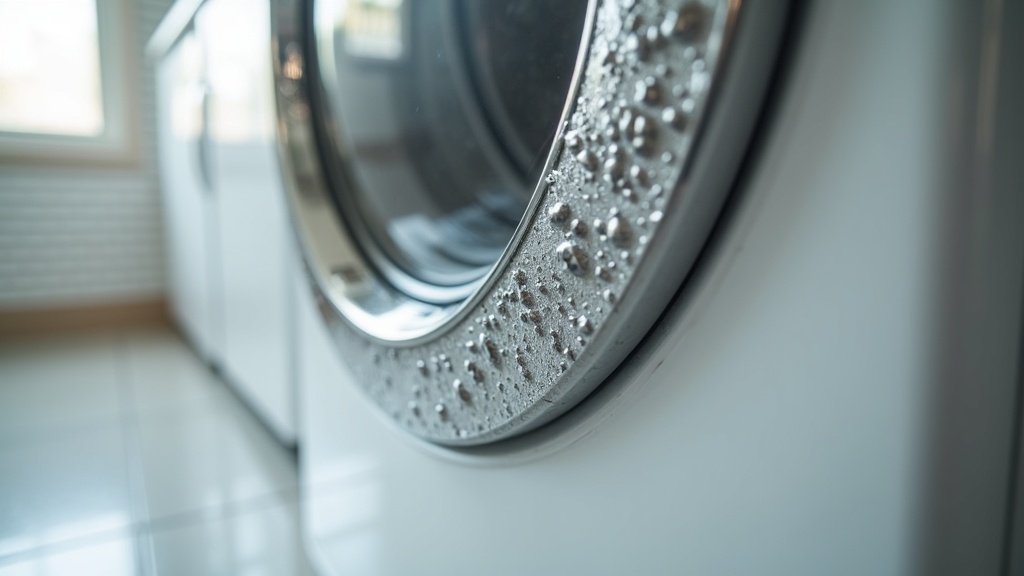
A washing machine running on untreated hard water lasts just 7.7 years, compared to 11 years on softened water. That is a 30% reduction in lifespan, and it translates directly to hundreds of dollars in premature replacement costs. For Treasure Valley homeowners in Meridian, Boise, Eagle, and Nampa, this is not a hypothetical. Our water tests between 10 and 17 grains per gallon, well above the national average of 7 to 8 gpg, and 2026 is making things worse. Idaho's April 2026 drought emergency, driven by the worst snowpack in 131 years, is reducing natural dilution and pushing mineral concentrations even higher than usual. If you have noticed your clothes coming out stiff, your machine draining slowly, or a persistent musty smell in the drum, hard water is almost certainly the reason. Here is what is actually happening inside your appliance, what it will cost you if you ignore it, and what actually works for Treasure Valley water conditions.
Why Idaho's Water Is Hard on Washing Machines (The Local Reality)
Meridian water regularly tests between 12 and 17 grains per gallon. Boise ranges from 10 to 15 gpg. The national average sits at 7 to 8 gpg. That means Treasure Valley households are running washing machines on water that carries roughly double the mineral load of most American homes. Calcium and magnesium are the primary culprits, and they come from the Snake River Plain aquifer system that supplies much of the region.
In 2026, that baseline hardness is climbing. Idaho's drought emergency, declared in April following the worst snowpack on record in 131 years, means less snowmelt is diluting surface water and aquifer recharge is slower. Both Ada County and Canyon County have been classified as abnormally dry. Less dilution means the same minerals concentrate into a smaller volume of water. Every gallon coming out of your tap carries more calcium and magnesium than it did two or three years ago.
We also see this play out when new homeowners arrive from California or the Pacific Northwest. They move into a Meridian new-build or a Boise craftsman expecting the same soft or mildly hard water they had before, run the same detergent amount, wash the same way, and within six months they are calling us wondering why their clothes look gray and their machine smells. The water here is genuinely different, and appliances pay the price when homeowners do not adjust for it quickly.
What Hard Water Actually Does Inside Your Washing Machine
The damage is not dramatic at first. It is slow and cumulative, happening inside components you cannot see, which is exactly why so many Treasure Valley homeowners do not catch it until the machine fails or they get an expensive repair quote.
The first problem is chemical. Calcium and magnesium ions react with the surfactants in laundry detergent to form insoluble metallic soap compounds. Instead of lifting soil away from fabric, your detergent gets neutralized by minerals and leaves a waxy residue on clothes. That residue is why laundry feels scratchy and looks dingy even after a full wash cycle with a full detergent dose.
The second problem is thermal. Heating elements in washing machines accumulate limescale, the same hard white mineral crust you see on faucets. Scale is a poor conductor of heat. A study by the Water Quality Association and Battelle Memorial Institute found that scale buildup reduces heating element efficiency by up to 24%. Your machine works harder and uses more electricity to reach the same water temperature, and the element itself degrades faster under that sustained thermal stress.
Inlet valves, pumps, and drain hoses are not immune either. Mineral deposits coat the interior surfaces of these components over time, narrowing passages and straining the motor and pump bearings. Rubber door seals absorb mineral-laced water with every cycle. The minerals accelerate rubber degradation, causing cracks that lead to leaks and mold. Residual detergent combined with mineral deposits creates a gray biofilm on interior surfaces, which is the source of the musty odor that hot water cycles alone cannot fully eliminate. We see this constantly in homes across Meridian and South Boise.
The Warning Signs Your Machine Is Already Taking Damage
The signs are usually there well before the repair calls start. Most homeowners in Boise and Meridian have seen at least a few of these and assumed it was a detergent issue or just normal wear.
- White or gray chalky deposits on the rubber door gasket, inside the detergent drawer, or visible on the drum interior
- Laundry that comes out stiff or scratchy to the touch, even after using fabric softener
- Whites turning dull gray after repeated washing
- A persistent musty or sour smell on laundry even after running a hot clean cycle
- The machine takes noticeably longer to fill than it used to
- Drain cycles running slow or the machine pausing mid-cycle
- The detergent drawer clogged with a paste-like residue that requires scrubbing to remove
- Error codes related to water flow, drainage, or temperature that were not appearing a year ago
Any one of these on its own might be dismissed. Seeing three or more together is a reliable signal that hard water has been accumulating inside your machine for long enough to affect performance. At that point the question is not whether damage has occurred; it is how much and how quickly you want to stop the progression.
The Real Cost of Hard Water on Your Washing Machine Budget
The lifespan numbers from the WQA Battelle study are the starting point: 7.7 years on untreated hard water versus 11 years on softened water. A mid-range front-load washer in 2026 costs $800 to $1,400 installed. Replacing a machine 3.3 years early costs you roughly $250 to $450 per year in accelerated depreciation alone.
Then there is the energy penalty. If scale on your heating element is cutting thermal efficiency by up to 24%, you are paying meaningfully more per cycle in electricity costs across a decade of laundry loads. Idaho Power rates have climbed in recent years, and the compounding effect of 24% more energy per cycle adds up quickly for a family running eight to ten loads per week.
Detergent is the third cost that flies under the radar. Hard water at 12 to 17 gpg requires 50 to 100% more detergent to achieve the same cleaning result as softened water. If you are spending $30 per month on detergent, hard water may be doubling that cost to $50 to $60 monthly, every month, year after year.
Repair calls for scale-related pump and valve failures in the Meridian and Boise area run $150 to $400 per visit before parts. We talk to homeowners regularly who have made two or three of these calls on a machine that is only six or seven years old, not realizing the underlying cause is the water itself.
Add it up across a shortened machine life: extra detergent, higher energy bills, repair calls, and early replacement. Treasure Valley homeowners who skip water treatment routinely spend $1,500 to $3,000 or more over the life of a single washing machine compared to what they would spend with a whole-house softener in place. For more context on how hard water affects your other appliances, see our breakdown of hard water appliance damage costs across water heaters, dishwashers, and fixtures.
Hard Water and Your Laundry: What It Does to Clothes
The machine is not the only thing suffering. The clothes going through it are accumulating mineral deposits wash after wash, and the damage becomes visible faster than most people expect at Idaho hardness levels.
Calcium and magnesium ions bond to fabric fibers during the wash cycle. Over time, this mineral buildup stiffens the fibers and degrades the texture. Towels that used to feel soft and absorbent become rough and scratchy. Cotton T-shirts and sheets lose their softness within a few months. The problem is mechanical at the fiber level, not just surface residue.
Whites turn gray because neutralized detergent leaves mineral scale in the fabric weave, trapping soil instead of releasing it into the wash water. The result is fabric that looks perpetually dingy no matter how much detergent you use or how hot the water is. Colors fade faster for the same reason: detergent residue left in fabric attracts dirt between washes, dulling the appearance cycle after cycle.
Dark activewear and black fabrics show hard water damage the fastest. At Meridian's 15 gpg, black leggings, athletic shorts, and dark denim can develop a visible white mineral blush after 20 to 30 washes. Children's clothing and athletic gear are often the first places families notice the problem because those items get washed most frequently at higher temperatures.
Why Most Online Advice Doesn't Work for Idaho Homes
Search "washing machine hard water" and you will find the same advice repeated everywhere: run a monthly citric acid cycle, use descaler tablets, and cut back on detergent. That advice is calibrated for the national average of 7 to 8 gpg. It does not translate to Meridian at 15 gpg or Canyon County well water pushing 17 gpg.
Monthly citric acid cycles are a cosmetic fix. They dissolve the scale you can see on the drum and the gasket. They do not reach the scale coating your inlet valve, your pump housing, your drain hose interior, or the heating element buried inside the machine body. The deposits you can reach are not the ones destroying your appliance.
Descaler tablets have the same limitation. They treat symptoms rather than source. At Meridian's hardness levels, you would need to run a descaling cycle every two to three weeks just to keep pace with mineral accumulation, and you would still not be reaching the interior components that matter most.
The "use less detergent" advice is genuinely backwards for hard water. Detergent that cannot lather because it has been neutralized by calcium and magnesium simply does not clean. Reducing the dose compounds the problem. The right answer at Idaho hardness levels is to remove the minerals from the water before they enter the machine, not to adjust habits around water quality that is working against you from the start.
Solutions That Actually Work for Treasure Valley Homes
The only solution that addresses the root cause is removing calcium and magnesium before they enter your appliances. A whole-house water softener does exactly that; it conditions every gallon that flows through your home, so your washing machine, water heater, dishwasher, and fixtures all run on treated water.
For 12 to 17 gpg hardness levels, salt-based ion exchange is the gold standard. Salt-free conditioners and template-assisted crystallization systems perform adequately in the 7 to 10 gpg range that most of the country deals with. At Idaho's mineral concentrations, they underperform. We have tested both in Treasure Valley homes, and the difference in scale prevention at our local hardness levels is meaningful. If someone is recommending a salt-free system as equivalent for Meridian or Eagle water, they are either not familiar with our local conditions or they are not giving you the full picture.
While you are evaluating a softener, a few interim steps slow the damage. Run a monthly hot water cycle with two cups of white vinegar to dissolve surface scale in the drum. Leave the door ajar between cycles to let the interior dry out and slow biofilm growth. Clean the rubber door gasket weekly with a damp cloth, paying attention to the folds where mineral deposits and mold accumulate. For new construction in Meridian, Kuna, or Nampa, installing a softener before you run your first load of laundry is the cleanest approach; you protect appliances from day one and never deal with buildup at all.
If you want to know exactly what your water contains before deciding on a treatment system, we offer a free water test for Treasure Valley homeowners. It takes about 15 minutes and gives you exact hardness numbers, iron levels, and pH so you can make an informed decision rather than guessing. You can also review common questions about system options in our water softener FAQ.
When to Call a Professional
Some situations warrant a call before you get to the softener installation conversation. Orange or brown streaking inside the drum is one of them. That color indicates iron contamination on top of calcium and magnesium hardness, which is common in Canyon County homes on well water. Standard softening handles calcium and magnesium effectively, but iron at higher concentrations often requires an additional filtration step. If you are seeing rust-colored staining in your drum, on your laundry, or on your fixtures, let us test your water before you invest in any treatment system.
Repair quotes over $400 on a machine under eight years old are another trigger. Before you approve that repair, factor in the water conditions driving the failure. Replacing a pump or valve on a machine that will continue running on untreated 15 gpg water means the same failure likely recurs within two to three years. That context matters when you are deciding between repair, replacement, and treatment.
Drum biofilm and persistent mold from mineral deposits sometimes require professional cleaning before a new softener fully resolves the odor problem. The mineral scale that has built up over years of hard water creates surface texture where mold and bacteria anchor. Softening the water stops new deposits but does not remove existing buildup. If the musty smell persists after you have started treatment, a professional appliance cleaning is the right next step.
And for homeowners who moved here from the Pacific Northwest or California in the last two to three years: the habits and assumptions you built around soft or mildly hard water do not translate to Treasure Valley conditions. The water here is genuinely harder, and it has a measurable effect on how appliances perform and how long they last. Getting a water test is the fastest way to understand what you are actually dealing with in your specific home.
Frequently Asked Questions
How does hard water damage a washing machine?
Hard water contains elevated levels of calcium and magnesium that accumulate inside your washing machine over time. These minerals neutralize laundry detergent, coat heating elements with insulating scale, narrow inlet valves and pump passages, degrade rubber door seals, and contribute to biofilm buildup in the drum. The result is reduced thermal efficiency, slower fill and drain cycles, increased motor and pump strain, and a shortened overall lifespan for the appliance.
How long do washing machines last with hard water vs. soft water?
According to the WQA Battelle Memorial Institute study, washing machines running on untreated hard water lasted an average of 7.7 years. The same machines on softened water lasted 11 years, a difference of 3.3 years or roughly 30% of the machine's expected lifespan. For Treasure Valley homeowners at 12 to 17 gpg, that shortened lifespan means paying for a replacement machine years earlier than necessary.
What are the signs hard water is damaging my washing machine?
The most common signs are white or gray chalky deposits on the rubber door gasket and inside the detergent drawer, laundry that feels stiff or looks dull after washing, a persistent musty odor on clothes even after hot cycles, slower fill or drain times than the machine used to have, a detergent drawer that requires scrubbing to clear paste-like buildup, and water flow or drainage error codes that were not previously appearing. Seeing three or more of these together is a reliable indicator that hard water has been accumulating inside the machine long enough to cause real damage.
Does using more detergent help in hard water?
More detergent helps to a point, but it does not solve the underlying problem. Calcium and magnesium ions react with detergent surfactants and neutralize them before they can clean fabric. At Meridian's 12 to 17 gpg, hard water can require 50 to 100% more detergent than the recommended dose just to achieve baseline cleaning, and excess detergent that fails to rinse fully leaves its own residue in fabric. The real fix is removing the minerals from the water before they reach your machine, not adjusting how much detergent you use around them.
Is a water softener worth it for laundry in the Treasure Valley?
For most Treasure Valley households, yes. The combined savings on detergent (often 50% less), energy (up to 24% per cycle), avoided repair calls ($150 to $400 each), and extended appliance lifespan typically add up to $1,500 to $3,000 or more over the life of a single washing machine. At 12 to 17 gpg, the math favors treatment over absorbing the ongoing costs of untreated water. A free water test from TrueWater Idaho gives you exact hardness numbers for your specific home so you can calculate the actual return for your situation.
Find Out What's in Your Water, Free
If you are seeing any of the signs above in your Boise, Meridian, Eagle, or Nampa home, the first step is knowing exactly what your water contains. We offer a free water test for Treasure Valley homeowners that gives you precise hardness, iron, and pH readings so you are working with real numbers, not guesses.
Call us at (208) 968-2771 to schedule your free test or ask any questions about water treatment options for your home. We work exclusively in the Treasure Valley and we know the local water conditions in Ada and Canyon Counties. There is no pressure and no obligation.
(208) 968-2771 - Free Water Test