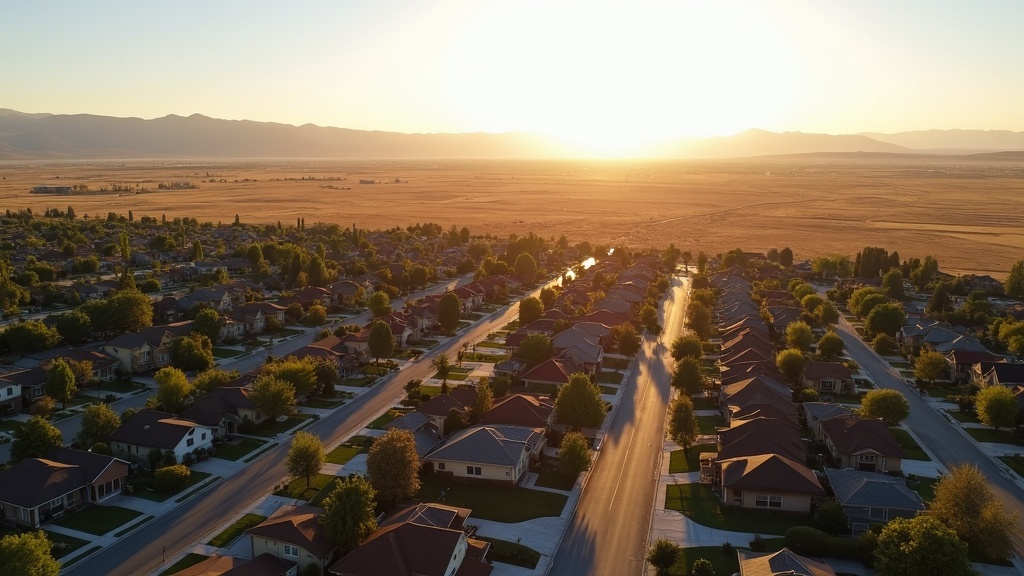
Summer 2026 Water Restrictions in Boise and Meridian
Idaho's 2026 drought emergency arrived earlier and hit harder than most Treasure Valley homeowners expected. Governor Brad Little declared a statewide drought emergency on April 13, 2026, covering all 44 counties through December 31, following the second-warmest winter since 1896 and record-low snowpack across the state. By late April, Boise had already activated Stage 2 water restrictions, two full months ahead of schedule, and Meridian moved to Stage 1 voluntary rules shortly after.
If you are watering your lawn in Boise or Meridian this summer and you are not sure which rules apply to you, which days you are allowed to water, or what fines are on the table, this guide covers everything you need to know, including a detail that is confusing a lot of homeowners: not every Boise property is on the same water system.
What Triggered Stage 2 So Early in Boise
Boise's water restrictions are tied to Boise River flow rates. Stage 2 activates when flows drop below 1,500 cubic feet per second. This spring, the river dropped below 1,200 cfs, well past that threshold, because the mountains that normally hold snowpack into June were bare by March. IDWR hydrologist David Hoekema described it plainly: "This year's very extraordinary. We've never seen anything quite like this."
Veolia Water Idaho, which serves the majority of metered Boise customers, coordinated with Boise Public Works to activate Stage 2 jointly. The result is a mandatory odd/even watering schedule with real financial consequences for violations. As of June 2026, approximately 57.7% of Idaho is in severe-to-exceptional drought (D2 through D4), according to the National Drought Monitor, and there is no meaningful rain in the long-range forecast.
The practical takeaway for Boise homeowners: this is not a typical summer advisory. Stage 2 is enforced by Veolia's AMI smart-meter network, which can flag off-schedule irrigation consumption automatically without a complaint from a neighbor. Violations are tracked and fines escalate quickly.
Boise Stage 2 Rules: What You Can and Cannot Do
If your Boise home is on a Veolia metered water connection, here are the current Stage 2 rules as of summer 2026:
- Odd addresses (street numbers ending in 1, 3, 5, 7, or 9): water on Monday only.
- Even addresses (street numbers ending in 0, 2, 4, 6, or 8): water on Tuesday only.
- No irrigation between 10 AM and 6 PM from June 1 through September 30, regardless of address.
- Allowed any day: drip irrigation systems (no time restriction) and hand watering with a shut-off nozzle (outside the 10 AM to 6 PM window).
Fines start with a written warning, then move to $100, $250, and $500 or more for repeat violations. Commercial accounts and HOAs can face fines up to $1,000. One small piece of good news: Boise's Water Wise program is offering up to $100 in rebates for WaterSense-certified smart irrigation controllers, which can help you stay on schedule automatically.
The drip irrigation exemption is worth knowing. Drip lines, soaker hoses, and subsurface irrigation for garden beds are not subject to the day restrictions. If you have been thinking about converting your vegetable garden or flower beds to drip, this summer is a practical time to do it. Studies consistently show drip systems use 30% less water than overhead sprinklers for the same plant coverage.
The Boise Pressure Irrigation Exception (This Is Where the Confusion Is)
Here is the detail that is causing the most confusion in neighborhoods across Boise: many subdivisions in Boise are served by a separate pressure irrigation system fed by the New York Canal, not by Veolia metered water. If your outdoor irrigation comes from that system, you are billed separately for it, and the Veolia Stage 2 fines do not apply to your lawn watering.
How do you know which system you are on? The simplest check is your water bill. If you receive a separate irrigation bill (often from a homeowners association or an irrigation district rather than from Veolia directly), you are likely on the pressure irrigation system. If your lawn watering runs through your standard Veolia meter, Stage 2 applies to you.
This does not mean pressure irrigation customers are completely off the hook. Canal water allocations are also affected by low snowpack, and some irrigation districts have begun their own advisory restrictions. Check with your HOA or district if you are unsure. But the Stage 2 fine structure is specifically a Veolia metered system enforcement, and applying it to pressure irrigation customers is a mistake we have seen cause unnecessary stress for homeowners in parts of the Boise Bench and southwest Boise.
Meridian's Stage 1 Rules and What Stage 2 Would Look Like
Meridian operates on a completely separate water system from Boise. The City of Meridian Water Division and the Meridian Service Metropolitan District both draw from groundwater rather than surface water from the Boise River. That means Meridian's drought triggers are different, and its current restrictions are less severe, though still binding under Stage 1 as of April 2026.
Current Meridian Stage 1 rules:
- Odd addresses: water on Monday, Wednesday, and Saturday.
- Even addresses: water on Sunday, Tuesday, and Thursday.
- No watering on Friday for any address.
- No watering between 10 AM and 6 PM on any day.
- Fines: written warning, then $100, then $200 for continued violations.
If Meridian escalates to Stage 2, the schedule tightens significantly: watering would be limited to Sunday and Wednesday only for all customers, with service suspension on the table for chronic violations. Stage 3 and Stage 4 would eliminate outdoor watering entirely and carry $500 fines. The city monitors aquifer levels continuously, and Stage 2 is not automatic, but it is worth understanding before the summer peaks.
For current Meridian restriction status, the Meridian Service Metropolitan District posts updates at meridianservice.org/water-restrictions.
How the 2026 Drought Is Changing Your Water Hardness Right Now
This is a connection most homeowners do not think about, but it matters for your appliances, your water heater, and your plumbing. During normal years, Boise's municipal water supply is roughly 60% surface water from the Boise River and Lucky Peak Reservoir, blended with about 40% groundwater from Veolia's 83 wells. Surface water is generally softer.
This summer, because the river is running low, Veolia is drawing more heavily on groundwater. Groundwater in the Eastern Snake River Plain moves through basalt geology that is rich in calcium and magnesium, the minerals that cause hardness. The result is that Boise tap water, which typically runs 10 to 13 grains per gallon (gpg), may be running at the higher end of that range or slightly above it in 2026.
Meridian's water is already all groundwater at 7 to 8.4 gpg under normal conditions, so the shift is less dramatic, but hardness levels still fluctuate seasonally and with aquifer drawdown. We have written more about Meridian water hardness levels and what those numbers mean for your home.
Practically, harder water means more scale buildup in your water heater, dishwasher, and washing machine. It means your sprinkler heads can clog faster from mineral deposits. If you have a water softener, the settings you used last summer may not be calibrated for this year's readings. The most accurate way to know what you are dealing with is a current water test, not last year's numbers.
For more detail on how the drought is affecting tap water chemistry across the Treasure Valley, see our article on how the 2026 Idaho drought is affecting tap water quality.
Practical Steps to Protect Your Lawn, Garden, and Home This Summer
Staying inside the rules while keeping your yard alive takes some planning, but it is manageable. Here is what we recommend for Treasure Valley homeowners this summer:
- Set your irrigation controller to your designated day and time window. Program it to finish before 10 AM. If you have a smart controller, it will adjust for rain automatically, which is exactly what the WaterSense rebate is designed to encourage.
- Convert garden beds to drip irrigation. Drip is exempt from the day restrictions under Boise Stage 2, uses less water, and keeps root zones more consistently moist. This is the highest-leverage change you can make right now.
- Raise your mow height to 3.5 inches. Taller grass shades the soil, reduces evaporation, and stays healthier between watering days with less stress.
- Apply for the Boise Water Wise rebate. Up to $100 toward a WaterSense-certified smart controller is available through Boise's conservation program. Do not leave that money on the table.
- Check your water softener settings. If you have one, consider testing your current water hardness and adjusting the regeneration cycle to match this summer's conditions rather than relying on last year's settings.
- Get a water test before making any treatment decisions. Drought-year readings can differ meaningfully from what you have seen before. Know your actual numbers.
The IDWR drought declaration page at idwr.idaho.gov and the National Drought Monitor at drought.gov both have current conditions if you want to track how things evolve through the summer.
Get a Free Water Test This Summer
Drought conditions mean your 2026 water hardness readings may be different from past years. A free TrueWater test shows exactly what is in your water right now, so you can protect your appliances and plumbing through the summer season.