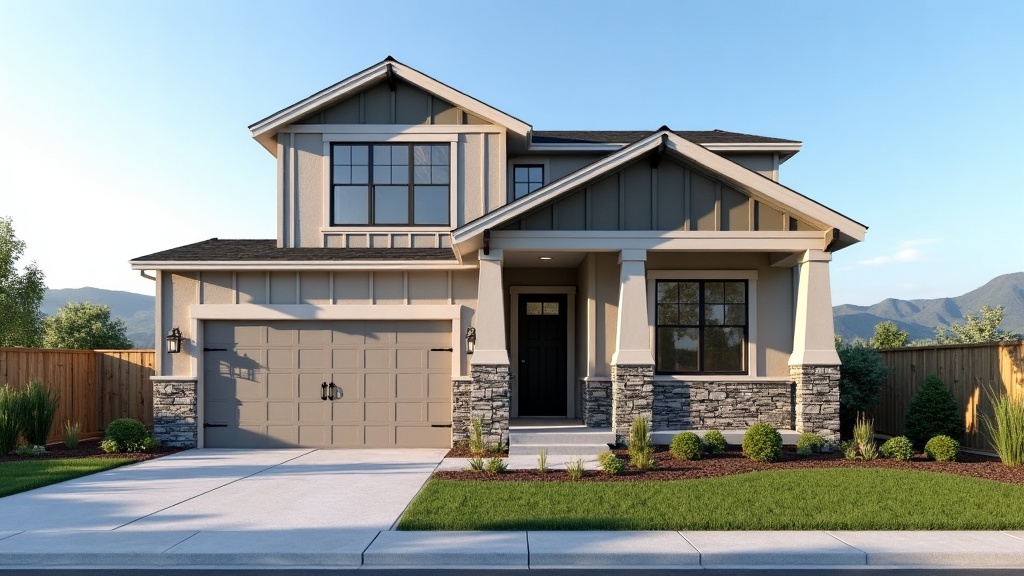
If you just moved into a brand-new home in Meridian, Eagle, or anywhere in the Treasure Valley, you probably assumed the water situation would take care of itself. New pipes. New fixtures. New appliances. Everything fresh from the builder. But here is what most Boise-area homebuilders do not mention at closing: your water hardness has nothing to do with how old your home is. Treasure Valley groundwater registers 10 to 17 grains per gallon (gpg) of hardness regardless of when your neighborhood was built, and with the City of Boise's Drought Emergency Ordinance now in effect, conditions are pushing hardness even higher this summer.
At TrueWater Idaho, we talk to new construction buyers every week who are surprised by this. The surprise is understandable. It is also completely preventable, and this article explains exactly why it happens and what you can do about it.
Why "New Home" Does Not Mean "Better Water"
The most common misconception we hear from new construction buyers: "We figured the water would be better since everything is new." It is an understandable assumption, but it misses how hard water actually works.
Water hardness is determined by the mineral composition of your water source, not the condition of your pipes or fixtures. In the Treasure Valley, that source is overwhelmingly the Eastern Snake River Plain Aquifer system and a network of deep basalt wells, all of which carry naturally high concentrations of calcium and magnesium dissolved from volcanic rock. Boise city water typically measures 10 to 15 gpg. Meridian runs 12 to 17 gpg. Eagle and Star fall in a similar range. The USGS classifies water above 7 gpg as "hard", which means the entire Treasure Valley qualifies by a wide margin.
New copper or PEX pipes do not filter these minerals, do not absorb them, and do not change the water chemistry in any way. Your new home connects to the same municipal supply that has been running hard water through Treasure Valley neighborhoods for decades. The minerals are in the source. The pipes just carry them in.
The 2026 Drought Is Compounding the Problem for New Homes
There is a timing issue that makes 2026 especially challenging for new homebuyers. The City of Boise adopted a Drought Emergency Ordinance this summer in response to near-record dry conditions, with snowpack falling to roughly one-third of normal in the Boise Basin. As Stage 2 water conservation was activated months earlier than usual, Boise's utility has drawn more heavily on its network of over 80 basalt groundwater wells.
More groundwater use and longer contact time with mineral-rich volcanic rock means higher calcium and magnesium concentrations in the finished water supply. The ordinance itself acknowledges that "severe or prolonged drought may cause significant impacts to quality and quantity of water for human consumption." In practical terms: Treasure Valley water is harder in 2026 than it was during wetter years. New construction homes being occupied right now are meeting the hardest water in recent memory on their very first day of use.
For existing homeowners, a drought-driven hardness increase is notable but gradual. For a brand-new dishwasher or water heater encountering untreated hard water from Day 1, the clock on scale accumulation starts running at the worst possible moment.
Your New Pipes Do Nothing for Hard Water
To be precise: municipal water treatment in Boise, Meridian, and Eagle removes bacteria, viruses, chlorination byproducts, and regulated health contaminants. It does not remove calcium or magnesium, because these minerals are not classified as health risks at the concentrations found in the Treasure Valley. They pass through treatment, through the main distribution lines, through your new service connection, and into your home at the same hardness level that left the aquifer.
New PEX tubing has no existing scale buildup, which creates a brief visual reprieve: your water heater looks clean and your showerhead flows perfectly in year one. But calcium and magnesium begin depositing on any surface where heated water contacts pipe walls, tank interiors, or heating elements. By year two, the heating element in a builder-grade water heater running 15 gpg water is developing a coating. By year five, that coating measurably reduces efficiency. When you eventually call for warranty service, you will run into the gap described below.
Builder-Grade Appliances and the Hard Water Trap
Most new construction homes in the Treasure Valley, including subdivisions by CBH Homes, Hubble Homes, Brighton Homes, and Hayden Homes, ship with economy-tier appliances selected to minimize per-unit cost. These appliances are not engineered for performance in hard water conditions. They carry standard heating elements, no descaling cycles, and no manufacturer-level protection against mineral scale damage.
A standard tank water heater in a Meridian home running 17 gpg water will not last its rated 10 to 12 year lifespan. Research from the Water Quality Association and appliance testing consistently shows that appliances exposed to hard water suffer 30 to 50 percent reductions in usable lifespan. At Meridian's hardness levels, a tank heater that should last 12 years may fail in 5 to 7, with energy efficiency declining sharply in the final years. We covered the full cost breakdown in our guide on water heater replacement costs in Idaho.
The same math applies across every water-using appliance in your home. The dishwasher begins leaving film on glassware within months. The ice maker develops restricted water lines within two to three years. The washing machine solenoid valves experience accelerated wear from mineral deposits. Each represents a repair or replacement expense that falls squarely outside your builder warranty, and outside most manufacturer warranties as well.
The Warranty Gap No One Warns You About
This is the detail that catches new homebuyers off guard most often. Builder warranties in Idaho cover structural defects in the home itself, not the performance of appliances. Those appliances come with separate manufacturer warranties, and those warranties almost universally exclude damage from scale buildup, poor water quality, or failure to meet the minimum water quality standards in the installation manual.
If your water heater heating element fails due to calcium scale accumulation, the manufacturer will typically deny the claim. If your dishwasher pump seizes from mineral deposits, the result is the same. We have seen this play out in Treasure Valley homes more than once: a homeowner in a three or four-year-old Meridian subdivision calls about a failed water heater still within its limited warranty period. The technician removes the heating element and finds it encased in calcium. The manufacturer denies the claim. The homeowner pays $800 to $1,200 out of pocket, for damage that a water softener installed at move-in would have prevented entirely.
The gap opened on closing day, and no one mentioned it at the walk-through.
What Hard Water Costs Over 10 Years in a New Treasure Valley Home
At Meridian's typical hardness of 12 to 17 gpg, a home without a water softener absorbs a measurable financial penalty across several categories. Scale buildup on water heater elements acts as thermal insulation, forcing the heater to run longer to reach temperature. Studies show that heating water through scale deposits uses approximately 29 percent more energy over the heater's life. Over a 20-year period, that energy penalty on a single water heater adds $2,500 to $4,000 in extra utility costs compared to a softened-water home.
Beyond the water heater, hard water requires significantly more cleaning product to achieve the same results, because mineral ions interfere with soap and detergent lathering. Specialty cleaning products for scale removal, extra dishwasher pods, and laundry additives for mineral-stiffened fabrics can add several hundred dollars per year to household expenses. The Water Quality Association estimates the total hard water cost on an average home in a hard water region runs well over $1,500 in energy costs alone over 10 years, before factoring in appliance replacement and repair.
A properly sized water softener system for a Treasure Valley home typically runs $2,500 to $4,500 installed. The return over 10 years, in protected appliances and reduced energy and cleaning costs, is straightforward math. For new construction buyers, the calculation is clearest at move-in, before any damage has accumulated.
What to Ask Before Closing (and What to Do After)
If you are still in the buying process, a few specific questions are worth raising before you sign. Ask what the water hardness level is in the subdivision. Expect an honest answer of 10 to 17 gpg in most Treasure Valley areas. Ask whether the home is pre-plumbed for a water softener. Many newer Treasure Valley builds include a bypass loop that makes softener installation significantly simpler and less expensive. Ask what the builder's warranty covers regarding appliance failure from water quality issues, and expect the answer to be nothing.
If you have already closed, the question is about timing. The sooner a softener is installed, the less scale has formed in your pipes, water heater, and appliances. A home that has been running untreated hard water for two years has already absorbed two years of scale accumulation. Getting a softener in now stops the clock on further damage immediately.
We also covered the specific questions worth raising if you purchased from CBH Homes or Hubble Homes in our earlier guides on CBH Homes water softener pre-install questions and Hubble Homes water quality questions.
Get a Free Water Test for Your New Home
We test homes throughout the Treasure Valley at no cost and with no sales pressure. You get precise hardness data, mineral analysis, and honest recommendations for your specific home. Takes about 30 minutes.