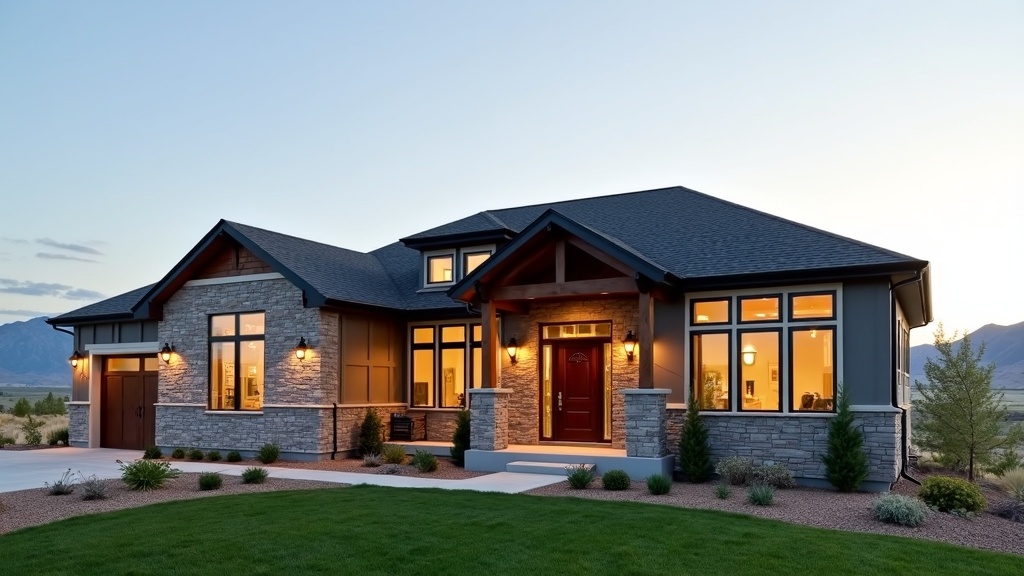
CBH Homes just crossed 29,000 homes built across Idaho, and right now they are breaking ground on a new headquarters in Caldwell. Across the Treasure Valley, new CBH communities are opening in Meridian, Eagle, Nampa, Star, Kuna, and beyond. Thousands of buyers are signing purchase agreements, touring design centers, and making selections on flooring, countertops, and appliances. Almost none of them are asking the one question that will cost them the most money after move-in: what about the water?
This summer, the question matters more than ever. The Boise City Council recently adopted a drought emergency ordinance as Idaho faces a dry summer, with demand on the public water system nearly tripling during peak months. As water stress increases across the region, the mineral concentration in municipal supply lines tends to hold steady or inch upward. In CBH communities throughout the Treasure Valley, that means buyers are moving into homes with water running at 10 to 17 grains per gallon of hardness. That is well into the "very hard" category, and it starts damaging appliances, fixtures, and finishes from day one.
We work with new construction buyers across Meridian, Eagle, Nampa, Star, Kuna, and Caldwell. The most common thing we hear: "I wish someone had told me to ask about this before I closed." This guide covers exactly what to ask CBH, what a proper pre-install includes, and how to protect your new home from the moment you turn on the water.
Why New CBH Homes Still Have Hard Water
One question we get often: does a brand-new home have better water than an older one? The answer is no. The hardness in your water has nothing to do with the age of your house. It comes from the Snake River Plain aquifer system beneath the Treasure Valley, where water picks up calcium and magnesium as it moves through limestone and mineral-rich rock formations over thousands of years.
CBH builds across multiple Treasure Valley cities, and hardness levels by area typically run like this:
- Meridian: 12 to 17 grains per gallon (gpg)
- Eagle: 10 to 16 gpg
- Star and Kuna: 10 to 15 gpg
- Nampa and Caldwell: 10 to 16 gpg
- Boise: 10 to 15 gpg
For reference, water is classified as "hard" at 7 gpg and "very hard" at 10.5 gpg and above. Most CBH communities sit firmly in the very hard range. A brand-new dishwasher, water heater, and washing machine running on 14 gpg water will accumulate scale at the same rate as a 15-year-old home on the same street. The pipes are different. The water is not.
What a Water Softener Pre-Install Actually Means
The phrase "water softener pre-install" gets used loosely in the home building industry, and it is worth knowing exactly what you are getting before you assume anything. A true pre-install is not an installed system. It is the groundwork that makes a future installation clean, code-compliant, and inexpensive. Here is what a complete pre-install should include:
Cold-Water Bypass Loop
This is the most important component. A bypass loop means your plumber has already cut a section into the main cold-water line and installed the inlet/outlet valves where the softener will connect. Without this, a technician has to cut into finished drywall after move-in to create the connection. That costs you an extra $300 to $600 in labor and means patching new walls in a new home.
Dedicated Drain Connection
A water softener needs a drain for its regeneration cycle, which runs automatically every few days. This should be a standpipe or a direct connection to a nearby drain line, typically in the utility or mechanical room. If there is no drain nearby, running one after the fact requires rerouting pipe through finished space.
Electrical Outlet
Modern water softeners run on a standard 110V outlet. You need one within a few feet of where the unit will sit. In most CBH utility rooms this is already present, but confirm it during your walkthrough. Some older spec configurations put the outlet on the wrong wall for a comfortable installation.
Adequate Floor Space
A standard residential softener system needs roughly 12 by 18 inches of floor space, plus clearance to access the brine tank for salt loading. Confirm your utility room layout accommodates this before the slab is poured or walls are framed, because repositioning plumbing or electrical after that point is costly.
The 5 Questions to Ask CBH Before You Sign Off
These questions should go to your CBH sales representative at or before your design center appointment. Changes are much easier to make before framing is complete. Once drywall is up, your options narrow and costs climb.
Question 1: Is a water softener bypass loop included in the standard build, or is it an upgrade? Some CBH floor plans in certain communities come with a utility room rough-in as standard. Others require you to request it as a line-item upgrade. Do not assume either way. Ask specifically whether the bypass loop and drain stub are included, and get confirmation in writing in your purchase agreement or change order.
Question 2: Where is the water softener location in the utility room, and what is the drain configuration? You want to walk through the utility room layout with your sales rep and identify exactly where the softener will sit, where the bypass connections will be, and where the drain exits. If the drain stub is more than 8 feet from the softener location, ask for a drain extension.
Question 3: Is the pre-install a stubbed loop or a full bypass assembly? A stubbed loop means the pipes are capped and ready to connect. A full bypass assembly means the inlet and outlet valves are already in place. The latter is more convenient and typically only costs a little more during construction. Ask which one you are getting.
Question 4: What is the water source for this development, and has recent testing been done? CBH builds in both established city water service areas and new development zones where water infrastructure is recently installed. New main lines can carry higher sediment loads or chloramine levels, especially in the first months of a subdivision opening. Ask whether recent water quality tests are available, and plan to do your own testing before move-in.
Question 5: Can I add a softener before my final walkthrough, or does CBH require it to happen after close? Some builders allow third-party contractors on site after framing but before drywall. Others require all work to happen post-close. Knowing this timeline tells you whether you can have a softener system installed and tested before the day you move in, which is the ideal scenario.
The Real Cost of Skipping the Pre-Install Question
Here is the math that most CBH buyers do not see until it is too late. During the build, adding a water softener rough-in typically costs $300 to $500 in added labor and materials. After you move in, a plumber needs to cut into existing drywall, reroute supply lines, and create a drain path. That retrofit labor adds $500 to $1,000 on top of the equipment cost, plus you are paying for drywall repair in a brand-new home.
The softener system itself runs $2,500 to $4,500 installed, regardless of whether you add it during or after construction. The rough-in just controls the labor premium. Skip the question during your build and you pay an extra $500 to $1,000 in avoidable costs.
Beyond the installation cost, there is the damage that accumulates while you wait. At 12 to 17 gpg, scale builds inside water heater tanks within the first six months of use. A tankless water heater operating on hard water can lose up to 25 percent efficiency within two years. New appliance warranties often include language excluding damage caused by scale buildup, meaning a hard water failure on a two-year-old dishwasher or washing machine may not be covered.
For more detail on what hard water does inside new construction homes, see our article on new construction water quality in Meridian.
What to Do If You Already Closed Without a Pre-Install
If you are already in your CBH home and did not get a pre-install during the build, you have not missed your window. A retrofit installation is more involved and costs a bit more in labor, but it is completely standard and the result is the same. Here is the process:
First, get your water tested. We offer free water testing throughout the Treasure Valley, and it takes about 20 minutes. This tells us exactly what hardness level you are dealing with, whether there is iron or manganese present (common in parts of Eagle and Nampa), and what size system your home needs. Sizing matters: a system built for a 2-bedroom home will not keep up with a 5-bedroom household, and an oversized system wastes salt on regeneration cycles.
Second, we assess your utility room for the best bypass location and drain routing. In most CBH homes, the configuration is straightforward. Third, we install and commission the system the same day, and you are on softened water immediately. The test to schedule free water testing in Idaho is your starting point.
The Drought Angle: Why This Matters More in Summer 2026
Boise's recently adopted drought emergency ordinance is a reminder that water in the Treasure Valley is a resource under pressure. The city has documented that demand on the public water system nearly triples during the hottest summer months, and this year's dry conditions have accelerated that pressure.
Water softeners, when properly sized and programmed, are actually part of the solution rather than part of the problem. Modern demand-initiated regeneration systems only regenerate when necessary, using 20 to 30 percent less water and salt than older timer-based systems. More importantly, soft water lets you use less detergent, less soap, and less water overall to get the same cleaning results. Appliances run more efficiently on soft water, extending their lifespan and reducing energy use. None of that eliminates the need to conserve, but it puts a properly installed water treatment system in a different category than a luxury upgrade.
As a CBH buyer in Meridian, Eagle, or Nampa this summer, you are moving into a high-growth area where water infrastructure is already under seasonal stress. Getting ahead of your water quality early, rather than waiting for visible problems on fixtures or a service call on a failing appliance, is the smarter path.
Get a Free Water Test Before You Close
We serve CBH Homes communities throughout the Treasure Valley. No pressure, no obligation. Just real answers about your water.
Choosing the Right System for Your CBH Home
Not all water softeners are the same, and the right system depends on your household size, your water profile, and whether you have any secondary concerns like iron or chloramine. Here is a quick framework for CBH buyers:
Hardness only: A standard salt-based ion exchange softener sized to your household is the right call for most Meridian, Eagle, and Boise CBH communities. Look for a system rated for at least 1.5 times your expected daily grain load to allow for regeneration cycling. For a family of four on 14 gpg water, that typically means a 48,000 to 64,000 grain capacity system.
Hardness plus iron: Parts of Eagle, Nampa, and Caldwell see moderate iron levels in addition to high hardness. If your free water test shows more than 0.3 mg/L of iron, you need a softener designed to handle iron without fouling the resin bed. These systems require slightly different maintenance and salt type.
Hardness plus taste/drinking quality: A water softener improves your water for laundry, dishes, appliances, and bathing, but it does not improve the taste of your drinking water. Many CBH buyers pair a softener with a point-of-use reverse osmosis system under the kitchen sink. This is a common combination in the Treasure Valley and the most complete approach to home water treatment.
A quality softener system runs $2,500 to $4,500 installed depending on capacity and features. An add-on RO system for the kitchen typically adds $400 to $800. Both systems should be installed by a licensed professional and commissioned with a final hardness test to confirm performance.
Frequently Asked Questions
Does CBH Homes include a water softener pre-install as standard?
No. CBH Homes does not include a water softener as standard equipment. They typically offer a utility room location that can accommodate one, and in some communities you can add a rough-in during the build process. Ask your sales rep early in the process, before your design center appointment, because plumbing changes are much easier to accommodate before framing is complete.
What does a water softener pre-install actually include in a new CBH home?
A proper pre-install should include: a dedicated drain stub (typically a stand pipe or floor drain nearby), a cold-water bypass loop with shut-off valves, a 110V electrical outlet nearby, and adequate floor space in the utility or mechanical room. Some builds also include a 3/4-inch bypass loop pre-plumbed into the main water line. Ask specifically for each of these items rather than assuming a generic "pre-install" covers all of them.
How hard is the water in CBH Homes communities across the Treasure Valley?
Most CBH Homes communities sit on the same Snake River Plain aquifer, which means hardness typically runs 10 to 17 grains per gallon depending on the city. Meridian tends toward 12 to 17 gpg, Boise runs 10 to 15 gpg, and Eagle, Star, Nampa, Kuna, and Caldwell fall in the 10 to 16 gpg range. Anything above 7 gpg is considered hard. At 12 to 17 gpg, your water falls in the very hard category, and you will see scale on fixtures within months of moving in.
Is it cheaper to add a water softener during the build or after moving in?
Almost always during the build, though the math might surprise you. Getting a rough-in during construction typically costs $300 to $500 in added labor and materials. Adding one after move-in means a plumber needs to cut into existing drywall, reroute supply lines, and create a drain path, which can add $500 to $1,000 in retrofit labor on top of the equipment cost. The system itself runs $2,500 to $4,500 installed either way. So a pre-install saves you money on labor and avoids cutting into a brand-new home.
Can TrueWater Idaho install a water softener in a new CBH Homes property?
Yes. We service CBH Homes communities throughout the Treasure Valley, including Meridian, Eagle, Nampa, Kuna, Star, Caldwell, and Boise. We offer free water testing so you know exactly what you are dealing with before recommending a system. Call or text us at (208) 968-2771 to schedule a free test, ideally before you close or within the first few months of moving in.
Ready to Talk Water for Your New CBH Home?
We have tested water in CBH communities across Meridian, Eagle, Nampa, Star, Kuna, and Caldwell. Whether you are still in the build process or already moved in, we can help you get ahead of your water. Free test, honest assessment, no pressure.
Call or text (208) 968-2771 or use the form below to schedule your free water test. Same-week appointments typically available across the Treasure Valley.