Canyon County farmers are dealing with serious losses this summer. The drought emergency stretching across southern Idaho has forced water allotments to be cut, leaving some fields unplanted and others struggling through the hottest part of the growing season. For Treasure Valley homeowners, the ripple effect is quieter but real: reduced snowpack and low reservoir levels concentrate the minerals already dissolved in our aquifers. In practical terms, the water flowing into homes in Meridian, Eagle, and Caldwell this August is measurably harder than it was two summers ago. That makes your water treatment system work more, regenerate more, and wear faster. Which means the brand you choose, and the installer you trust, matters more right now than it has in years.
We install water softeners across the Treasure Valley and we get asked one question more than almost any other: should I go with Kinetico or Culligan? This article is our honest answer. We are not a Kinetico dealer. We are not a Culligan dealer. We sell and service several brands, so we have no financial reason to push you toward either one. What we do have is a few years of installing and servicing systems in homes from Nampa to Eagle, and that experience gives us a clear picture of where each brand excels and where each one creates problems for homeowners.
What Kinetico Actually Is (and What It Costs in Idaho)
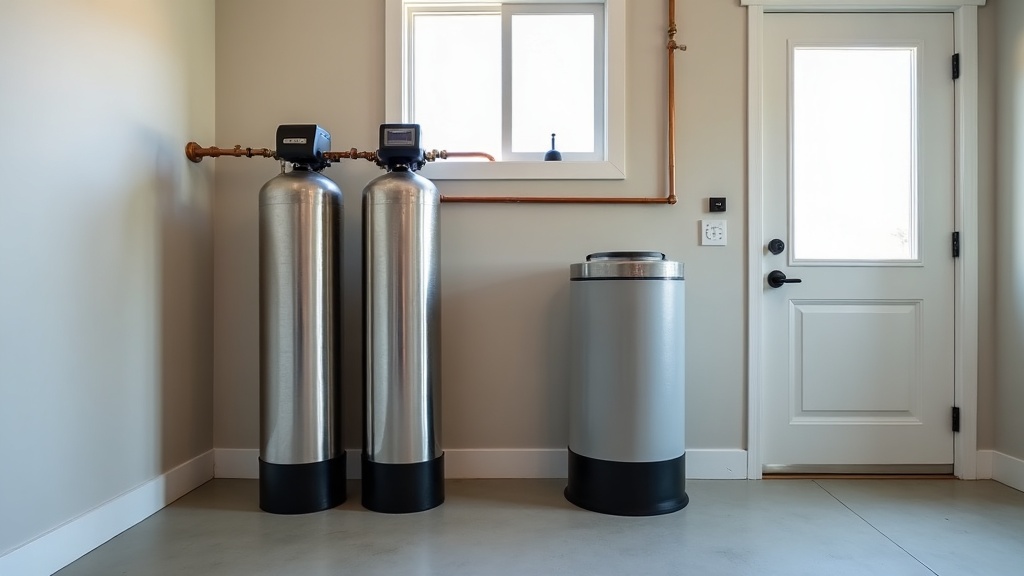
Kinetico is a premium American-made brand that has been around since 1970. The core technology is a twin-tank, non-electric system that regenerates on demand rather than on a timer. Here is why that matters: most water softeners are programmed to regenerate at 2 a.m. every few days, regardless of whether you have used a lot of water or very little. Kinetico's system tracks actual water usage and only regenerates when the resin needs it. One tank stays in service while the other regenerates, so you never get a burst of hard water in the middle of a shower.
For Meridian and Eagle homeowners, where hardness regularly runs 12 to 17 grains per gallon (gpg), that demand-initiated regeneration translates to real savings on salt and water over time. A timer-based system regenerating on a fixed schedule in a 15 gpg home burns through salt faster than necessary. Kinetico's approach is more efficient at high-hardness levels.
The honest tradeoff is price. A Kinetico system installed in a Treasure Valley home typically runs $3,000 to $6,000 or more, depending on the model and your home's flow rate requirements. That is a significant premium over comparable single-tank systems. Additionally, Kinetico uses proprietary parts that are only available through authorized dealers. If your dealer goes out of business or raises service prices substantially, your options narrow. That dealer dependency is worth factoring into the total cost of ownership.
What Culligan Actually Is (and How the Pricing Model Works)
Culligan is a franchise system. There is no single Culligan company; there are independent Culligan dealers who license the brand and serve specific territories. That matters because service quality, product selection, and pricing vary between local franchises. The Culligan dealer serving Boise may operate very differently from one in another state.
Culligan offers both purchase and rental options. The rental model is where most of the brand recognition comes from. For a monthly fee, typically $30 to $60 in Idaho depending on the system and service tier, Culligan delivers salt, handles service calls, and takes responsibility for the equipment. That is genuinely useful for renters, for people who are uncertain about their long-term plans in the Treasure Valley, or for anyone who simply does not want to think about their water system. The monthly fee covers everything.
The catch is long-term cost. If you own your home and plan to stay, paying $45 per month adds up to $2,700 over five years and $5,400 over ten years, before counting salt. You can buy a capable softener system outright for $1,200 to $3,500 installed and own it free and clear. The math favors purchasing if you are settled. Like Kinetico, Culligan's rental model creates a form of service dependency: your rental unit belongs to them, and leaving the contract or switching providers requires returning the equipment.
Side-by-Side: Kinetico vs Culligan for Treasure Valley Homes
| Factor | Kinetico | Culligan (Purchase) | Culligan (Rental) |
|---|---|---|---|
| Installed cost | $3,000 to $6,000+ | $1,200 to $3,500 | $0 upfront |
| Monthly ongoing | Salt only (~$10-20/mo) | Salt only (~$10-20/mo) | $30-60/mo + salt |
| 10-year estimate | $4,800-$8,400 | $2,400-$5,900 | $5,600-$9,200 |
| Electricity required | No | Yes | Yes |
| Twin-tank design | Yes (standard) | Model dependent | Model dependent |
| Service flexibility | Dealer-tied parts | More open | Dealer-tied contract |
| Best for | Long-term homeowners, high hardness areas | Budget-conscious owners | Renters, short-term residents |
10-year estimates include salt at $15/mo average. Rental estimate uses $45/mo base rate. Actual costs vary by household size and water usage.
The Brand Lock Problem Both Companies Share
Here is a point that does not get discussed enough in water softener comparisons. Both Kinetico and Culligan are built around dealer-tied service ecosystems. Kinetico uses proprietary components that require an authorized dealer for repairs and replacement parts. Culligan's rental model means the equipment belongs to the franchise, and leaving means returning the unit and starting over. These are not predatory practices; they are business models. But they create a real risk for homeowners: if your local dealer exits the market, raises prices aggressively, or provides poor service, your options are limited.
We have seen this play out in the Treasure Valley. A homeowner in Nampa called us after their Kinetico dealer significantly increased their service fees. Because the resin valve required a proprietary Kinetico part, their options for independent service were narrow. We were able to help, but it required sourcing parts through alternative channels, which added time and cost.
One of the reasons we built TrueWater the way we did is specifically to offer homeowners an alternative. We are not locked to any single brand. We can service most major water softener systems, source parts from multiple suppliers, and give you honest advice that is not shaped by which brand gives us the best dealer margin. That flexibility has real value, especially when your system needs attention on a Saturday morning and your original dealer does not pick up the phone.
Idaho-Specific Context: Why Hard Water Makes Brand Choice Matter More
Not all water is the same, and not all of Idaho's water is the same. Here is what our water testing shows across the Treasure Valley:
- Boise: 10 to 15 gpg (hard to very hard)
- Meridian: 12 to 17 gpg (very hard, among the highest in the valley)
- Eagle and Caldwell: 12 to 17 gpg (similar to Meridian)
- Nampa: 3.5 to 7 gpg (moderately hard, noticeably softer due to source water differences)
In a 15 gpg environment, a water softener regenerates more frequently than it would in a softer water area. That means more wear on the resin bed, more salt consumption, and faster valve wear. Systems that are sized for lower-hardness markets, or systems running on a fixed timer that does not account for actual usage, will underperform and cost more to maintain in Meridian or Eagle specifically.
With the 2026 drought concentrating aquifer minerals further, we are seeing some homeowners in Eagle and Caldwell testing their water and finding it running harder than the historical averages. If you installed a system three or four years ago that was sized for your baseline hardness, it may be worth a retest to see if that sizing still holds. See our guide on water softener maintenance in Boise for what a seasonal check should include.
According to the Water Quality Association, water measuring above 10.5 gpg is classified as very hard, and anything above that threshold warrants a system sized specifically for high-mineral-load performance rather than a standard residential unit.
How TrueWater Approaches the Decision
When a homeowner in Meridian calls us and asks whether they should get a Kinetico or Culligan, the first thing we do is test their water. Not because we want to delay the conversation, but because the right answer genuinely depends on their actual hardness number, their household size, their water usage patterns, and how long they plan to stay in the home. A Nampa household at 5 gpg has a very different situation than a new-construction home in Eagle at 14 gpg.
After the free water test, we walk through a straightforward buying framework that covers system sizing, salt efficiency, maintenance expectations, and total cost of ownership. If a Kinetico system is the right fit, we will tell you. If a high-quality single-tank system from a different brand delivers 95% of the performance at 60% of the price, we will tell you that too.
We install systems that fit homes, not brands that fit our dealer agreements. That is the simplest way we know to describe how we work.
The Honest Bottom Line
Kinetico makes a genuinely well-engineered product. The non-electric twin-tank design is well-suited to Idaho's hard water, and for homeowners who plan to stay in their home for 10-plus years, the efficiency gains can offset a portion of the premium price. The main risk is service dependency on an authorized dealer network.
Culligan's purchase option is a reasonable middle-ground choice. The rental model is worth the premium only in specific circumstances: short stays, rented homes, or homeowners who place a very high value on zero-maintenance living and are willing to pay for it over the long run.
Neither brand is objectively the best choice for every Treasure Valley home. The best choice is the one that is correctly sized for your actual water hardness, installed by someone who will still be around in five years, and backed by service that does not hold your system hostage to a single provider relationship.
If you want to know where your water actually falls on the hardness scale, we will come out and test it for free. No sales pressure. Just numbers.
Not Sure Which System Is Right for You?
Get a free water test from our local team. We'll show you your exact hardness numbers and recommend a system that fits your home and budget, with no brand bias and no pressure.