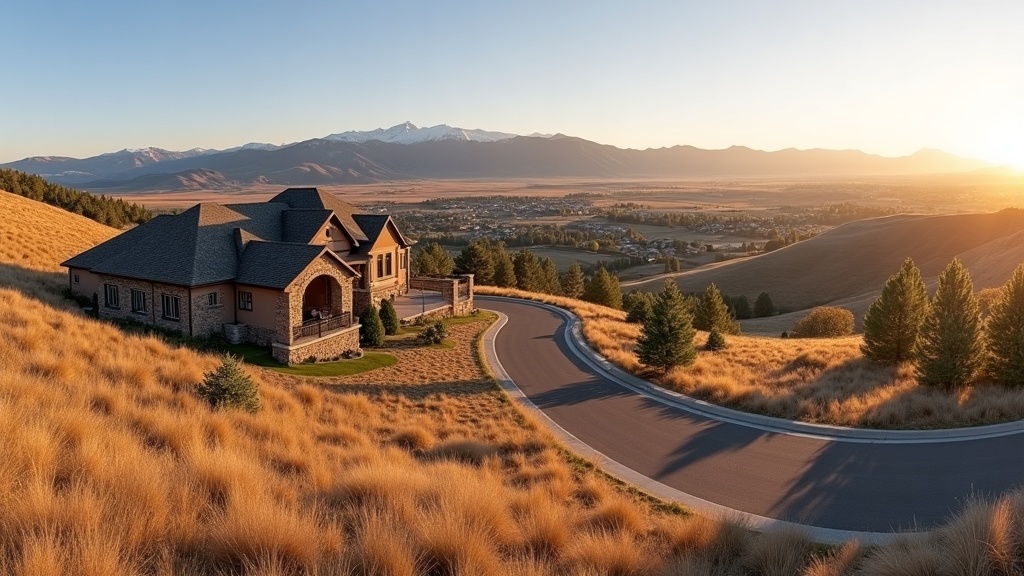
Hidden Springs sits in the Dry Creek Valley foothills north of Boise, one of the more distinctive planned communities in the Treasure Valley. The homes are newer, the views are excellent, and the water situation is unlike most of Ada County. If you just bought here, or you have been living here for a few years and started noticing orange stains on your fixtures, this article is for you.
Where Hidden Springs Gets Its Water (and Why It Matters)
Hidden Springs is not on Boise city water. The community is served by Hidden Springs Water Co., LLC, a private utility that draws from the Dry Creek Valley aquifer at foothill elevations ranging roughly 2,900 to 3,200 feet. The system includes a 350,000-gallon reservoir and splits into eight service zones because of the nearly 900-foot elevation difference across the development.
That geology matters. The Boise foothills sit on Idaho Batholith granite interbedded with ancient Lake Idaho sediments. Both formations are mineral-rich. Water moving through fractured granite and lacustrine deposits picks up iron, manganese, hardness minerals, and other dissolved solids before it ever reaches your tap. This is fundamentally different from Boise proper, which blends Snake River surface water with deep aquifer wells and treats it at a municipal level.
Because Hidden Springs is a private utility and not a city system, you cannot pull up a Consumer Confidence Report on the city website. To see current water quality data, you need to contact the HOA or the utility directly. The Idaho DEQ permit page for Hidden Springs Water Co. is a starting point for regulatory records, but it will not tell you what is coming out of your specific tap today.
That is why a professional water test matters here more than in most Boise-area neighborhoods.
Iron in Hidden Springs Water: The Orange Stain Problem
Iron is the most common complaint we hear from Hidden Springs residents. The USGS groundwater study of northern Ada County documents elevated iron and manganese throughout the foothill aquifer system, and Hidden Springs draws from exactly that zone.
Iron in water comes in two forms, and the difference matters for treatment:
- Ferrous iron (dissolved): Water looks clear when it first comes out of the tap, but turns orange or brown after sitting in the toilet bowl or on a surface. It has oxidized on contact with air.
- Ferric iron (particulate): Visible rust-colored particles already suspended in the water. You may see them when filling a glass or a white tub.
Idaho's secondary maximum contaminant level for iron is 0.3 mg/L. This is a cosmetic standard, not a health limit, but foothill wells in Ada County routinely exceed it. At levels above 0.3 mg/L you get orange staining on toilets, tubs, sinks, and laundry. At higher levels, you get a metallic taste and increasingly stubborn rust deposits that build up over months and years.
A third issue is iron bacteria, a naturally occurring microorganism that feeds on dissolved iron. Signs include a reddish-brown slime in your toilet tank, biofilm buildup in pipes, and a faint sulfur or swampy odor. Iron bacteria is not a health hazard at typical levels, but it accelerates staining and clogs filters faster.
One thing many Hidden Springs residents have noticed in the spring of 2026: the staining seems worse than last year. There is a direct reason for that, which we cover in the drought section below.
Water Hardness at Hidden Springs: What the Numbers Mean
Hardness is measured in grains per gallon (GPG). For context:
- Soft water: under 3.5 GPG
- Moderately hard: 3.5 to 7 GPG
- Hard: 7 to 10.5 GPG
- Very hard: above 10.5 GPG
The Treasure Valley floor, where most of Boise and Meridian sit, typically measures 6 to 15 GPG. Foothill communities like Hidden Springs pull from shallower granite aquifers with higher mineral contact, and we see estimated hardness in the 12 to 18 GPG range. Compare that to Eagle water quality, which already runs hard, and you get a sense of where Hidden Springs sits on the spectrum.
At 12 to 18 GPG, you will see white scale buildup on faucets and showerheads, spots on dishes and glassware, stiff laundry, and dry skin and hair after showering. Those are the obvious signs. The less obvious one is what happens inside your appliances.
Many newer homes in Hidden Springs have tankless water heaters. These are efficient and compact, but they are highly sensitive to hard water. Scale buildup inside a tankless unit at 15+ GPG can cause failure in three to five years. The expected lifespan with properly conditioned water is fifteen to twenty years. That is a significant cost difference for a single appliance, and it does not count your dishwasher, washing machine, and ice maker.
The challenge at Hidden Springs is that you are often dealing with high hardness and elevated iron at the same time. These two problems require different treatment approaches, which is why a full water test before buying equipment matters.
The 2026 Drought and Hidden Springs Groundwater
On April 13, 2026, Idaho Governor Brad Little declared a statewide drought emergency. The winter of 2025-2026 was the second-warmest since 1896 and produced the lowest snowpack on satellite record. For the Boise River basin, that means dramatically reduced surface recharge into the foothill aquifer system.
You can read more about the full regional picture in our article on Idaho's 2026 drought emergency and what it means for Treasure Valley water quality. For Hidden Springs specifically, the practical effect is this: when aquifer levels drop, wells draw from deeper, more mineralized zones. Minerals that were diluted by seasonal recharge are now more concentrated.
If your iron staining looked manageable last year and suddenly seems worse this spring, the drought is likely a contributing factor. Sediment filters are also fouling faster than usual. If you have a filter system, check and replace cartridges more frequently than your normal schedule. And if you have been putting off a water test, 2026 is the year to do it. Current conditions are not typical, and what you find now will reflect the more challenging end of what your water supply can produce.
What a Free Water Test Will Actually Tell You
A professional water test gives you numbers. Without numbers, you are guessing at equipment, and the wrong equipment wastes money. Here is what a proper test covers for a Hidden Springs home:
- Hardness in grains per gallon
- Iron: both ferrous (dissolved) and ferric (particulate) levels in mg/L
- Manganese: often elevated alongside iron in foothill aquifers
- pH: affects how aggressively water interacts with pipes and fixtures
- TDS (total dissolved solids): overall mineral load
DIY test strips sold at hardware stores cannot distinguish ferrous from ferric iron. That distinction directly determines what equipment you need. A standard water softener handles ferrous iron reasonably well at low levels; it does almost nothing for ferric iron or iron bacteria.
Hidden Springs is served by a shared utility, but the source is still foothill groundwater, and individual service connections can vary. The only way to know what is actually at your tap is to test your tap.
TrueWater offers free water testing with results back within 24 hours. No sales pressure, just numbers. Call us at (208) 968-2771 to schedule.
Treatment Options for Hidden Springs Water Profiles
Once you have test results in hand, the right treatment path becomes straightforward. Here is how we typically approach Hidden Springs profiles:
Hardness Only (Iron Below 0.3 mg/L)
A standard ion-exchange water softener handles hardness well. For a Hidden Springs home, expect to budget $2,500 to $4,500 installed, depending on home size and the softener capacity needed for your hardness level. At 12 to 18 GPG, you will want a properly sized unit, not the smallest one on the shelf.
Iron Below 3 mg/L Plus Hardness
An iron-capable water softener, sometimes called a combination unit, handles both simultaneously. This covers a large portion of Hidden Springs homes. Same price range as above, with the unit selected specifically for iron handling capacity.
Iron Above 3 mg/L or Significant Ferric Iron
At higher iron levels, or when ferric (particulate) iron is present, you need a dedicated iron filter installed upstream of the softener. The iron filter oxidizes and captures iron before it ever reaches the softener resin, which protects the resin and extends its life. Add $800 to $1,500 for the iron filter stage. This is also the setup needed when iron bacteria is present, often combined with periodic shock chlorination and a carbon post-filter.
Manganese
If manganese is elevated (common in foothill aquifers alongside iron), a greensand filter or catalytic carbon filter addresses it. Manganese causes black staining and is more stubborn than iron, so it is worth testing for specifically.
Salt-Free Alternatives
Template-assisted crystallization (TAC) systems are a salt-free option for hardness. They work by converting calcium and magnesium into a crystalline form that does not stick to surfaces. They are a legitimate option for scale prevention. However, TAC systems do not remove iron or manganese. If your Hidden Springs water has elevated iron, a salt-free softener is not the right primary treatment.
Maintenance at Higher Mineral Loads
One practical note for Hidden Springs: higher mineral loads mean your softener works harder. Regeneration cycles will be more frequent, and softener resin should be replaced every eight to twelve years rather than the fifteen-plus years you might see quoted for lower-mineral-load areas. Budget for that in your long-term cost calculation. For a nearby comparison of what installation looks like in the area, see our work on water softener installation in Eagle.
The Bottom Line for Hidden Springs Homebuyers and Current Residents
If you are buying a home in Hidden Springs, build water treatment into your budget. Based on what we see in foothill communities across Ada County, most homes will need at minimum a water softener, and many will need an iron filter as well. Budget $2,500 to $6,000 depending on what the test shows. Get the test done during due diligence, not after closing.
If you are already living in Hidden Springs without a treatment system, 2026 is the year to act. Drought conditions are concentrating minerals in the aquifer right now, and the wear on your appliances and fixtures compounds every year without treatment.
Start with the test. It is free, it takes about 20 minutes, and it tells you exactly what you are working with. Call TrueWater at (208) 968-2771 to schedule yours.
Get a Free Water Test for Your Hidden Springs Home
We test for hardness, iron, manganese, pH, and TDS. Results in 24 hours. No cost, no obligation.