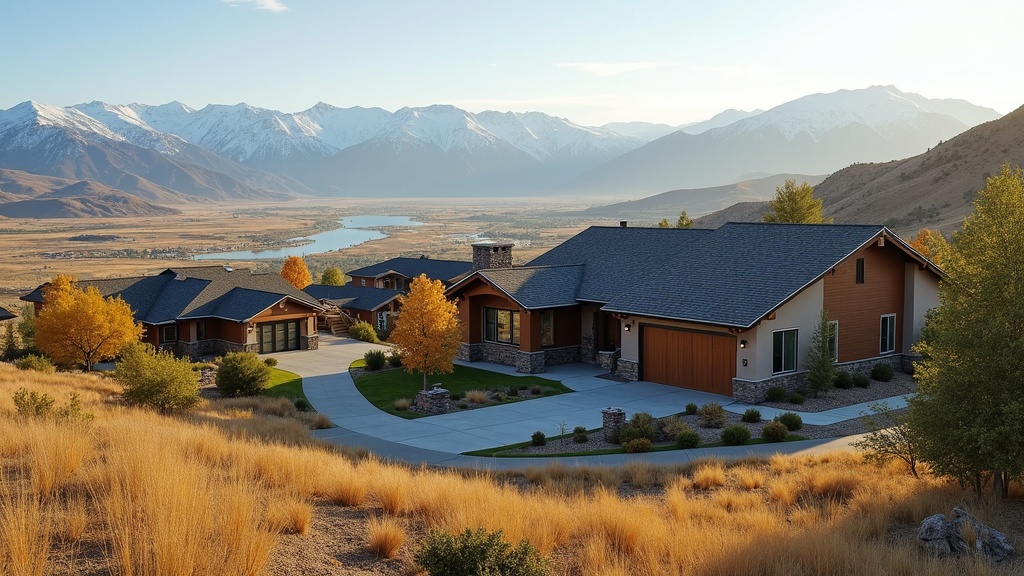
Eagle has become one of the most desirable places to live in the Treasure Valley, with rapid growth, excellent schools, and easy access to the Boise River Greenbelt. What most people moving there do not know is that Eagle also has some of the valley's harder water, and what that means for their home is worth understanding before it costs them money.
Eagle's Water: Where It Comes From
Eagle's water supply is managed by the City of Eagle and, in some service areas, United Water Idaho. The primary source is the Boise Valley Aquifer, accessed through a network of production wells drilled into the same volcanic basalt geology that underlies the entire Treasure Valley.
Eagle's aquifer access points draw water that has traveled through particularly mineral-rich basalt formations on the northwest side of the valley. The result is groundwater that tends to run harder than what Boise's blended surface-and-groundwater system produces, and slightly softer than what high-draw Meridian wells produce.
Typical Eagle hardness measurements run 11 to 14 grains per gallon (gpg). The USGS classifies anything above 10.5 gpg as "very hard." Eagle is consistently in that category, with some neighborhoods, particularly in newer developments close to the Canyon County line, testing as high as 15 to 16 gpg.
The Valnova Factor: What Eagle's Growth Means for Water
Eagle is in the middle of a significant growth period. The planned Valnova development, potentially 7,000 homes in the northwest Eagle area, represents one of the largest single development proposals in Ada County history. While it is still progressing through planning and approval phases, its scale creates real questions about water infrastructure capacity.
Adding thousands of homes to an aquifer-dependent system increases demand on the same groundwater source that existing residents rely on. IDWR's March 2026 groundwater moratorium in Canyon County, which halted new well permits due to supply stress, is a regional signal that aquifer sustainability is not unlimited. Eagle's expansion plans are playing out in that context.
For existing Eagle homeowners, the practical concern is less about water supply running out and more about what increased aquifer draw means for mineral concentrations over time. As water tables lower and utilities draw from deeper zones, hardness levels tend to increase. Getting a baseline test for your current water quality is sensible before those dynamics shift further.
What Hard Water Does to an Eagle Home
At 11 to 14 gpg, Eagle water creates the full range of hard water effects. Here is what we see most frequently in homes we visit in the Foothills East, Banbury Meadows, and Lexington Hills neighborhoods:
- Faucet and showerhead scaling: White mineral deposits form on aerators and showerheads, reducing flow and requiring regular cleaning or replacement
- Water heater efficiency loss: Scale accumulates on heating elements, reducing efficiency and shortening the heater's service life (see our article on hard water scale in water heaters)
- Dishwasher film: Dishes and glassware come out with a white haze even after a full wash cycle
- Laundry stiffness: Hard water reduces detergent effectiveness, leaving fabrics feeling stiff and requiring more detergent
- Skin and hair effects: Many Eagle residents, especially those who relocated from the Pacific Northwest, notice drier skin and hair after showering, a direct result of mineral residue left on skin
None of these effects are dangerous, but they represent real costs: higher energy bills from an inefficient water heater, more cleaning products, shorter appliance lifespans, and the general annoyance of hard water daily life.
Eagle vs. Boise vs. Meridian: Where Do You Stand?
Eagle sits in the middle of the Treasure Valley hardness spectrum. Meridian's rapidly growing groundwater-dominant system often tests hardest, regularly reaching 15 to 17 gpg in some neighborhoods. Boise's blended system runs 10 to 13 gpg. Eagle typically falls in the 11 to 14 gpg range, with neighborhood variation.
If you moved to Eagle from Boise proper, you may have noticed a slight increase in scale buildup and soap scum. If you moved from outside the valley entirely, particularly from a region with naturally soft water, the difference is likely very noticeable.
The city-to-city comparison matters because water softener sizing depends on actual hardness levels. A system sized for Boise's 11 gpg water may be undersized for Eagle's harder zones. Our free in-home test gives you the accurate number for your specific address.
Your Options as an Eagle Homeowner
The most effective treatment for Eagle's hard water is a whole-house salt-based water softener. Installed at the main water line entering your home, a properly sized softener removes calcium and magnesium through ion exchange before the water reaches any fixture, appliance, or pipe.
For a typical Eagle home of 2,000 to 3,000 square feet with 2 to 4 occupants, a 32,000 to 48,000 grain capacity system covers normal daily usage. Larger homes or homes where all occupants shower and do laundry frequently may benefit from a 48,000 to 64,000 grain system. We size based on your actual hardness level and household size, not one-size-fits-all recommendations.
Salt-free conditioning systems (template-assisted crystallization, or TAC) are an option for homeowners who prefer to avoid salt-based systems. They do not remove minerals but change the mineral crystal structure to reduce scale formation. These systems work reasonably well in the 10 to 13 gpg range. At 14 gpg and above, which some Eagle neighborhoods see, salt-based softeners provide more consistent results.
Reverse osmosis (RO) systems at the kitchen sink address drinking water quality, including reducing hardness in the water you consume. They do not protect appliances, plumbing, showerheads, or the rest of the home's water uses. RO paired with a whole-house softener gives you both protection and high-quality drinking water.
A quality installed water softener system for an Eagle home typically runs $2,500 to $4,500. That range covers most residential applications. We are honest about costs because we believe informed customers make better decisions, and better decisions mean fewer callbacks and more referrals for us.
Frequently Asked Questions
Free Water Test for Eagle Homeowners
Find out exactly what is in your Eagle water. Our free in-home test takes 30 minutes, covers hardness, pH, TDS, iron, and more. No pressure, no obligation. Just clear information.