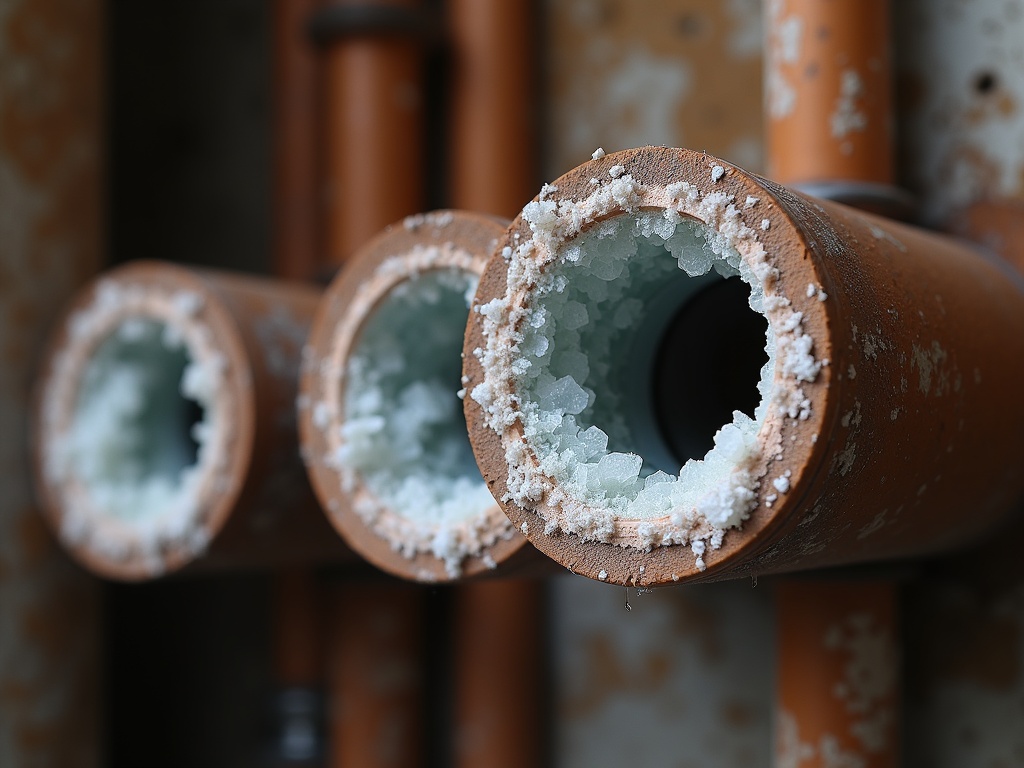
Most Treasure Valley homeowners never see a bill labeled "hard water damage," but they pay it every year anyway, spread across higher energy bills, appliance replacements, plumbing service calls, and extra soap. Based on local hardness levels of 7 to 17 grains per gallon (gpg) across Boise, Meridian, Eagle, and surrounding communities, the annual cost typically lands between $800 and $1,500 for a single-family home. This guide breaks down every category so you know exactly what you are paying and why.
The 2026 drought emergency has cut water allotments across the Treasure Valley. As snowpack-fed surface water drops, municipalities draw more from the Snake River Plain Aquifer, which concentrates dissolved minerals at your tap. Boise and Meridian water already runs 7-17 gpg hard under normal conditions. This summer readings are trending toward the upper end of that range, making every cost below more urgent than it was last year.
What Makes Idaho Water So Hard
The short answer is geology. The Snake River Plain Aquifer, which supplies much of the Treasure Valley's drinking water, sits beneath volcanic basalt and limestone formations. As groundwater filters through those rocks over decades, it picks up calcium and magnesium. By the time that water reaches your tap, it carries a mineral load that varies by city but is consistently on the harder end of the national scale.
Here is where Treasure Valley cities currently land on the hardness scale, using the standard grains-per-gallon measure:
- Boise: 7 to 13 gpg (hard)
- Meridian: 12 to 17 gpg (very hard)
- Eagle: 10 to 14 gpg (hard to very hard)
- Nampa: 8 to 12 gpg (hard)
For context: water below 3 gpg is considered soft. Anything above 7 gpg is classified as hard, and above 10 gpg is very hard. Most of the Treasure Valley lives in "hard to very hard" territory year-round. You can explore hard water levels across the Boise metro in our detailed city-by-city guide. For the underlying groundwater science, the USGS Water Resources mission area maintains ongoing aquifer monitoring data for the Snake River Plain.
The 2026 drought is accelerating this: as surface water shrinks, utilities draw more from deep aquifer sources, which carry higher mineral concentrations. If your home tested at 13 gpg two summers ago, it is worth retesting this year.
The Annual Dollar Cost: What Treasure Valley Homeowners Actually Pay
We have broken the annual cost of hard water into six categories. These are conservative estimates for a standard single-family home; larger households with more people and more daily water use will trend toward the higher end of each range.
| Cost Category | Annual Cost Range |
|---|---|
| Water heater efficiency loss | $100 to $220 |
| Appliance replacement acceleration | $150 to $400 |
| Plumbing service and fixtures | $100 to $300 |
| Soap, detergent, and cleaning products | $150 to $250 |
| Bottled water and filter pitchers | $50 to $150 |
| Total estimate | $550 to $1,320 (Boise) / $800 to $1,500 (Meridian and Eagle) |
The gap between Boise and Meridian/Eagle numbers is real. Hardness at 12 to 17 gpg accumulates scale significantly faster than hardness at 7 to 10 gpg, which means appliances degrade faster, energy bills climb higher, and plumbing issues arrive sooner. With this summer's drought pushing readings toward the upper end of those city ranges, Meridian and Eagle households should expect to land at or above the higher estimate this season.
Appliance Damage and Shortened Lifespans
Hard water's biggest financial hit comes from what it does to your appliances over time. Scale, the white crusty mineral deposit you see on faucets and showerheads, builds up inside appliances too, where you cannot see it until something fails.
Water Heaters
This is where hard water does the most damage in dollar terms. Scale coats the heating element and tank walls, acting as insulation that forces the heater to work harder. Department of Energy research shows scale at 12 gpg or higher can cut water heater efficiency by up to 29 percent, which shows up on your gas or electric bill every month. Beyond energy cost, scale shortens lifespan from the expected 12 to 15 years down to 7 to 10 years at Meridian and Eagle hardness levels. Replacing a water heater in the Treasure Valley in 2026 runs $900 to $1,800 installed. Read more about water heater scale buildup in Idaho and what those deposits look like inside your tank.
Dishwashers
Hard water etches glassware over time, leaving a permanent cloudy haze that does not wash out. More seriously, it causes valve failures and internal scale buildup that leads to early mechanical failure. At 14 to 17 gpg, you can expect to replace a dishwasher 3 to 4 years earlier than the manufacturer's expected lifespan. Replacement cost in the Treasure Valley: $600 to $1,200 installed.
Washing Machines
Scale builds up in inlet valves and drum seals. The result is 2 to 4 years of shortened lifespan, plus stiffer laundry fabrics and more fading over time as hard water interacts with detergent. Replacement cost: $700 to $1,400.
Amortized across a full appliance set at 12 gpg or higher, the accelerated replacement cost works out to $150 to $400 per year for a typical home.
Plumbing and Fixture Costs
Your plumbing pays a slower but steady price for hard water. Scale inside supply lines narrows the effective pipe diameter over 10 to 15 years at 10 gpg or higher, reducing flow rates and water pressure gradually enough that most homeowners do not notice until it becomes a problem.
The more immediate costs show up in fixtures:
- Faucet and fixture cartridge failures: $80 to $200 per fixture. Cartridges fail 2 to 3 years early at Boise hardness levels. Those service calls add up.
- Showerhead clogging: Hard water clogs showerheads 2 to 3 times faster than soft water. Replacement runs $40 to $120, and most homeowners replace every 1 to 2 years without connecting it to water quality.
- Tankless water heater descaling: Annual descaling service runs $150 to $250. Skipping it accelerates corrosion and shortens the unit's life.
- Pinhole leaks on older copper pipe: Scale buildup inside older pipe leads to pinhole leaks. Repair runs $300 to $800.
Combined, plumbing and fixture costs from hard water typically land at $100 to $300 per year, with older homes and harder water at the high end.
Soap, Energy, and Hidden Household Costs
Beyond appliances and plumbing, hard water quietly drains money through daily household purchases that seem unrelated until you connect the dots.
Soap and Shampoo
Hard water requires roughly twice as much soap, shampoo, and body wash to produce a lather equivalent to what soft water produces. For a family of four in Meridian, that doubles what you spend on personal care products each year. The overspend typically runs $150 to $250 annually.
Dish and Laundry Detergent
The same principle applies in the kitchen and laundry room. Hard water demands more detergent per cycle, rinse aid becomes a recurring expense rather than an occasional one, and fabrics come out stiffer and more faded over time.
Energy Bills
The water heater efficiency loss described above translates directly to a higher gas or electric bill every month. At 12 gpg or higher, the annual overspend on water heating energy runs $100 to $220 for a typical Treasure Valley home.
Cleaning Products and Bottled Water
CLR, Lime-A-Way, and similar descaling products are almost entirely a hard water problem. Budget $50 to $100 per year. Many Treasure Valley residents also supplement with bottled water or filter pitchers because hard water affects taste, adding another $50 to $150 annually.
Combined, the soap, energy, and hidden household costs add $350 to $720 per year on top of the appliance and plumbing numbers. For many Meridian and Eagle households, this is where the total tips above $1,000.
What a Water Softener Saves You
The math is straightforward once you have the full cost picture. A professionally installed salt-based system in the Treasure Valley typically costs $1,200 to $2,800, or $25 to $45 per month on a rental plan. Set against $800 to $1,500 in annual hard water damage, payback looks like this:
- Meridian and Eagle (12 to 17 gpg): typical payback within 12 to 24 months
- Boise (7 to 13 gpg): typical payback within 18 to 30 months
After payback, the savings continue every year. Key wins:
- Energy savings: $80 to $200 per year by eliminating scale from the water heater
- Soap and detergent reduction: 30 to 50 percent less product needed, saving $100 to $150 per year
- Appliance lifespan restored: Full manufacturer-expected life instead of early failure
- Plumbing protected: No new scale accumulation, fewer service calls, longer fixture life
Our guide on choosing the right water softener for Boise homes walks through sizing, system types, and what to look for in a local installer. The Idaho DEQ drinking water program publishes water quality reports by municipality if you want to verify your city's current hardness data.
TrueWater installs and supports systems locally. When something needs adjustment, we come back out, and we know exactly what the water in your neighborhood looks like because we test it every day.
Frequently Asked Questions
How much does hard water cost the average Treasure Valley homeowner per year?
Does the 2026 drought make hard water worse in Idaho?
What part of my home takes the most damage from hard water?
Is a water softener worth it in Boise versus Meridian?
Get Your Free Water Test for Your Treasure Valley Home
Find out exactly where your tap water lands on the hardness scale. Free water test, no obligation, results explained on the spot. We serve Boise, Meridian, Eagle, Star, Kuna, Nampa, Garden City, Caldwell, Middleton, and Emmett.