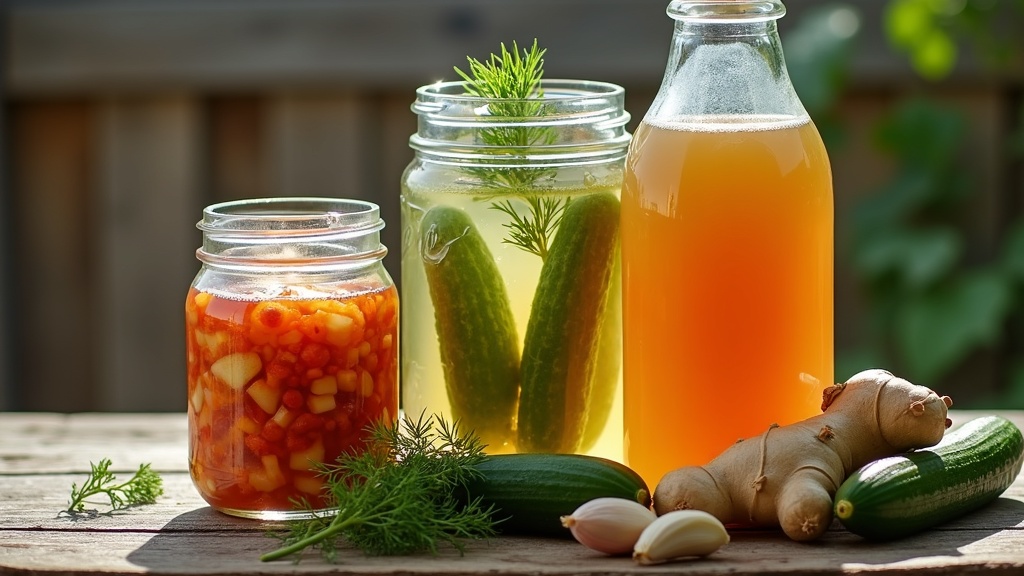
The Summer Fermentation Wave Has Hit Boise (And Your Kitchen Might Be Part of It)
If you've been spending more time at your kitchen counter with mason jars, salt, and vegetables this summer, you're not alone. Home fermentation has hit a real stride across the Treasure Valley in 2026. Garden beds in Boise and Meridian are producing more cucumbers and cabbage than most families can eat fresh, and fermented dill pickles and kimchi are the logical answer. Continuous-brew kombucha setups and water kefir grains have gone mainstream alongside them. The gut health wave that started a few years ago hasn't faded. It's deepened, and it's pulling people into fermentation who might never have tried it otherwise. Tutorials, Reddit threads, and local fermentation classes at natural food stores have all grown with it. If you've jumped in recently or you're planning to, this piece is for you.
What Your Fermentation Cultures Actually Need to Survive
Fermentation is alive. That sounds obvious, but it's easy to forget when you're following a recipe and treating it like baking. The organisms doing the work in your ferments are real, living things with real requirements. In kimchi, sauerkraut, and lacto-fermented pickles, the stars are Lactobacillus bacteria, naturally present on vegetables and in the environment. They convert sugars into lactic acid, which preserves the food and creates the sour, tangy flavor you're after. In kombucha, you're working with a SCOBY (symbiotic culture of bacteria and yeast) that ferments sweet tea into something acidic, fizzy, and complex. Water kefir grains are small colonies of bacteria and yeast that work similarly, fermenting sugar water or coconut water into a probiotic drink.
Each of these cultures is sensitive to its environment. Wrong salt concentration, wrong temperature, wrong oxygen exposure at the wrong stage. Most guides cover those failure points decently. They cover salt ratios. They cover temperature ranges. They cover keeping vegetables submerged. But almost every fermentation tutorial treats water in a single throwaway line: "Use filtered water or dechlorinated water." No explanation, no detail, no acknowledgment of why it matters or what happens if you skip that step. For Treasure Valley fermenters specifically, this one variable deserves a full conversation.
The One Variable Every Fermentation Tutorial Glosses Over
Water is the medium your cultures live in. Your brine is mostly water. Your kombucha brew is mostly water. The organisms you're trying to grow are suspended in it, replicating in it. What's in that water matters enormously before you ever add salt or sugar or a SCOBY.
Most guides tell you to avoid tap water and use filtered or dechlorinated water. The reason is chlorine. Municipal water supplies add chlorine specifically to kill microorganisms, and it doesn't stop doing that job when it reaches your fermentation jar. Some tutorials note that you can leave tap water out overnight and chlorine will mostly off-gas. That works. But here's where Boise and Meridian fermenters hit a wall most tutorials never address.
Veolia Water Idaho, which serves most of the Treasure Valley including Boise, Eagle, and much of Meridian, uses chloramine as its primary disinfectant, not plain chlorine. Chloramine is formed by combining chlorine with ammonia. Utilities prefer it because it stays active through long pipe runs and doesn't dissipate easily. That stability is the exact problem for fermenters: chloramine does not off-gas when you leave water out overnight. Boiling does not remove it. Boiling actually concentrates it, since water evaporates while chloramine stays behind. You can let a pitcher of Boise tap water sit on your counter for 24 hours and the chloramine is still there, ready to suppress whatever cultures you're trying to grow. If your ferments have been inconsistent, flat, mushy, or dead on arrival, this is a very commonly missed reason.
Boise's Water in Summer 2026: Why It Matters More Right Now
Idaho is currently in a declared drought emergency across all 44 counties, and the impact on water quality is real. Veolia and other Treasure Valley utilities are drawing harder on deep volcanic aquifer water under the Snake River Plain to meet demand. That aquifer water is naturally higher in minerals, particularly calcium and magnesium. Boise water typically runs 10 to 13 grains per gallon (GPG) in hardness, which the USGS classifies as very hard. Meridian runs even higher, 12 to 17 GPG in parts of the city. Under drought conditions, heavier draws on that aquifer water mean more mineral load in your tap, and potentially higher disinfectant concentrations as utilities compensate for the increased treatment challenge. This summer specifically, Treasure Valley tap water may be carrying more chloramine than it does in a typical year, which lands right in the middle of peak fermentation season. The timing matters.
Water hardness also plays a role most recipes don't account for. High calcium and magnesium content affects brine texture and culture activity. For kimchi and sauerkraut, very hard water can interfere with how brine penetrates vegetables and how Lactobacillus establishes early. For kombucha and water kefir, some minerals are beneficial, but Treasure Valley levels can create imbalance. Our 2026 Boise water quality breakdown covers the full picture.
Frequently Asked Questions
Does boiling tap water remove chloramine before fermentation?
What kind of water should I use for kombucha and water kefir?
Why did my kimchi or sauerkraut turn out mushy instead of tangy?
Does Boise and Meridian tap water use chloramine or regular chlorine?
How does the 2026 Idaho drought affect water quality for cooking and fermentation?
For more on how tap water affects other kitchen projects, see our piece on sourdough starter failures and Boise water quality. The same chloramine issue shows up there too.
Know What's In Your Boise Water Before Your Next Batch
A free water test shows exactly what you're working with. Carbon filtration removes chloramine. Reverse osmosis handles both chloramine and excess hardness. No pressure, no sales pitch, just data you can actually use.