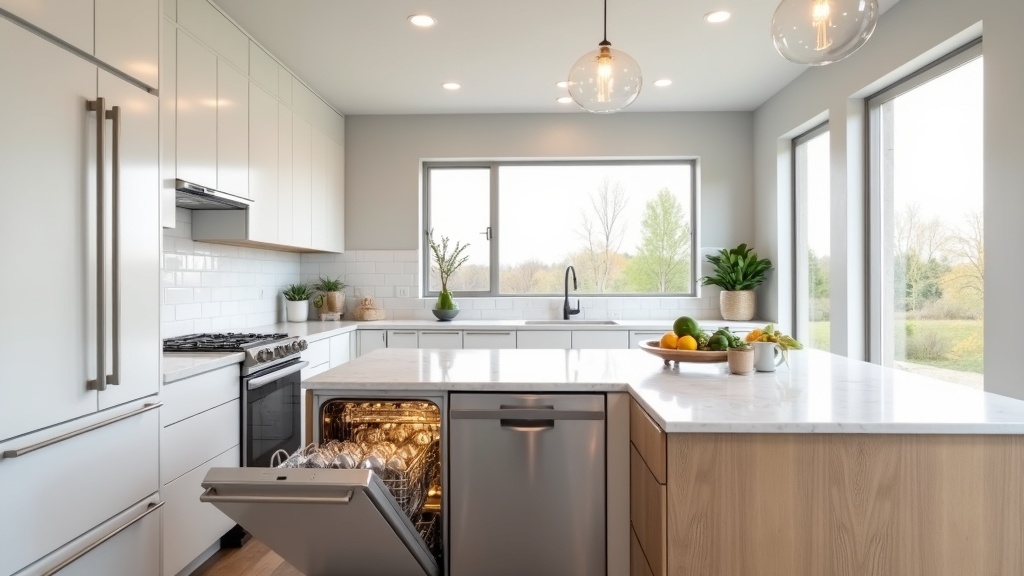
If you live in Meridian and your dishwasher glasses have gone cloudy, your dishes come out spotted no matter what detergent you use, or you recently got a repair quote that left you wondering whether to fix it or buy a new unit, hard water is very likely at the center of the problem. Here is what we see every week across Treasure Valley homes, and what you need to know before you spend another dollar on repairs.
Why Meridian's Water Is Especially Hard on Dishwashers
Meridian tap water consistently tests between 12 and 17 grains per gallon (gpg). To put that in context, the U.S. Geological Survey classifies water above 10.5 gpg as "very hard." Most of the Pacific Northwest runs significantly softer. Seattle averages around 0.3 gpg. Portland sits near 1 gpg. Boise and Meridian are in a different category entirely.
The reason is geology. Idaho draws roughly 95% of its municipal water from groundwater aquifers rather than surface reservoirs. As that water percolates through limestone, basalt, and other mineral-rich rock formations under the Snake River Plain, it picks up calcium and magnesium. By the time it reaches your tap, it is carrying a heavy mineral load.
That baseline has gotten worse in 2026. In April, Idaho Governor Brad Little declared a statewide drought emergency, citing record-low snowpack and the second-warmest winter in state history since 1896. Reduced snowmelt means less freshwater diluting the aquifer. Less dilution means higher mineral concentration in the water that feeds Meridian homes right now. The dishwasher running in your kitchen today is dealing with harder water than it was two years ago.
There is also a new-construction factor. Meridian's population hit 139,740 in 2024, representing 16.9% growth since 2020. South Meridian developments like Century Farm, Sky Mesa Highlands, and Movado are among the most active in the entire Treasure Valley in 2026. Builders in Idaho are not required to install water treatment systems. Dishwashers, water heaters, and washing machines go in on day one with no protection. Most homeowners have no idea their new appliances are running in some of the hardest water in the region.
What Hard Water Actually Does to Your Dishwasher
The visible symptom most homeowners notice first is cloudy glassware or white spots on dishes. But by the time you notice that, mineral scale has already been building inside your machine for months or years. Here is what is happening mechanically.
Spray arm jets clog gradually. Your dishwasher cleans by spinning water through small holes in the spray arms. Calcium and magnesium deposits accumulate inside those jets, restricting flow. As the holes narrow, water pressure drops, and cleaning performance falls. A machine that used to clean well starts leaving food residue and film even with a full detergent pod.
The heating element coats over. Scale on the heating element acts like an insulating blanket. The element has to work harder and run hotter to heat water to the same temperature. This accelerates wear, shortens the element's lifespan, and increases energy consumption. The EPA has documented that hard water scale significantly reduces appliance efficiency over time.
Door gaskets and interior seals fail. Mineral crust accumulates along the door seal and at connection points throughout the tub. As it builds, it can prevent the door from sealing cleanly, causing minor leaks. Those leaks are often the first thing that prompts a service call, and many technicians replace the gasket without identifying the underlying water quality issue.
The detergent dispenser sticks. Scale deposits around the dispenser latch mechanism cause it to stick open or fail to open fully. Homeowners often interpret this as a broken latch and pay for a replacement, when descaling would have fixed the same problem for a fraction of the cost.
Film vs. Etching: The Distinction That Changes Everything
Not all cloudy glasses are the same, and the difference matters a great deal when you are deciding what to do next.
White film is mineral deposit on the surface of the glass. It is reversible. Soak the glass in white vinegar for five minutes. If the cloudiness lifts, you are dealing with hard water film, and the glass is still intact. A water softener and a thorough machine descaling will stop the problem from continuing.
Etching is something different. It is microscopic pitting of the glass surface caused by repeated washing over time, often accelerated by the combination of hard water and high-pH detergents. If the cloudiness does not lift after the vinegar soak, the glass is permanently etched. No amount of cleaning will restore it.
This distinction matters because etched glassware is often what sends homeowners to the appliance store. They assume the dishwasher is failing and buy a new unit. The new machine gets installed, and within a year or two, the glasses start going cloudy again. The machine was never the problem. The water was.
What Hard Water Dishwasher Repairs Cost in Meridian (2026 Pricing)
We talk to homeowners all across Ada County after they have already been through the repair cycle. Here is what service typically runs in the Boise and Meridian area this year.
- Service call fee: $99 to $110 in the Meridian and Boise area. Many technicians waive this fee if you proceed with the repair, but not all do.
- Spray arm replacement or professional descaling: $80 to $200 installed, depending on the brand and whether the technician is replacing the arm or cleaning and reinstalling it.
- Heating element replacement: $100 to $350 depending on the appliance model and local labor rates. Higher-end brands with proprietary parts tend to land at the top of that range.
- Pump or motor damage from scale: $200 to $400 or more. This is where costs escalate quickly. Scale-related pump wear often presents as noise, poor draining, or error codes, and the repair quote can be close to half the cost of a new machine.
- Full Ada County appliance repair range: Estimates across the county run from roughly $49 for minor adjustments to $346 for major component replacement, according to local service aggregators.
The number that surprises most homeowners is the soft cost: multiple service calls before the root cause is identified. A technician replaces a gasket. The machine leaks again two months later. Another call, another diagnosis, possibly a spray arm replacement. By the time someone identifies the water as the problem, a homeowner may have spent $200 to $500 on overlapping diagnostic visits that never addressed what was actually wrong.
The Repair-vs-Replace Math Under Hard Water Conditions
The national average dishwasher lifespan is 9 to 12 years. In Meridian, running on untreated water at 12 to 17 gpg, we consistently see significant problems beginning between years five and seven. That is a meaningful reduction in a machine that costs $400 to $1,200 to purchase plus $150 to $300 for installation.
The standard repair-vs-replace rule of thumb is to replace when a repair quote exceeds 50% of the replacement cost. That is reasonable as far as it goes, but it misses a critical variable in hard water conditions: if you replace the machine without addressing the water, you will repeat this cycle in four to six years with the new unit.
We think about it differently. If you have had two separate repairs on the same dishwasher within 24 months, and neither repair was caused by a manufacturing defect or accident, the water is almost certainly the common denominator. At that point, the decision is not just repair vs. replace. It is repair-and-treat or replace-and-treat vs. continue the cycle.
A quality whole-house water softener system typically runs $2,500 to $4,500 installed. That is a real number. But consider what it protects: your dishwasher, your water heater, your washing machine, your faucets, and your plumbing. We have a full breakdown of water heater damage and replacement costs in our article on water heater replacement costs in Idaho, and the scale impact numbers there are even more significant than what dishwashers see. When you spread the softener cost across all the appliances it protects, the math changes considerably.
Why New Meridian Homeowners Are Most at Risk
If you bought a home in Century Farm, Sky Mesa Highlands, Movado, Paramount, or Bridgetower West in the past two years, there is a high probability your dishwasher and water heater are running on completely untreated water. Builders in Idaho install appliances to code. Water treatment is not part of the code.
The first 12 to 24 months in a new home are deceptive. Everything looks fine. Glasses are clear. The machine runs without issues. Mineral scale builds slowly, invisibly, inside spray arms and on the heating element. Then, usually somewhere in year two or three, symptoms appear. Glasses go cloudy. A spray arm starts underperforming. The first warranty call comes back as "no fault found" because the technician tests the machine's mechanics, not the water feeding it.
The median home price in Meridian is around $560,000. At that price point, most buyers are not thinking about water quality in the first months after closing. A dishwasher that costs $700 to replace because of preventable mineral damage is a small but entirely avoidable loss. We also cover the broader picture of hard water appliance damage costs across the home if you want to see the full scope of what untreated water does to a typical Treasure Valley house over time.
What a Water Softener Actually Prevents
When we install a water softener in a Meridian home, it replaces the calcium and magnesium ions in the water with sodium ions through an ion exchange process. The water that reaches your dishwasher is soft, meaning it carries almost no mineral load. The results across your appliances are concrete.
Your dishwasher spray arm jets stop clogging. The heating element stops coating over. Door seals last their full designed lifespan. Glasses stay clear from the first wash. Detergent efficiency improves because hard water neutralizes a significant portion of detergent's cleaning action before it even reaches your dishes. Most homeowners see detergent use drop by 50% to 70% after installing a softener, which adds up over the years.
More broadly, a softener brings your dishwasher's expected lifespan back to the full 9 to 12 year range that the manufacturer designed for. It does the same for your water heater, washing machine, and plumbing fixtures. That is the real value of the investment: it is not just about one appliance. It is about protecting every water-using system in your home simultaneously.
If you are not sure how hard your water actually is, the first step is a free water test. We test homes across Meridian, Boise, Eagle, Nampa, and the wider Treasure Valley regularly, and the results almost always show homeowners water quality data they have never seen before.
Frequently Asked Questions
Get a Free Water Test for Your Meridian Home
Find out exactly how hard your water is and what it is doing to your appliances. We test homes across Meridian, Boise, Eagle, and the Treasure Valley at no cost and no obligation. Takes about 20 minutes.