The City of Boise adopted a Drought Emergency Ordinance this week, responding to near-record dry conditions across the Treasure Valley. The ordinance applies only to City of Boise water customers, but the conditions driving it affect every community in the region, including Eagle and Star. When aquifer recharge slows, minerals concentrate. Water that was already testing at 12 grains per gallon gets harder. We have been treating water throughout Ada and Canyon counties for years, and right now, the question we get most from new construction clients is the same one it has always been: "Should we rough this in now or wait until after move-in?" This article answers that with specifics, numbers, and a clear recommendation.
What Eagle and Star Water Actually Looks Like Before You Move In
Eagle is served by Eagle Water Company. Star is served by Veolia (formerly United Water Idaho). Both systems draw from the Snake River Plain Aquifer and from surface water sources that have been under pressure from consecutive below-average snowpack winters. The result, on your water test, looks like this:
- Eagle municipal water: 11 to 14 grains per gallon (gpg)
- Star municipal water: 12 to 16 grains per gallon (gpg)
The USGS water hardness classification places anything above 10.5 gpg in the "very hard" category. Both cities sit firmly in that zone, and during drought years, readings trend toward the upper range as less dilution occurs during aquifer recharge.
In neighborhoods like Lexington Hills, Dry Creek Ranch, Heron River, and Star Commons, this is not a future problem. It is a day-one problem. Very hard water begins depositing scale inside your water heater within the first year of use. Appliances, including dishwashers and washing machines, can fail six to eight years earlier than their rated lifespan. Spotted dishes, stiff laundry, and dry skin are the immediate signals. The long-term cost is in equipment replacement and energy bills from a scale-clogged water heater working harder than it should.
What "Roughed-In" Means for Water Treatment
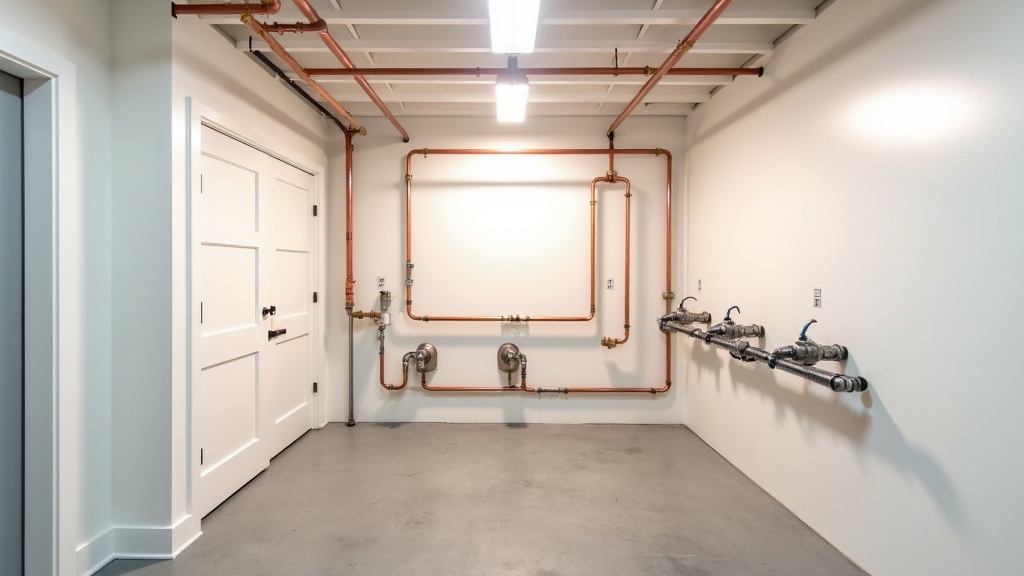
A water softener rough-in has nothing to do with the softener itself. You are not buying equipment at this stage. You are building the infrastructure so that when you are ready for equipment, the installation is clean, fast, and significantly cheaper than the alternative.
A complete rough-in for a water treatment system includes four components, all installed before insulation and drywall go up:
- Inlet and outlet bypass valves on the main supply line (a bypass loop)
- A drain line stub-out routed to the laundry drain or floor drain
- A dedicated 120V electrical outlet within six feet of the softener location
- Treated water line connection to the whole-house supply, positioned before the water heater
Materials run between $150 and $400, plus one to two hours of plumber time at whatever your builder's subcontractor charges. Total rough-in cost: $150 to $550. That is the entire investment at this stage.
Custom home builders in Eagle and Star do not always include this in the standard scope. You have to ask for it, typically as a change order. The good news is that you have more leverage at this stage than at any other point in the build. Once drywall is up, the conversation changes entirely.
Rough-In vs Retrofit: The Real Cost Comparison
The softener system itself costs the same whether you install it at rough-in or three years after move-in. A whole-home TrueWater system runs $1,200 to $2,800 installed, depending on grain capacity and whether you add a sediment pre-filter or a point-of-use reverse osmosis unit at the kitchen sink. Equipment cost is a constant.
What changes is the labor to install it:
- During construction (rough-in): $150 to $550 total for infrastructure; equipment install is straightforward
- In a finished home (retrofit): $400 to $900 in additional labor on top of equipment cost, for drywall cuts, drain routing, patch and paint, and working in a tight utility space
That gap is $400 to $900, and it does not count the hidden cost of reduced access. In a retrofit, the softener often ends up in a location that is harder to reach for salt loading or maintenance, simply because there was no good option after drywall. With a rough-in, you choose the location deliberately.
There is also the break-even calculation on water heater maintenance. A flush and descale on a water heater running 14 gpg water typically costs $150 to $300 per service visit, and many plumbers recommend it annually in hard water areas. The rough-in premium pays for itself on the first avoided service call.
The Decision Timeline: When the Window Opens and Closes
The construction timeline moves faster than most buyers expect. Here is where the window is, and where it closes:
- Pre-construction and design phase: Add the rough-in spec to the plumbing plan. Costs nothing extra at this stage. The plumber budgets for it from the start.
- Rough plumbing inspection (typically four to eight weeks into framing): The last easy opportunity. Add the bypass loop and drain stub this week. The walls are still open.
- Insulation phase: The window is closing. Drywall follows insulation quickly on most custom builds in Eagle and Star.
- Drywall complete: You are now in retrofit territory. The cost premium kicks in.
- Certificate of Occupancy and move-in: Full retrofit. Budget $500 to $900 in additional labor above the equipment cost.
We recommend scheduling a TrueWater site visit between the rough plumbing inspection and insulation. One hour, no charge. We review the utility room layout, confirm the bypass location, and write the rough-in spec for your plumber so there is no ambiguity on the change order.
What to Ask Your Builder (Exact Language)
Builders respond to specific requests, not general ones. Here is the language that works:
- "Can we add a water softener pre-plumb to the plumbing scope?"
- "I want a bypass loop, drain stub, and dedicated outlet in the utility room for a future water softener."
- "What is the add-on cost as a change order?" (A typical answer is $200 to $500. If you are quoted over $800, call us before signing anything.)
Ask to see the rough plumbing plan and confirm that the utility room location is accessible from the main supply line before the water heater. If your builder says "we can add it after you move in," they are technically correct. But the labor cost runs $400 to $900 higher in a finished home. The rough-in is the right call.
For Star homes on well water, the conversation is slightly different. Well water in Canyon County often carries iron, manganese, or sulfur in addition to hardness. Before finalizing any rough-in spec on a well property, we recommend a full water test first: hardness, iron, total dissolved solids, pH, and sulfur. That test determines whether you need a single-stage softener or a multi-stage treatment system, which affects the footprint and drain capacity you rough in for.
How the 2026 Drought Is Changing the Equation
The Boise Drought Ordinance that went into effect this week is a policy signal, not just an operational one. It tells you that water stress in the Treasure Valley has moved from a background concern to an active management problem. Eagle and Star are not subject to the ordinance directly, but the aquifer conditions that drove it affect both cities.
The Snake River Plain Aquifer has been under pressure from back-to-back below-average snowpack winters in 2023-24 and 2024-25. Less snowmelt means less recharge. Less recharge means less dilution of calcium and magnesium in the groundwater. The practical result is that water hardness readings across the Treasure Valley have been trending toward the upper end of their historical ranges. Eagle water that tested at 11 gpg in a wet year may test at 13 or 14 gpg this summer.
Municipal systems under drought stress also adjust their treatment chemistry, sometimes in ways that homeowners feel downstream: shifts in pH, changes in disinfection byproducts, adjustments in coagulant use. The EPA drinking water standards set the floor for municipal treatment, but they do not address the hardness and scale issues that affect your home's plumbing and appliances.
A water softener rough-in is infrastructure you are building for the next 30 years. The drought conditions of 2026 are a useful reminder that water quality in the arid West is not a static problem. Building the capacity now, while the walls are open, is the rational call.
What TrueWater Recommends for Eagle and Star New Builds
Here is what we typically specify for new construction in these two cities:
- Eagle municipal water (11 to 14 gpg): A 32,000 to 48,000 grain whole-home softener, roughed in before the water heater on the main supply line. Most Eagle homes in the 2,500 to 4,000 square foot range land in the 48,000 grain range.
- Star municipal water (12 to 16 gpg): 48,000 grain minimum. For homes on older Star distribution lines, we also recommend adding a sediment pre-filter to the rough-in spec. Older infrastructure can introduce particulates that shorten softener resin life.
- Star well water: Full water test first. Plan the rough-in for a multi-stage system with adequate footprint and drain capacity. Do not spec equipment until you have test results.
- Reverse osmosis for drinking water: We recommend a point-of-use RO unit at the kitchen sink on every new build. Stub the drain line to the sink cabinet during cabinet rough-in. This is a 30-minute addition that saves a wall-penetration later.
We offer free on-site consultations for new construction projects. We review your builder's plans, confirm the utility room location and clearances, and write the rough-in spec in language your plumber can add directly to their scope. No equipment purchase required. You are under no obligation. For an existing article on what this looks like in a similar market, see our new construction water quality in Meridian guide. And if you are dealing with the specific challenges of hill and foothills lots, our Eagle Foothills water quality guide covers the well water side in detail.
Know What's In Your Water Before Your Walls Close
Want to know exactly what's in your Eagle or Star water before you build? We offer free on-site water consultations for new construction projects. No pressure, no sales pitch. Just the facts you need before your walls close.
Frequently Asked Questions
Do I have to buy the water softener before my house is framed?
No. The rough-in is just the plumbing infrastructure: bypass valves, drain line, and electrical outlet. You can buy and install the actual equipment anytime, even years later. The rough-in simply means the installation will be clean, fast, and significantly less expensive when you are ready.
How hard is the water in Eagle, Idaho?
Eagle water typically tests between 11 and 14 grains per gallon (gpg), which the USGS classifies as very hard. During dry years like 2026, readings can trend toward the upper end of that range as aquifer recharge slows and minerals concentrate. That makes a water softener rough-in especially relevant for anyone building in Eagle right now.
My builder says they can add a softener after we move in. Why should I do it now?
They are right that it is possible after move-in, but the labor cost typically runs $400 to $900 higher in a finished home versus during construction. More importantly, your water heater and appliances begin accumulating scale damage from day one. The rough-in protects everything from the first shower, and it gives you a cleaner, more accessible installation for the life of the system.
Does the Boise Drought Ordinance affect Eagle and Star residents?
The ordinance applies specifically to City of Boise water customers. Eagle and Star have their own water providers, so they are not subject to this ordinance directly. However, the drought conditions driving it affect the entire Treasure Valley, including the aquifers and surface water sources that feed Eagle and Star systems. Water hardness readings across the region are trending higher as a result.
What is the difference between a water softener rough-in for a well vs municipal water?
For municipal water, a standard rough-in covers most scenarios. For well water in Star and Canyon County, we recommend sizing the rough-in space for a multi-stage system because well water often contains iron, manganese, or sulfur in addition to hardness. You want the drain capacity and footprint for a larger system, and you want that decision made before your utility room walls are closed.