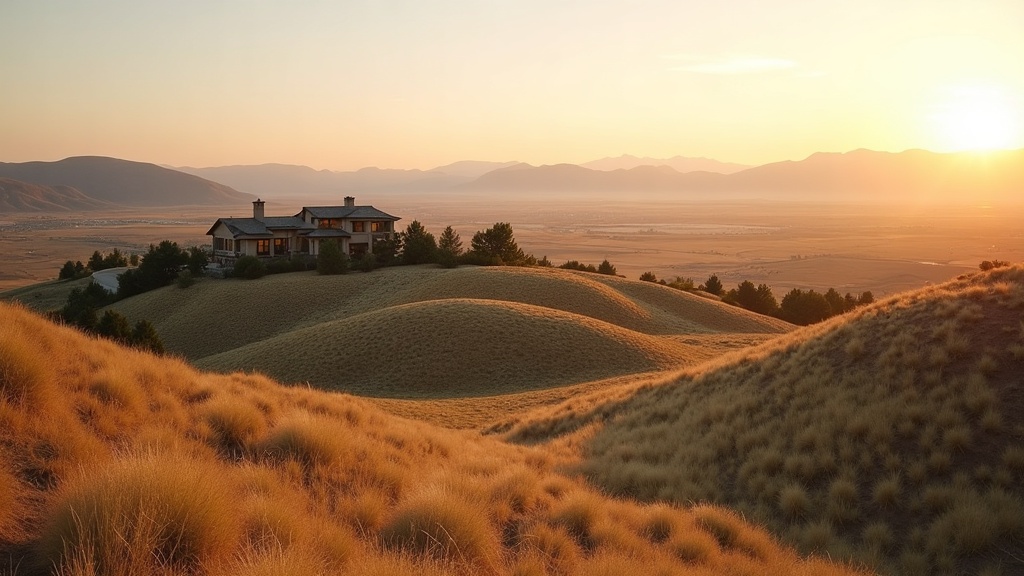
Eagle Foothills is one of the fastest-growing and most desirable corridors in the Treasure Valley. Custom homes are going up from Beacon Light Road north toward the Valnova master-planned community, and the views from those hillside lots are hard to beat. The water coming out of those taps, though, is a different story. Whether your new home sits on city water or a private well, the Eagle Foothills area consistently tests among the hardest water in Ada County, ranging from 12 to 18 grains per gallon (gpg). That number has real consequences for your appliances, plumbing, skin, and energy bills, and knowing what you are dealing with is the first step.
Why Eagle Foothills Water Is Different From the Rest of Eagle
Eagle is not a monolithic water zone. The city operates multiple distribution systems, and hardness readings vary significantly depending on where you live. Homes in Eagle's eastern and western urban core typically test between 6 and 9 gpg. That is still considered hard water by EPA standards, but it is manageable. Move north of Beacon Light Road into the Foothills, and the readings jump to 12 to 18 gpg. That puts the Foothills in the same hardness range as Meridian, which averages 12 to 17 gpg, and on par with some of the toughest stretches in Boise, which runs 10 to 15 gpg.
Even on city water, homes at the end of longer distribution runs in the Foothills can see more mineral variation than those closer to treatment infrastructure. And on parcels larger than an acre, private wells pull directly from the Snake River Plain Aquifer with no municipal treatment at all.
The Volcanic Basalt Factor
The geology here explains everything. The Treasure Valley sits on layered basalt deposited by ancient lava flows, and groundwater moving through basalt dissolves calcium carbonate and magnesium as it travels. The further north and higher in elevation you go, the longer that water has been in contact with the rock. More contact time means more dissolved minerals, which means harder water by the time it reaches your tap.
This is not a contamination problem. It is geology. But it does require treatment if you want to protect your home and your family. For more background on how Idaho's aquifer geology drives hardness across the region, see our overview of Eagle's water supply, quality, and hardness.
City Water vs. Private Wells in Eagle Foothills: Which Do You Have?
This matters a lot when choosing a treatment system. Eagle operates four water systems: the Eastern Zone, Western Zone, Avimor, and the newer Valnova service area. If your address falls within one of those service boundaries, you are on municipal water and Eagle's public works team handles baseline treatment.
Many Foothills parcels on one to five or more acres use private wells. If you are not sure which applies to you, check your property records in Ada County's parcel data portal, look for a well head on your property (typically a four to six inch casing pipe capped with a well cap), or contact Ada County's building department.
Private well owners carry the full responsibility for water quality. There is no municipal testing, no treatment upstream of your pressure tank. The Idaho Department of Health and Welfare recommends testing private wells every one to three years, and more often during drought conditions.
What Private Well Owners Should Test For
A complete panel for an Eagle Foothills well should include:
- Total hardness (calcium and magnesium, reported in gpg or mg/L)
- Iron and manganese (staining, metallic taste, clogged fixtures)
- Arsenic (detected in Ada County wells; EPA limit is 10 ppb)
- Uranium (low-level occurrences in Snake River Plain groundwater)
- Nitrates (agriculture-adjacent parcels, septic proximity)
- Bacteria (coliform, E. coli; annual testing recommended)
The EPA's private well guidance is a solid reference for understanding what to test and how often.
What Hard Water Does to a New Home
Valnova is a 7,000-home master-planned community breaking ground in Eagle Foothills, developed by Clyde Capital Group. Construction started in 2025, and thousands of new homeowners are moving into some of the highest-hardness water territory in Ada County. Water rights for Valnova are assigned to the City of Eagle, with infrastructure built at developer cost. The SH-16 overpass that will serve the area is under construction through the end of 2026.
For those buyers, and for anyone in a newer Foothills home, the timing conversation matters. Scale buildup inside supply lines, water heaters, and dishwashers is often invisible until the damage is done. Tankless water heaters are especially vulnerable. Most manufacturers specify hardness under 11 gpg for warranty coverage. At 14 to 18 gpg, you are outside that range without treatment, and a voided warranty on a $1,200 to $2,000 unit is a painful lesson.
Beyond equipment, you will notice it in daily life. Shower glass films over within weeks. Tile grout stains. Soap and shampoo do not lather as well. Skin and hair dryness are among the most common complaints we hear from families new to the Treasure Valley.
There is also an energy cost. Scale deposits on water heater heating elements increase energy consumption by roughly 25 percent for every quarter inch of buildup. That adds up over a year on a family's utility bill.
The ideal window is before drywall or during the rough-in phase of new construction. Installing a softener pre-drywall is cleaner, faster, and cheaper than retrofitting later. If your home is already finished, it is still very doable, but the earlier the better.
The 2026 Drought and Eagle Foothills Water
Idaho entered a statewide drought emergency on April 13, 2026, after the second-warmest winter since 1896 and record-low snowpack. Ada County is classified at D2 (Severe Drought) on the U.S. Drought Monitor. Eagle moved to Stage 1 water restrictions in April, requiring odd/even outdoor watering schedules and prohibiting irrigation between 10 a.m. and 6 p.m.
If you are on city water, supply remains stable. Conservation rules apply, but your water quality is not directly affected by drought in the short term.
If you are on a private well, the picture is different. Reduced snowpack means reduced aquifer recharge. As water tables drop, wells pull from older, more stagnant portions of the aquifer. Two things happen: mineral concentration tends to increase (because there is less dilution from fresh snowmelt infiltration), and arsenic readings can tick upward. Statewide groundwater curtailment orders were issued on May 14, 2026, and well owners across Ada County should consider a fresh test this season if they have not done one recently.
Water Treatment Options for Eagle Foothills Homes
Not every home needs the same solution. The right system depends on whether you are on city water or a well, your hardness level, and whether you have secondary concerns like iron or arsenic. Here is how we think about it.
Salt-Based Water Softeners (Ion Exchange)
For hardness above 10 gpg on city water or a clean well (low iron, no arsenic), a salt-based ion exchange softener is the most effective and proven solution. The resin tank swaps calcium and magnesium ions for sodium, delivering soft water to every tap, fixture, and appliance in the home. Typical installed cost in the Treasure Valley runs $1,200 to $2,800 depending on grain capacity and your home's square footage. See our full breakdown of water softener installation costs in Eagle, Idaho for more detail.
Whole-House Filtration for Well Water
Well water with multiple concerns requires a staged approach. The sequence typically looks like this:
- Sediment pre-filter (removes particulates that can foul downstream media)
- Iron filter, if iron is above 0.3 ppm (oxidizing media or aeration, depending on levels)
- Salt-based softener (handles hardness after iron is removed)
- Arsenic reduction media, if arsenic is detected above safe levels
- Reverse osmosis at the kitchen tap for drinking and cooking water
Skipping the iron filter and running iron-rich water through a softener will foul the resin and cut the softener's lifespan significantly. The order matters.
Reverse Osmosis for Drinking Water
An under-sink RO system (three to five stage) handles what a softener cannot: arsenic, nitrates, total dissolved solids, and anything else that gets through to the drinking water tap. Most Foothills homeowners with wells pair a whole-house softener with an RO system at the kitchen sink. A refrigerator line hookup is a common add-on so ice and chilled water both come through the RO membrane.
What to Expect From a TrueWater Site Visit
We start with a water test. For city water homes, we run an on-site hardness and basic mineral test during the visit. For well water homes, we coordinate a full certified lab panel so you have complete data on hardness, iron, arsenic, nitrates, and bacteria before we recommend anything.
During the visit, we also check your plumbing for visible scale buildup at fixture connections, water heater inlets, and under-sink supply lines. That gives us a practical picture of how long the hard water has been working on your home.
You leave with a written recommendation showing two to three options with installed pricing. No pressure, no high-close tactics. We are a local Treasure Valley team, not a national franchise with quotas to meet. From signed agreement to installation, most jobs run one to two weeks.
Frequently Asked Questions
How hard is the water in Eagle Foothills compared to the rest of Eagle?
Eagle's urban core typically tests between 6 and 9 grains per gallon. The Foothills area, especially north of Beacon Light Road, tests 12 to 18 gpg. That is roughly double the hardness in the rest of the city, driven by longer groundwater contact with volcanic basalt at higher elevations. Both are considered hard water, but the Foothills range requires more robust treatment.
Do I need a water softener if my Eagle Foothills home is on a private well?
Almost certainly yes, but the softener is usually part of a larger system. Well water in the Foothills commonly has hardness above 12 gpg plus elevated iron and, in some cases, arsenic. We recommend a full lab panel first so we know exactly what is in your water. Depending on results, you may need a sediment pre-filter and iron filter ahead of the softener, and an RO system at the kitchen tap for drinking water safety.
What does the 2026 Idaho drought mean for my well water quality in the Foothills?
Drought reduces aquifer recharge. As water tables drop, wells draw from older portions of the aquifer where minerals are more concentrated. This can increase hardness readings and, in some cases, arsenic levels. Statewide groundwater curtailment orders were issued in May 2026. If you have not tested your well in the past year, now is a good time to get a fresh lab panel so you have current baseline data.
Will a water softener void my tankless water heater warranty?
Installing a properly sized softener before your tankless water heater protects the warranty rather than voiding it. Most tankless manufacturers specify that water hardness should not exceed 11 gpg for full warranty coverage. At 12 to 18 gpg, you are already outside that threshold without treatment. A softener bringing hardness down to 0 to 1 gpg satisfies manufacturer requirements and extends the life of the unit significantly.
What contaminants should I test for in an Eagle Foothills private well?
At minimum, test for total hardness, iron and manganese, arsenic, uranium, nitrates, and total coliform bacteria. Arsenic has been detected in Ada County wells at low levels, and uranium occurs naturally in Snake River Plain groundwater. Nitrates are worth testing on agricultural-adjacent parcels or properties with older septic systems. The Idaho Department of Health and Welfare recommends full panel testing every one to three years, and more often during drought conditions like we are seeing in 2026.
Get Your Free Eagle Foothills Water Test
We test on-site for city water homes and arrange full lab panels for well water. No pressure, no sales pitch. Just honest answers about your water.