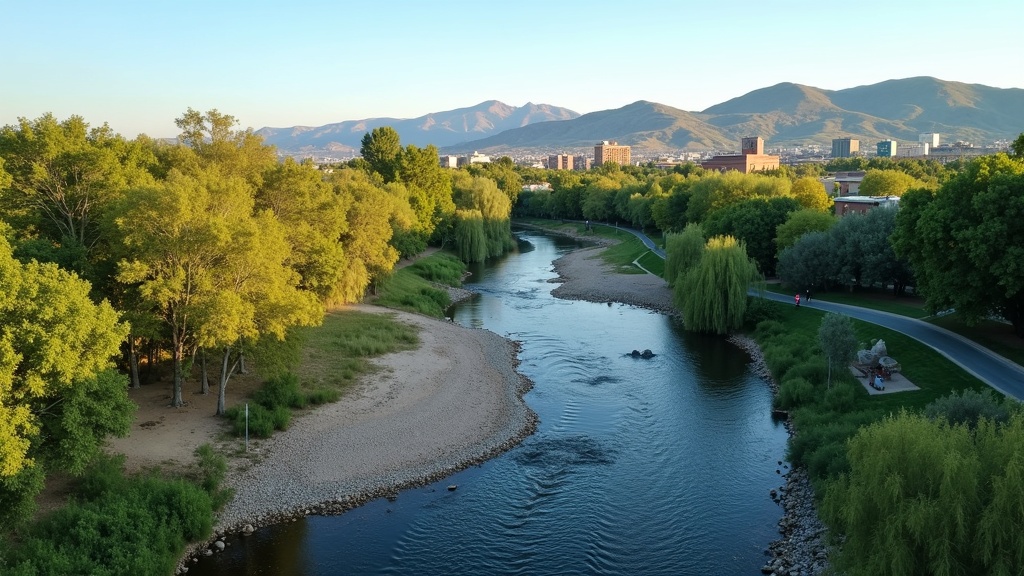
The Boise River Is Running Low. Here Is What That Means for Your Tap.
As of June 25, 2026, USGS monitoring station data shows the Boise River at Glenwood Bridge running at approximately 786 cubic feet per second. The median flow for this calendar date across 44 years of records is 1,310 cfs. That means the river is roughly 40 percent below its historical median and more than 55 percent below the long-term mean flow of around 1,740 cfs for late June.
We have been tracking this closely because the Boise River is not just a greenbelt amenity. It is the upstream source for a significant share of the treated drinking water that flows into homes across Boise and Ada County. When the river runs this low, the chemistry of that water shifts in ways most homeowners do not realize until they start noticing scale on their faucets, spots on their glassware, or a faint odor from the tap.
This article focuses specifically on the treatment implications of low river flow: how concentration effects work, what it means for hardness and disinfection byproducts, and what Treasure Valley homeowners can do about it. If you want the broader drought emergency context, see our earlier piece on Idaho drought 2026 tap water quality.
How Low River Flow Concentrates What Is in Your Water
Think of the Boise River as a giant mixing bowl. Minerals dissolve into it from surrounding rock and soil. Organic matter washes in from the watershed. Agricultural runoff from upstream operations adds its share. Under normal flow conditions, all of these inputs are diluted across a much larger volume of moving water.
When flow drops by 40 percent or more, that dilution effect shrinks. The same amount of dissolved minerals and organic material now occupies less water. The result is a higher concentration of everything the river carries, including calcium and magnesium (the minerals responsible for water hardness), naturally occurring organic compounds, and sediment that can spike after any summer thunderstorm rolls through the Foothills.
This is not unique to Boise. Every surface water system in the American West experiences this during drought years. What makes the Treasure Valley situation notable is that Boise already sits at the harder end of the drinking water spectrum under normal conditions, running 10 to 15 grains per gallon (gpg) on most days. When concentration effects kick in, that number can edge higher, which has a compounding effect on appliances, pipes, and water heaters that are already dealing with scale.
Disinfection Byproducts: The Part Most People Miss
Chlorine is the primary disinfectant used in municipal water treatment. It is safe, effective, and federally required to maintain a residual level through the distribution system all the way to your tap. The challenge is that chlorine reacts with naturally occurring organic matter in source water to form disinfection byproducts (DBPs), most notably trihalomethanes (THMs) and haloacetic acids (HAAs).
During low-flow drought conditions, two things happen at once. First, organic matter concentration in river water rises, because the same biological load from algae, plant material, and upstream runoff is now concentrated in lower volume. Second, water moves more slowly through the system, giving chlorine more time to react with that organic matter before it reaches your home. Both factors push DBP formation upward.
Your utility is required to keep THMs below 80 parts per billion and HAAs below 60 ppb under EPA Stage 2 Disinfectants and Disinfection Byproducts Rule. Treatment plants adjust chlorine dosing and other parameters to stay within those limits. The water remains legally safe to drink. But if you want a layer of protection beyond what the utility provides, a quality under-sink EPA-certified reverse osmosis system removes THMs and HAAs effectively, typically reducing them by more than 95 percent.
What Boise and Meridian Homeowners Are Noticing Right Now
Our team has been doing free water tests across Boise, Meridian, Eagle, and Nampa throughout June 2026. A few patterns are showing up consistently.
Scale is building faster. Homeowners are reporting white mineral deposits on showerheads, faucet aerators, and coffee maker heating elements that they need to clean more often than they did a year ago. That tracks with higher hardness concentration in source water.
Water heaters are working harder. Scale buildup inside tank water heaters acts as insulation between the heating element and the water. Every eighth of an inch of scale forces the heater to consume more energy to achieve the same output temperature. If your water heater is more than five years old and has not been flushed recently, this is a good time to schedule a flush.
Taste and odor shifts. Some customers in north Boise and Garden City have mentioned a faint earthy or chlorine-adjacent taste that was not as noticeable last summer. This is consistent with elevated organic matter and the adjusted disinfection chemistry that treatment plants use to manage it.
Meridian residents tend to be somewhat less affected by surface flow swings because Meridian's supply draws more heavily from the deep basalt aquifer system beneath the valley floor. Aquifer water typically runs 12 to 17 gpg of hardness, but it is more chemically stable than surface water and less responsive to short-term river flow changes. That said, even aquifer-sourced water picks up additional hardness during drought years as pumping draws from deeper, more mineral-rich zones.
How Treatment Plants Adapt, and What They Cannot Control
United Water Idaho and the City of Boise water utility both operate modern treatment facilities that can adjust their processes to compensate for lower-quality source water. During drought periods, they typically increase coagulant dosing to capture more suspended particles, adjust pH to optimize disinfection chemistry, and in some cases increase the frequency of filter backwashing to handle higher turbidity spikes.
What utilities cannot fully control is the mineral content that passes through treatment. Calcium and magnesium that cause hardness are not removed by conventional municipal treatment processes. Chlorination deals with biological contaminants but adds its own chemistry to the water. The result is treated water that is safe by every regulatory measure but may be harder and carry more disinfection chemistry than it did during higher-flow months.
This is the gap that home water treatment fills. A properly sized whole-house softener removes the hardness that utilities cannot. An undersink RO removes the residual disinfection byproducts and any trace contaminants that pass through the municipal system. Together, they give you full-spectrum protection that goes beyond what any municipal treatment plant is designed or funded to provide.
The Aquifer Connection: Lucky Peak and Groundwater
Boise's water supply is a blend of surface water from the Boise River system, including storage in Lucky Peak, Arrowrock, and Anderson Ranch reservoirs, and groundwater from the Eastern Snake Plain Aquifer system. During normal years, reservoir storage at Lucky Peak provides a buffer against seasonal flow fluctuations. During a drought year like 2026, with reservoir storage running well below historical norms, the blend shifts. Treatment plants draw more from groundwater to compensate, and groundwater in the Treasure Valley carries its own mineral signature.
The deep basalt aquifer water is typically very stable in quality, but it is also very hard. Shifting the supply blend toward more groundwater during drought does not necessarily make water more dangerous, but it does mean more hardness reaching your home's plumbing and appliances. For homeowners already dealing with scale on fixtures, this is the mechanism that explains why things seem to be getting worse this summer specifically.
For a deeper look at where Boise area water comes from under normal conditions, our Boise water quality report for 2026 covers the full supply picture with hard numbers.
What You Can Do Right Now
Here are the practical steps we recommend for Treasure Valley homeowners dealing with 2026 drought-driven water quality shifts.
- Get a free water test. Do not guess at what is actually in your water. We test for hardness, pH, TDS, chlorine, and iron at no charge. Call (208) 968-2771 to schedule.
- Flush your water heater. Sediment accumulates faster during high-concentration periods. A flush takes about 30 minutes and can meaningfully extend the life of the unit.
- Clean aerators and showerheads. Soak them in white vinegar for an hour to dissolve calcium scale. Replace any that are beyond recovery.
- Consider a whole-house softener. If your water tests above 10 gpg, a properly sized softener is the most cost-effective way to protect appliances, pipes, and fixtures from accelerating scale damage.
- Add an undersink RO for drinking water. Particularly if you are sensitive to taste changes or want to eliminate any concern about disinfection byproducts in cooking and drinking water.
- Run cold water for 30 seconds before use. In low-flow conditions, water sitting in distribution lines concentrates additional minerals. Flushing the line before drinking is a simple free step.
Frequently Asked Questions
Is Boise tap water safe to drink when the river is low?
Yes. United Water Idaho and city treatment plants are required to meet EPA Safe Drinking Water Act standards regardless of river flow. However, lower flows do mean higher concentrations of naturally occurring minerals, which increases hardness and can raise levels of disinfection byproducts like trihalomethanes. The water is safe, but it may taste different and cause more scale buildup in your home.
Does low river flow make Boise water harder?
It can, yes. When river flow drops significantly, the same mineral load that enters the water from surrounding geology becomes concentrated in less water volume. This raises total dissolved solids and can push hardness higher than the typical 10-15 grains per gallon Boise residents are used to. Meridian, which pulls more from groundwater aquifers, tends to run 12-17 gpg and is somewhat less affected by surface flow swings.
What are disinfection byproducts and should I be worried?
Disinfection byproducts (DBPs) form when chlorine used to treat drinking water reacts with naturally occurring organic matter in source water. During low-flow, droughty conditions, organic matter concentrations in river water can increase, producing more DBPs like trihalomethanes (THMs) and haloacetic acids (HAAs). Your utility is required to keep these well below EPA limits, but a quality under-sink reverse osmosis system removes them effectively if you want an extra layer of protection.
How does the Boise River low flow affect water treatment plants?
Treatment plants must work harder during low-flow periods. With less dilution, source water enters the plant with higher turbidity spikes after any rain event, elevated mineral concentrations, and more organic matter. Plants compensate by adjusting coagulant doses, filtration rates, and disinfection protocols. The result is safe water, but the treatment chemistry shifts in ways that can slightly change taste, odor, and the mineral profile coming out of your tap.
What can I do to protect my home during low-flow drought conditions?
The two most effective steps are installing a whole-house water softener to manage increased hardness and scale, and adding an under-sink reverse osmosis system for drinking and cooking water to remove any elevated disinfection byproducts. A free water test from TrueWater Idaho will show you exactly where your water stands right now so you can make an informed decision. Call us at (208) 968-2771 to schedule.
Find Out What Is Actually in Your Water
With the Boise River at its lowest June level in years, now is the right time to know your numbers. We test hardness, TDS, chlorine, and iron for free, no strings attached.
Serving Boise, Meridian, Eagle, Nampa, Caldwell, Star, and Kuna