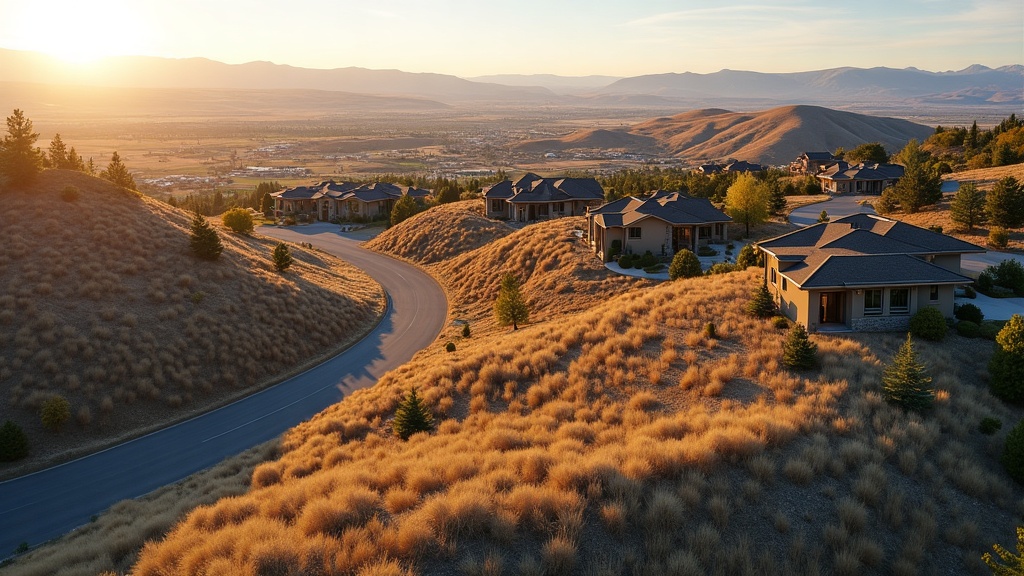
Avimor sits in the Boise Foothills above the valley floor, and that elevation comes with a water story that is different from most Eagle neighborhoods. If you are a new resident, or if you are buying into one of the community's expanding phases, understanding your water source is one of the smartest first steps you can take. We have tested water across the Treasure Valley for years, and Avimor is a community that deserves a closer look than most.
Why Avimor Has Its Own Water Story
Most Eagle residents are served by Veolia Water Idaho (formerly Suez), drawing from valley-floor sources. Avimor is different. Phase 1 homes are served by Veolia water piped up from the valley, a system that was deliberately engineered because the original development plan did not go as expected.
When developers drilled exploratory wells during the original buildout, they struck the Sandy Hill Aquifer, a formation isolated in a granite bowl beneath the foothills. Arsenic levels in that aquifer came back above EPA drinking water standards. Rather than treat that water on-site, the Idaho PUC approved piping treated municipal water up from the valley. That is the water Phase 1 residents use today.
The City of Eagle publishes a separate Annual Consumer Confidence Report specifically for Avimor and Valnova. This is a distinct document from the City's main service zone report. If you want to know exactly what is in your water, that is the report to request from the City of Eagle Water Department.
The story does not end there. Avimor has rights to pump up to 5 cubic feet per second from on-site wells for future development phases. As the community expands to its planned 1,700-plus additional homes, some residents may be served by different infrastructure than the original Phase 1 piped system. Knowing which phase you are in, and which water system serves your home, is the starting point for everything else.
What Veolia Eagle Water Actually Contains
Veolia Eagle serves roughly 9,800 people across its Eagle service area. Recent quality reports indicate that two contaminants have been detected above EPA health-based guidelines (MCLGs). That does not necessarily mean the water violates federal safety standards, but it is worth understanding what those contaminants are and what the numbers mean for your household.
On the hardness front, Eagle municipal water via Veolia generally runs in the 6 to 9 grains per gallon (gpg) range on the valley floor. Foothills service areas can trend higher depending on the specific source blend. For reference, water above 7 gpg is considered hard; above 10.5 gpg is very hard. Boise valley water typically runs 10 to 15 gpg, and Meridian runs 12 to 17 gpg. By Treasure Valley standards, Veolia Eagle water is on the moderate end, but moderate hardness still has real effects on your home.
Hard water leaves scale deposits in water heaters and dishwashers, creates spots on fixtures and glassware, reduces soap effectiveness, and shortens appliance lifespans. These are not catastrophic problems, but they add up. A household running hard water through a new water heater for ten years is paying a quiet tax in energy costs and early replacement.
For Avimor-specific hardness numbers rather than the general Eagle zone averages, request the Eagle CCR for Avimor and Valnova directly from the City of Eagle. That report will reflect what is actually coming through your service connection.
The Drought Factor: April 2026 Avimor Water Quality Update
Idaho declared a statewide drought emergency on April 13, 2026, following the second-warmest snow accumulation season since 1896. Snowpack hit record lows and melted a full month ahead of schedule. The Boise River dropped to Stage 2 conservation thresholds in April, a milestone that typically does not happen until June. IDWR issued curtailment orders on 924 eastern Idaho groundwater rights, a sign of how widespread the pressure has become.
What does a drought have to do with water quality? When aquifer recharge slows, the same dissolved mineral load is concentrated in less water volume. Put simply, less water in the system means higher mineral concentrations per gallon. For Avimor foothills residents near or on well water, this is directly relevant to hardness, iron, and other dissolved mineral readings.
For Veolia municipal customers, the utility continues treating and delivering water normally. But for any Avimor resident in a later development phase that may use on-site wells or surface water rights, the 2026 drought makes this an especially important year to test. You want to understand your worst-case mineral profile, and a drought year gives you exactly that picture.
We wrote a detailed breakdown of how the drought affects Treasure Valley water quality that covers the regional picture: Idaho Drought 2026: What It Means for Your Water Quality.
The Five Tests New Avimor Residents Should Run
Not all water tests are created equal. Here are the five tests that matter most for anyone moving into Avimor or the Eagle foothills.
1. Total Hardness (gpg)
This is the baseline test for any Treasure Valley home. Above 7 gpg, a softener is worth serious consideration. Above 10 gpg, the financial case becomes clear. TrueWater offers this test free during an in-home visit. Certified lab testing runs $20 to $40 if you prefer an independent result.
2. Arsenic
Given Avimor's history with the Sandy Hill Aquifer, arsenic testing is non-negotiable for any private well user in this area. The EPA action level is 10 parts per billion (ppb). Idaho DEQ maps arsenic occurrence statewide, and the Boise Foothills carry documented geological risk. This test requires a certified lab and typically costs $30 to $60.
3. Iron and Manganese
Both are common in Idaho groundwater. Iron causes rust-colored staining on fixtures, laundry, and sinks. Manganese causes black staining and, at elevated levels, carries neurological health concerns. A standard water softener handles low iron concentrations. Elevated levels require a dedicated iron filter. Testing iron and manganese together through a certified lab costs $40 to $80.
4. Nitrates
The Eagle foothills border agricultural areas where nitrate leaching into groundwater is a known concern. The EPA maximum contaminant level (MCL) is 10 milligrams per liter. Nitrates pose the most serious risk to infants and pregnant women. Any household on a private well should test annually. Lab cost is typically $20 to $40.
5. PFAS ("Forever Chemicals")
Trace PFAS levels have been detected across the Eagle and Treasure Valley region. New EPA limits took effect in 2024. If you are a Veolia municipal customer, the utility tests for PFAS and the results appear in the annual CCR. If you are on a private well, run this test at least once. A basic PFAS panel from a certified lab runs $100 to $200.
Municipal vs. Well Water in Avimor: Which Phase Are You In?
Your water infrastructure in Avimor depends on which phase your home was built in, and this matters more than most new residents realize.
Phase 1 homes, roughly 800 residences, receive Veolia Water Idaho service piped from valley-floor sources. This is regulated municipal water with annual quality reporting and federal Safe Drinking Water Act oversight. You receive the same annual CCR that Veolia distributes to its broader Eagle customer base, plus the Avimor-specific report from the City of Eagle.
Future expansion phases, which will add more than 1,700 additional homes, are planned to use a combination of on-site surface water rights and permitted groundwater wells. Homes in these phases may be served by different infrastructure than Phase 1 residents. That infrastructure will include treatment systems, but the source water and its mineral profile will be different from the piped valley water Phase 1 residents receive.
New construction is worth a separate note. Even on Veolia municipal service, new plumbing systems can introduce sediment, flux residue from soldered joints, and construction debris. A whole-house sediment filter is a practical first step for any newly built home while the plumbing settles in.
To confirm which water system serves your home, check your monthly water bill. The billing entity will be either Veolia Water Idaho or the City of Eagle. If you are unsure, call us at (208) 968-2771 and we can help you figure it out.
For more on water quality across the broader Eagle foothills area, see our detailed guide: Eagle Foothills Water Quality: Hard Water and Wells.
What Hard Water Actually Costs a New Homeowner
Hard water is easy to ignore because the damage is gradual. But the cumulative cost is real, and it shows up in your appliance replacement cycle, your energy bills, and your plumbing repairs.
Water Heater
Scale buildup reduces water heater efficiency by up to 48% and cuts the typical 12 to 15 year lifespan down to 6 to 8 years. A replacement water heater in Idaho runs $1,200 to $2,500 installed.
Dishwasher and Washing Machine
Scale shortens appliance lifespans and hard water neutralizes soap, meaning you use more detergent to get the same result. Appliance replacement costs range from $800 to $1,400.
Plumbing and Fixtures
Scale clogs aerators, showerheads, and supply lines over time. In copper plumbing, mineral buildup can accelerate corrosion and eventually cause pinhole leaks. Fixture replacement and plumbing repairs add up quietly.
Skin, Hair, and Laundry
Mineral residue on skin causes itching and dryness. Hard water leaves hair looking dull and feeling rough. Laundry comes out stiff and faded. These are quality-of-life costs that do not show up in a repair bill but add up daily.
The math is straightforward. A quality whole-house water softener in the Treasure Valley typically runs $2,500 to $4,500 installed. Across appliance protection, energy savings, and reduced detergent use, most households recover that investment in three to five years. After that, you are ahead.
Getting Your Avimor Eagle Water Tested
TrueWater Idaho offers a free in-home water test for Avimor and Eagle foothills residents. We test hardness, iron, and pH on-site, and the whole visit takes about 20 minutes. There is no pressure and no obligation. You get a clear picture of what your water actually contains.
For arsenic, nitrates, and PFAS, a certified lab is required. Idaho DEQ maintains a list of licensed drinking water labs that can run these panels. Depending on which tests you choose, expect to pay $50 to $200 for a comprehensive panel. We can point you toward the right panel for your situation.
The City of Eagle publishes the Consumer Confidence Report for Avimor and Valnova annually. That report covers contaminants in the municipal supply up to the meter. It does not cover your internal plumbing, a private well, or water quality inside new construction. Contact the City of Eagle Water Department to request the current report.
To look up the construction log and drilling records for any well at your property, use the IDWR Find a Well map. This is a public tool that shows well depth, construction details, and historical records for permitted wells across Idaho.
Ready to know what is in your water?
We serve Avimor, Eagle, Meridian, Boise, and the surrounding Treasure Valley. Free in-home test, no obligation.
(208) 968-2771Get a Free Water Test in Avimor
We test hardness, iron, and pH on-site. No pressure, no obligation. Serving Eagle, Avimor, Meridian, and the Treasure Valley.