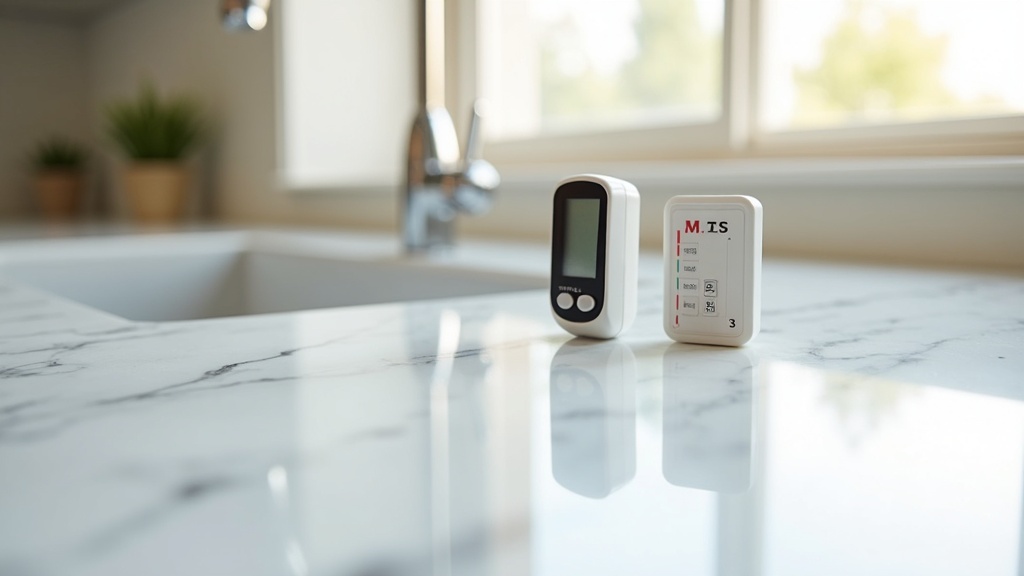
If you have lived in Meridian for more than a few months, you have probably noticed the white residue on your faucets, the spots on your glassware, or the way your skin feels tight after a shower. That is hard water doing its thing. But hardness is only part of the story. Knowing exactly what is in your water gives you the power to fix it.
Here is the good news: testing your water is straightforward, affordable, and something every Treasure Valley homeowner should do at least once a year. We put together this guide to walk you through every option available to Meridian residents in 2026.
Why Water Testing Matters for Meridian Homeowners
Meridian's water supply serves over 133,000 residents, and the city does an excellent job meeting federal compliance standards. But "meeting federal standards" and "having the cleanest possible water in your home" are two different things.
According to the Environmental Working Group's analysis of Meridian Water Department data, three contaminants have been detected above health advocacy guidelines: chloroform, hexavalent chromium (chromium-6), and total trihalomethanes. These are all within legal limits set by the EPA, but the health-based guidelines from organizations like EWG are significantly stricter.
On top of that, Meridian's water hardness typically ranges from 12 to 17 grains per gallon (gpg). That puts it firmly in the "very hard" category and explains why appliances wear out faster and soap does not lather the way it should.
What Idaho's 2026 Water Quality Push Means for You
Idaho DEQ is currently compiling data for its 2026 Integrated Water Quality Report, a comprehensive assessment of water bodies across the state. At the same time, new federal rules will require all public water systems to begin mandatory PFAS (forever chemicals) monitoring by April 2027.
For Meridian homeowners, this means two things. First, the state is paying closer attention to water quality than ever before. Second, if you are on city water, your utility will soon be required to test for PFAS compounds that were not previously monitored. If you are on a private well, no one is required to test your water. That responsibility falls entirely on you.
Idaho DEQ also conducted nitrate priority area sampling near Star in late 2025, highlighting how agricultural runoff continues to affect groundwater quality across the Treasure Valley. About 5% of groundwater monitoring sites statewide exceed the EPA's 10 mg/L nitrate limit, with another 33% showing elevated levels between 2 and 10 mg/L.
Option 1: DIY Test Strips and Kits
The simplest way to get a quick snapshot of your water is a home test kit. You can pick these up at Home Depot or Lowe's in Meridian, or order them online for $15 to $40.
What DIY kits measure well:
- Total hardness (grains per gallon)
- pH level
- Free chlorine and total chlorine
- Iron (some kits)
- Nitrates/nitrites (some kits)
What DIY kits cannot reliably detect:
- Hexavalent chromium (chromium-6)
- PFAS (forever chemicals)
- Specific bacteria species
- Exact mineral concentrations
- Trihalomethanes and other disinfection byproducts
DIY kits are a great starting point. They confirm what you probably already suspect about your Meridian water: that it is hard. But for a complete picture, you need professional testing.
Option 2: Free Water Testing from Local Companies
Several water treatment companies in the Treasure Valley offer free basic water testing, including us at TrueWater Idaho. A technician comes to your home, collects a sample from your kitchen tap, and tests it on-site or sends it to a lab.
A free test from a reputable company typically measures:
- Total hardness
- Total dissolved solids (TDS)
- Iron content
- pH levels
- Chlorine levels
The advantage here is that you get results explained by someone who understands Treasure Valley water specifically. We can tell you whether your 14 gpg reading is typical for your Meridian neighborhood or if something unusual is going on with your plumbing or well.
Option 3: Certified Laboratory Analysis
For the most comprehensive results, send a sample to a state-certified lab. In Idaho, the Idaho Department of Environmental Quality maintains a list of certified drinking water labs.
What to expect from lab testing:
- Basic panel ($25 to $75): Hardness, TDS, pH, chlorine, iron, manganese, nitrates
- Comprehensive panel ($150 to $250): All of the above plus heavy metals (arsenic, lead, chromium-6, uranium), bacteria (coliform, E. coli), and volatile organic compounds
- PFAS-specific testing ($200 to $400): Tests for PFOA, PFOS, and other forever chemicals
Lab testing is especially important if you are on well water in the Treasure Valley. Unlike city water, private wells have no regulatory oversight. You are the quality control department.
What to Test for in the Treasure Valley
Based on Meridian and broader Treasure Valley water data, here are the contaminants we recommend testing for:
- Hardness: Meridian ranges 12 to 17 gpg. This is the #1 issue for most homes.
- Nitrates: Agricultural runoff elevates levels across southern Idaho, especially near Star and Kuna.
- Arsenic: Natural geological deposits cause elevated levels in some Idaho groundwater. The EPA limit is 10 ppb.
- Hexavalent chromium: Detected in Meridian's water supply above EWG health guidelines, though within EPA legal limits.
- Trihalomethanes: Disinfection byproducts formed when chlorine reacts with organic matter in the water.
- PFAS: Low levels detected in Treasure Valley; federal monitoring requirements begin April 2027.
- Bacteria (well water): Coliform and E. coli testing is essential for any private well.
How to Collect a Proper Water Sample
Whether you are using a DIY kit or sending to a lab, proper sample collection matters. Here is the right way to do it:
- Use a clean container. Labs typically provide sterile bottles. If you are doing a DIY test, use a clean glass that has been rinsed with the water you are testing.
- Run the cold water tap for 2 to 3 minutes. This clears the pipes and gives you a representative sample of what is actually coming from the main supply.
- Do not touch the inside of the bottle or cap. Contamination from your hands can skew bacteria results.
- Test at the kitchen tap. This is the most common point of use for drinking water.
- Note the time and date. Water quality can vary by time of day and season, especially for well water in Idaho.
- Refrigerate if not testing immediately. Most labs require samples delivered within 24 to 48 hours for accurate bacteria testing.
How Often Should You Test?
For most Meridian homeowners on city water, an annual test gives you a reliable baseline. But you should test more often if:
- You just moved into a new home (especially new construction in Meridian's growing subdivisions)
- You have a new baby or young children in the house
- You notice changes in taste, smell, or appearance
- Your plumbing or water heater was recently serviced
- You are on well water (test every 6 months)
- You live near agricultural land or a recent development site
Think of water testing like a regular checkup. It is simple, affordable, and it prevents small problems from becoming expensive ones.
Frequently Asked Questions
Get Your Free Water Test
Not sure what is in your Meridian water? We will come to your home, test it on-site, and walk you through the results. No pressure, no obligation.