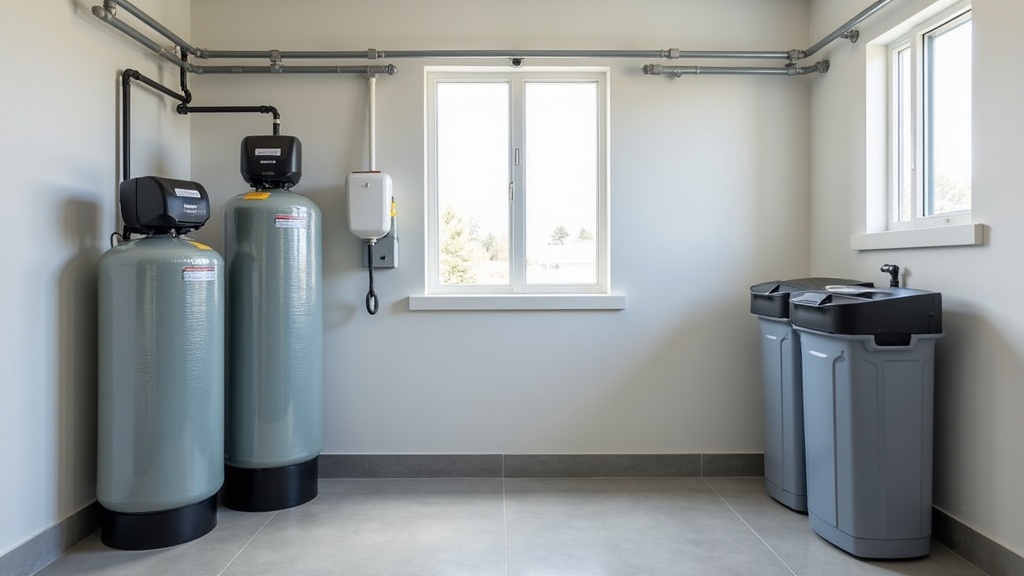
If you've noticed white buildup on your faucets, a filmy residue on glassware, or your water heater running harder than it used to, you're already living with the effects of hard water. And if you're in Meridian, Eagle, or Boise, those effects are more pronounced than almost anywhere else in Idaho.
The question we hear constantly: should you get a water softener or a water conditioner? The honest answer is that it depends on where you live, what your water hardness actually measures, and whether you're on city sewer or a septic system. This guide walks through all of it, including why the 2026 drought makes this decision more urgent than usual.
Treasure Valley Has Some of the Hardest Water in Idaho
Water hardness is measured in grains per gallon (gpg). Anything above 7 gpg is considered hard. Anything above 10.5 gpg is very hard. Here's where Treasure Valley cities typically fall:
- Meridian: 12 to 17 gpg (very hard to extremely hard)
- Eagle: 11 to 16 gpg (very hard)
- Boise: 6.6 to 15 gpg (varies significantly by zone)
- Garden City: around 10 gpg
- Nampa: 3.5 to 8 gpg (moderate, more variation)
Why is this area so hard? The geology is the main driver. The Treasure Valley sits atop limestone bedrock, volcanic ash layers, and alluvial deposits from the Boise River. As groundwater moves through these formations, it picks up calcium and magnesium at high concentrations. Surface water pulled from the Boise River tends to be softer; groundwater from local aquifers is where the numbers get concerning.
The 2026 drought adds a wrinkle. Idaho's statewide drought emergency, declared across all 44 counties this spring, has hydrologists projecting snowpack at or near historic lows for the Boise Basin. When surface water supplies tighten, municipalities and private well users draw more heavily on those same deep groundwater aquifers. More groundwater draw typically means water that's spent more time in contact with mineral-bearing rock. It's reasonable to expect hardness numbers to trend higher this summer in some areas. If you haven't tested your water recently, now is a good time.
What a Water Softener Actually Does
A traditional water softener uses a process called ion exchange. Inside the unit, resin beads carry a sodium charge. As hard water flows through, the resin beads attract calcium and magnesium ions and release sodium ions in their place. The result is water that's technically "soft," meaning the hardness minerals have been physically removed.
This is why softened water feels slippery in the shower. That's not residue; it's actually the absence of mineral interference. Your soap lathers more efficiently and rinses more completely when calcium and magnesium aren't competing with it.
The tradeoffs are real, though. Softeners require salt, typically 40 to 80 pounds per month depending on household size and water hardness. At $15 to $25 per 40-pound bag, that's a recurring monthly cost. The regeneration cycle also uses 50 to 100 gallons of water each time it runs, which carries some weight during drought conditions.
Brine discharge is another consideration. When the system regenerates, it flushes concentrated salt water to drain. For homes on city sewer in Meridian or Eagle, this isn't an issue. For Canyon County homeowners on private wells with septic systems, high-salt discharge can disrupt the bacterial balance in the septic tank and, over time, affect the drain field. It's not a dealbreaker, but it's a conversation worth having before you install.
Installation in Treasure Valley typically runs $1,500 to $3,500 depending on system size and plumbing complexity. For homes with tankless water heaters, Meridian new construction, or anyone consistently above 12 gpg on city sewer, a traditional softener is usually the right call. You can read more about water softener costs specific to Meridian here.
What a Water Conditioner Does (and Does Not Do)
Water conditioners, sometimes called salt-free softeners, work differently. The most common technology is template-assisted crystallization (TAC). Instead of removing calcium and magnesium from the water, TAC changes their physical structure. The minerals form microscopic crystals that stay suspended in the water rather than bonding to pipe walls, heating elements, or faucet surfaces.
The key distinction: conditioners prevent scale buildup, but they do not remove hardness. Your water hardness reading stays the same. What changes is that the minerals no longer adhere to surfaces.
There's no salt, no brine discharge, no drain connection, and no regeneration cycle. Maintenance is minimal, usually a filter cartridge swap every 6 to 12 months at $30 to $50. Installation typically runs $1,200 to $3,000.
One thing to set expectations on: you will not get the slippery soft-water feel in the shower from a conditioner. If that sensation matters to you or someone in your household, a traditional softener is the only way to get it. Conditioners are genuinely effective at protecting pipes and appliances; they just don't change the feel of the water.
Conditioners are a strong fit for well water on septic, homes with HOA restrictions on salt discharge, and areas where hardness is moderate, generally under 10 gpg. For Nampa homeowners on private wells, a conditioner is often the most practical solution.
The Treasure Valley Decision Framework
Here's how we think about it for different parts of the valley:
Under 10 gpg (parts of Nampa, Garden City): A salt-free conditioner is likely sufficient. Scale will be manageable and the low-maintenance approach fits this hardness range well.
10 to 15 gpg (most of Boise, Eagle): This is the gray zone. The right answer depends on your appliances, your sensitivity to scale, and whether you're on septic. If you have a tankless water heater or newer dishwasher, we lean toward a softener. If you're on septic or your HOA restricts brine discharge, a quality conditioner can do the job. See our Eagle water softener guide for more detail specific to that area.
15+ gpg (Meridian, Kuna, Star, parts of Nampa well water): At these levels, a traditional salt-based softener is the clear recommendation. Scale damage at 15+ gpg accumulates fast, and the cost of appliance replacement outpaces softener cost within a few years.
For new construction buyers in Meridian and Eagle, this point matters: scale damage is cumulative and silent. A brand-new tankless water heater moving into a home with 15 gpg water and no treatment starts accumulating scale on day one. You won't notice for two or three years. Then the efficiency drops, and by year five the warranty period is closing out just as the real problems start showing up.
We offer free water tests for Treasure Valley homeowners. The test measures your actual hardness in gpg, not a rough estimate. Guessing based on city averages can put you in the wrong equipment category, either overspending on a system you don't need or underpowering against hardness that's higher than expected.
What Happens When You Do Nothing
The cost of doing nothing is real, it just arrives slowly. Here's what untreated hard water does over time:
Water heaters: Just 1/8 inch of scale on a heating element increases energy consumption by roughly 30%. Tankless water heaters, which are standard in most Meridian and Eagle new construction, are particularly vulnerable. At 15+ gpg with no treatment, a tankless unit can fail within five years. Replacement runs $900 to $2,200 installed.
Pipes and plumbing: Scale narrows pipe diameter over years. In older homes with galvanized pipe, this compounds faster. Water pressure drops gradually and most homeowners chalk it up to the city water system.
Appliances: Dishwashers, ice makers, and washing machines all accumulate scale on internal components. Manufacturers' warranty claims for hard water damage are routinely denied because hard water is considered a preventable maintenance issue, not a defect.
Skin and hair: High mineral content interferes with soap and shampoo rinsing. Many people on hard water report dry skin and hair that feels dull or heavy. This is worth mentioning not as a fear tactic but because it's a real quality-of-life issue we hear about regularly from customers in Meridian and Eagle.
A properly sized water softener or conditioner typically pays for itself in appliance protection alone within three to five years. That's before accounting for reduced soap and detergent use, lower energy bills, and fewer service calls.
Maintenance and Ongoing Cost Comparison
Knowing the upfront cost is one thing. Understanding what you'll spend over time is just as important.
Water softener ongoing costs:
- Salt: one to two 40-pound bags per month, $15 to $25 each
- Resin replacement: every 10 to 15 years
- Electricity: roughly $50 to $100 per year
- Water used in regeneration: 50 to 100 gallons per cycle (worth noting during drought years)
- Expected system life: 15 to 25 years with proper maintenance
Water conditioner ongoing costs:
- Filter cartridge: every 6 to 12 months, $30 to $50 total per year
- No salt, no brine, no drain
- No electricity required in most systems
- Expected system life: 10 to 15 years
For households watching water usage carefully this summer given the drought outlook, the conditioner's zero-water regeneration requirement is a genuine advantage. Softeners can be programmed to regenerate less frequently to conserve water, but it's a tradeoff against performance at high hardness levels.
Get a Free Water Test for Your Treasure Valley Home
We test your actual hardness in grains per gallon and give you a straight recommendation. No pressure, no upsell. Serving Boise, Meridian, Eagle, Nampa, Caldwell, Kuna, and Star.