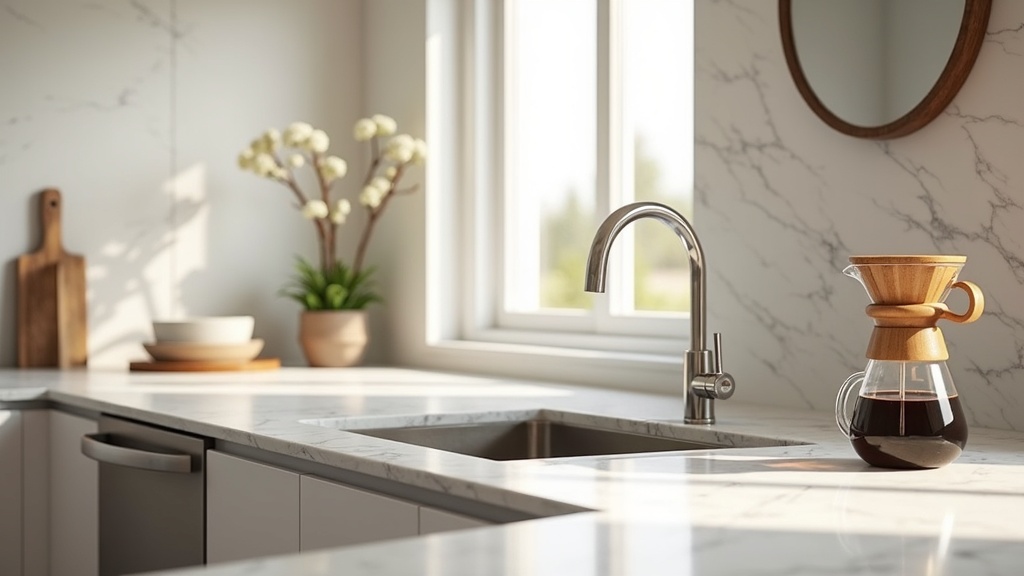
If you have ever wondered why your morning pour-over tastes different at home than it does at your favorite Boise coffee shop, the answer might not be your beans or your technique. It could be the water flowing from your kitchen faucet.
Water makes up over 98% of a cup of brewed coffee and is the primary ingredient in nearly every recipe you cook. Yet most Treasure Valley homeowners never think about how their water quality affects what they eat and drink every day. With Boise's water hardness measuring 10 to 15 grains per gallon, the minerals in your tap water are actively changing the flavor of your food and beverages.
Why Boise's Water Exceeds Coffee Brewing Standards
The Specialty Coffee Association (SCA) sets specific water quality standards for brewing. Their ideal range calls for total dissolved solids between 75 and 250 ppm, with a target of 150 ppm, and calcium hardness between 50 and 175 ppm.
Here is the problem for Boise residents: our municipal water typically measures 10 to 15 gpg of hardness. Converted to parts per million, that is roughly 171 to 256 ppm of calcium carbonate. In Meridian, it is even higher at 12 to 17 gpg (205 to 291 ppm). Both cities routinely exceed the SCA's upper limit for ideal coffee brewing water.
This is exactly why Boise's 23+ specialty roasters, from Dawson Taylor (roasting since 1995) to Push and Pour, all invest in multi-stage water filtration systems. They know that without treating their water, every cup would taste flat, chalky, or overly bitter regardless of how carefully they source and roast their beans.
How Hard Water Changes Your Coffee's Flavor
When water is too high in minerals, it over-extracts coffee grounds. The excess calcium and magnesium pull out bitter, astringent compounds while masking the delicate fruity and acidic notes that specialty beans are prized for. The result is a dull, heavy cup that tastes nothing like what the roaster intended.
Magnesium tends to highlight brighter, fruitier notes during extraction. Calcium emphasizes chocolatey, creamy characteristics. But when both are present in excess (as they are in Treasure Valley tap water), they overwhelm the subtle flavors and leave a chalky or metallic aftertaste.
If you use an espresso machine, the problem compounds over time. Scale deposits from hard water build up inside the boiler, pump, and group head. This restricts water flow, reduces heating efficiency, and can shorten a $1,000+ machine's lifespan by years.
Hard Water in the Kitchen: Beyond Coffee
The effects of hard water extend to everything you prepare in your kitchen. Here is how mineral-heavy water affects common cooking tasks:
- Boiling vegetables: High calcium content can toughen the cell walls of vegetables like beans, lentils, and peas. What should be a 45-minute simmer becomes a two-hour ordeal.
- Baking bread: Hard water interferes with gluten development and can inhibit yeast activity. Your dough may not rise properly, producing a denser loaf than you expect.
- Making soups and stocks: Excess minerals leave a slight metallic or chalky undertone in delicate broths. If your homemade chicken stock never tastes quite right, water hardness could be the reason.
- Brewing tea: Just like coffee, hard water dulls the complex tannins and aromatics in quality loose-leaf tea. Green and white teas are particularly sensitive.
- Pasta water: Scale deposits build up in pots used for boiling. Beyond the cosmetic issue, the minerals can subtly affect sauce adhesion and pasta texture.
Idaho's Water Infrastructure and Your Kitchen
Water quality in the Treasure Valley has become a statewide priority. The Idaho Legislature recently allocated $30 million for water infrastructure funding in the 2026 session, with agriculture leaders pushing to protect that investment during a tight budget cycle. Meanwhile, the state continues its five-year groundwater study in Canyon County, where 7,000 acres of irrigation rights were paused to understand what is happening underground.
For homeowners, the takeaway is that our water supply faces real pressure. The Treasure Valley's population has surged past 750,000 and is projected to reach 1.57 million by 2065. More demand on the same aquifer system means more dissolved minerals making their way into residential taps, especially during low-snowpack years like 2026 when municipalities draw more heavily from groundwater.
This does not mean your water is unsafe. Boise's 2026 water quality report shows it meets all EPA safety standards. But "safe to drink" and "ideal for cooking and brewing" are two different standards entirely.
What Local Coffee Pros Do About Water
We talked to several Boise-area specialty coffee professionals about their water setups. The consensus is clear: water treatment is not optional if you care about flavor.
Most commercial operations use a reverse osmosis (RO) system with controlled remineralization. This strips the water down to nearly zero TDS, then adds back precise amounts of magnesium and bicarbonate to hit that SCA sweet spot of 150 ppm. Some shops use blending systems that mix RO water with a small percentage of tap water to achieve similar results.
The good news is that homeowners do not need a commercial-grade setup to see a dramatic improvement. Here are the most practical options, ranked from simplest to most comprehensive:
Option 1: Pitcher or Faucet Filter
A quality carbon filter (like a Brita or PUR) reduces chlorine taste and some sediment but does very little for hardness. Good for removing off-flavors; insufficient for truly solving the mineral problem.
Option 2: Under-Sink Reverse Osmosis
An RO system at your kitchen sink delivers water in the ideal 20 to 80 ppm TDS range. This is what most serious home coffee enthusiasts install. Costs typically run $300 to $600 installed. The dedicated tap gives you clean water for drinking, cooking, and brewing without affecting the rest of your house.
Option 3: Whole-House Water Softener + Kitchen RO
This is the combination we recommend most often for Treasure Valley homes. A whole-house water softener reduces hardness throughout your plumbing (protecting appliances, fixtures, and skin), while an under-sink RO system gives your kitchen the precision water quality you need for cooking and coffee. A quality whole-house system typically runs $2,500 to $4,500 installed.
Simple Tests You Can Run Today
Curious whether your water is affecting your kitchen? Try these quick experiments:
- The coffee comparison: Brew the same beans with your tap water and with bottled spring water (look for one listing 100 to 150 ppm TDS on the label). Taste them side by side. If you notice a significant difference, your water hardness is affecting extraction.
- The kettle check: Look inside your electric kettle or the bottom of your most-used pot. White, chalky buildup means hard water minerals are concentrating every time you boil. That same mineral concentration is happening in every cup of coffee and every pot of soup.
- The soap test: Fill a clear bottle halfway with tap water, add a few drops of dish soap, and shake. If you get very few suds and the water looks cloudy, your water is hard.
Frequently Asked Questions
Find Out What Is in Your Water
We offer a free, no-pressure water test for Treasure Valley homeowners. We will measure your hardness, TDS, and other factors so you know exactly what your kitchen is working with.