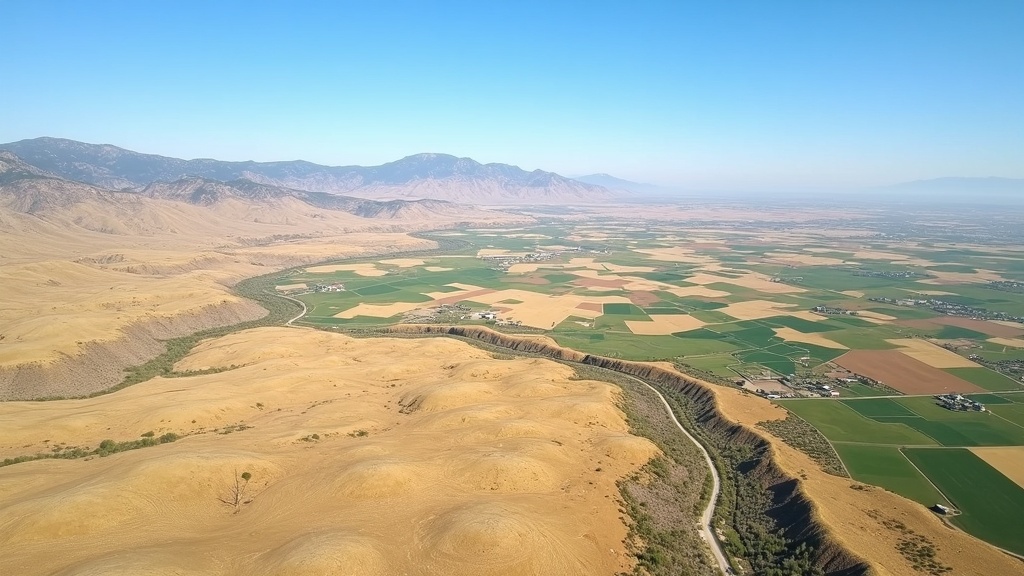
If you live in Boise, Meridian, Nampa, or anywhere else in the Treasure Valley, you already know this spring felt different. The mountains didn't hold as much snow. The Boise River ran lower than usual heading into summer. And in April 2026, Idaho's governor made it official: a statewide drought emergency covering all 44 counties. Snowpack in the Boise Basin came in at roughly 69% of normal. The second warmest winter on record did what warm winters do, and now everyone from farmers in Caldwell to homeowners in Eagle is feeling it.
Conservation isn't optional this summer. The City of Boise has already moved to Stage 2 water restrictions. Nampa is at Stage 1. The "Keep Boise Cool" initiative is asking residents to shift outdoor watering to early morning, skip days, and cut back. You've probably already adjusted your sprinkler timer. Maybe you've stopped washing your car at home. These are real, meaningful changes, and they add up.
But here's what almost nobody is talking about: the biggest water waste in many Treasure Valley homes has nothing to do with sprinklers or car washes. It's happening inside, every time you run the dishwasher, do a load of laundry, or take a long shower trying to rinse shampoo out of your hair. And it comes down to the chemistry of the water itself.
Why Treasure Valley's Water Situation Is Different in 2026
The Treasure Valley draws its water supply from a combination of surface water (primarily the Boise River and its tributaries) and the Eastern Snake River Plain Aquifer, one of the largest groundwater systems in the American West. In a normal year, winter snowpack replenishes both. This year, that recharge cycle was cut short.
According to the Idaho Department of Water Resources, the Boise Basin saw snowpack readings well below average through February and March. That shortfall flows downstream in a literal sense: less snowmelt means lower river flows, more pressure on groundwater withdrawals, and earlier-than-usual drawdowns on the aquifer systems that supply municipal wells across the valley.
For homeowners, this matters because the same aquifer systems under stress are also the source of your tap water. And those deep aquifers carry a lot of dissolved minerals, particularly calcium and magnesium. In other words, drought conditions and hard water aren't separate problems in the Treasure Valley. They come from the same place.
What the City of Boise Is Asking You to Do
Boise's "Keep Boise Cool" campaign launched this spring as a direct response to drought conditions. Under Stage 2 restrictions, the city asks residents to water on a two-day schedule based on address (odd or even), avoid outdoor watering between 10 AM and 6 PM, and limit irrigation to 10 minutes per zone per session. Landscape watering accounts for roughly 50 to 60 percent of residential water use in summer months, so these restrictions carry real weight.
Nampa's Stage 1 restrictions are slightly less prescriptive but push the same message: be intentional. Check for leaks. Run the dishwasher only when full. Don't let the tap run while brushing teeth. The City of Boise Public Works page has the full watering schedule and resources for reporting violations.
These are smart, necessary asks. They'll help. But they only address part of the equation, because water efficiency isn't just about how much water you use. It's also about how much water you need to get the job done.
The Water Waste Nobody Talks About
Here's a simple test. After you run your dishwasher, check the glasses when they come out. If you see white spots or a hazy film, your water is hard. If you notice you go through hand soap faster than expected, or your shampoo doesn't lather well no matter how much you use, your water is hard. If your washing machine needs extra rinse cycles to get clothes clean, your water is hard.
Hard water, which is simply water with high concentrations of calcium and magnesium, forces everything that uses water to work harder. Your dishwasher runs extra rinse cycles. Your washing machine needs more detergent and hotter water to lift stains. Your showers run longer because lathering is harder and rinsing is incomplete. Your water heater has to push through limescale deposits that grow thicker every year, reducing efficiency and driving up energy use.
Every one of those extra cycles, those longer showers, those repeated rinse runs, is water you're using that you wouldn't need to use if the water were softer. In a normal year, that's a comfort issue. During a drought emergency, it's a conservation issue.
This is the water waste that doesn't show up in any city conservation checklist, because it's not about behavior. It's about chemistry. And in the Treasure Valley, the chemistry is significant.
Hard Water in the Treasure Valley: The Numbers
Water hardness is measured in grains per gallon (gpg). The USGS classifies anything above 7 gpg as "hard" and above 10.5 gpg as "very hard." In Boise, tap water typically tests between 10 and 15 gpg. In Meridian, readings commonly run 12 to 17 gpg. Eagle, Nampa, and Caldwell fall in similar ranges depending on the specific source and season. That puts most of the Treasure Valley firmly in the "very hard" category year-round.
What does that mean in practical terms? The U.S. Department of Energy has documented that water heaters operating with hard water accumulate scale that reduces heating efficiency by 25 to 30 percent. Appliances, including dishwashers and washing machines, that run on hard water have documented lifespans 30 to 50 percent shorter than those running on soft water. Homeowners using hard water also spend an estimated 50 to 75 percent more on cleaning products, detergents, and soaps to compensate for the mineral interference.
Now layer in the water use side of the equation. Studies from the Water Quality Research Foundation have found that households using demand-initiated water softeners (the kind that regenerate only when needed, not on a fixed timer) can reduce household water consumption by up to 27 percent compared to households running untreated hard water. That's not a rounding error. In a drought year, that's a material difference.
The connection matters here. A good water softener isn't just a comfort upgrade. In 2026, in the Treasure Valley, it's a sustainability tool. It reduces the water your appliances waste, cuts the energy your water heater burns, extends the life of your plumbing and fixtures, and, when it's a demand-initiated system, it uses significantly less water to regenerate than older timer-based units.
You can read more about how Treasure Valley water hardness affects daily life in our complete hard water guide for the Treasure Valley, and how the 2026 drought specifically affects local water quality in our Idaho drought and water quality overview.
Frequently Asked Questions
Does a water softener actually save water during a drought?
Yes, in two ways. First, it reduces the water your appliances and daily routines waste because of hard water inefficiency. Dishes and laundry come clean in fewer cycles. Showers don't need to run as long. Second, modern demand-initiated softener systems only regenerate when they've actually processed enough water to need it, rather than on a fixed weekly schedule. That alone can cut the water a softener uses to regenerate by 40 to 50 percent compared to older timer-based units. The net effect for a typical Treasure Valley household is a meaningful reduction in total water use.
How hard is the water in Boise and Meridian specifically?
Boise tap water typically tests between 10 and 15 grains per gallon (gpg), which the USGS classifies as "very hard." Meridian runs slightly higher, often 12 to 17 gpg depending on the source and time of year. Eagle and Nampa are in similar ranges. Water above 10.5 gpg is considered very hard by federal classification standards. Most of the Treasure Valley sits well above that threshold. The exact number at your address depends on your specific water source, which is why a free water test is the most reliable way to know what you're working with.
Do Boise's Stage 2 water restrictions apply to indoor use?
Boise's current Stage 2 restrictions are primarily focused on outdoor irrigation, which accounts for the largest share of residential water use in summer. Indoor restrictions (shorter showers, full loads only in dishwashers and washing machines) are encouraged but not mandated at Stage 2. If conditions worsen and the city moves to Stage 3 or higher, indoor restrictions typically become mandatory. For now, outdoor watering schedules and voluntary indoor conservation are the ask. Improving indoor efficiency through water treatment is one of the most practical steps homeowners can take regardless of where the city's stage level lands.
Will the drought affect the quality of my tap water?
It can. When surface water levels drop, municipalities often draw more heavily from groundwater sources. Groundwater in the Treasure Valley tends to carry higher concentrations of dissolved minerals, which can increase water hardness and in some cases affect taste and odor. Lower river flows can also concentrate certain contaminants that normal dilution would keep at negligible levels. Your water utility's annual water quality report is the official source for what's in your supply. A home water test adds a layer of certainty for what's actually coming out of your specific tap, especially in a drought year when source blending may shift.
How much does a water softener cost for a Treasure Valley home?
A quality water softener system for a typical Treasure Valley home typically runs between $2,500 and $4,500 installed. The range depends on the size of your home, your water hardness level, and whether you pair the softener with any additional filtration. Most homeowners see the system pay for itself over 3 to 5 years through reduced soap and detergent costs, lower energy bills from a more efficient water heater, and longer appliance lifespans. We do a free water test at no cost and no pressure, so you can see exactly what your water looks like before making any decision.
What a Water-Smart Home Looks Like in the Treasure Valley
A water-smart home in 2026 does the obvious things: follows the city's irrigation schedule, runs full dishwasher and laundry loads, fixes leaks quickly, and avoids outdoor watering during peak heat. But it also does the less obvious thing: it treats the water coming into the house so every gallon works harder.
Soft water cleans more effectively. Appliances run at full efficiency. Showers and rinse cycles take less water to complete. Over the course of a summer, and especially a drought summer, those efficiencies add up in ways that matter both for your utility bill and for the valley's shared water resources.
The TrueWater team serves Boise, Meridian, Eagle, Nampa, Caldwell, and the surrounding Treasure Valley. We offer a free in-home water test that tells you exactly what your water contains and what, if anything, it would benefit from. No pressure, no sales pitch. Just a clear picture of your water.
Get a Free Water Assessment
Find out exactly what's in your Treasure Valley water. Our free in-home test takes about 20 minutes and comes with zero obligation. We serve Boise, Meridian, Eagle, Nampa, Caldwell, and surrounding areas.