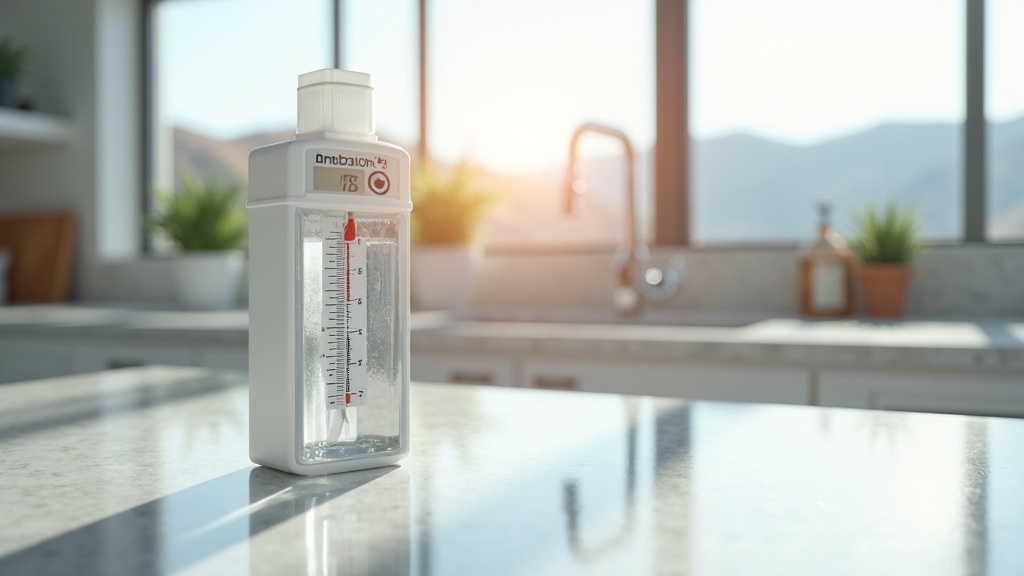
If you've ever filled a glass from the tap in Boise or Meridian and noticed a faint chalky film or an off taste, total dissolved solids (TDS) are likely part of the story. TDS is one of the most common water quality concerns in the Treasure Valley, yet it's also one of the least understood. This guide breaks down what TDS actually means, what the numbers look like for Idaho tap water, and what you can do about it.
What Is TDS in Drinking Water?
TDS stands for total dissolved solids. It measures the combined concentration of all inorganic and organic substances dissolved in water, expressed in milligrams per liter (mg/L) or the equivalent unit parts per million (ppm). These solids include minerals like calcium, magnesium, sodium, and potassium, as well as bicarbonates, sulfates, chlorides, and trace metals.
Some TDS content is completely natural and even beneficial. Minerals that give water a crisp, clean taste come from TDS. The concern arises when concentrations climb high enough to affect taste, leave scale deposits, or carry contaminants that impact health.
How TDS Is Measured
TDS is measured with an inexpensive digital meter that passes a small electrical current through a water sample. Because dissolved ions conduct electricity, higher TDS produces a stronger reading. Meters are widely available online for under $20, making it easy for any Treasure Valley homeowner to get a baseline reading in seconds.
TDS Levels in Boise and the Treasure Valley
Idaho's geology plays a direct role in local TDS numbers. The Snake River Plain aquifer, which supplies much of the Treasure Valley's groundwater, passes through layers of basalt, limestone, and sedimentary rock. As water moves through those layers, it picks up minerals continuously.
Boise City public water reports typically show TDS ranging from 130 to 320 mg/L depending on the source blend (surface water from the Boise River mixed with groundwater wells). Communities drawing primarily from wells, including parts of Meridian, Eagle, and Nampa, can see readings from 200 to over 500 mg/L during dry months when groundwater contribution increases.
These numbers are not alarming by federal standards, but they are high enough that many homeowners notice scale on faucets, filmy residue on dishes, and faster water heater corrosion. Understanding where your home falls on that range is the first practical step.
EPA Guidelines and Safe TDS Ranges
The U.S. Environmental Protection Agency sets a secondary maximum contaminant level (SMCL) for TDS at 500 mg/L. Secondary standards are non-enforceable guidelines based on aesthetic factors like taste, odor, and appearance rather than direct health risk. Water utilities are not required to stay below 500 mg/L, though most aim to.
The World Health Organization considers water below 300 mg/L to be excellent tasting. Water in the 300 to 600 mg/L range is considered good to fair. Above 900 mg/L, most people notice a distinct mineral or salty taste. Above 1,200 mg/L, water is generally considered unpalatable.
TDS Quick Reference Scale
- 0 to 50 mg/L: Very low mineral content. Common in RO-treated or distilled water. Can taste flat.
- 50 to 150 mg/L: Ideal range for most drinking water. Clean taste, low scale risk.
- 150 to 300 mg/L: Acceptable. Slight mineral taste possible. Light scale over time.
- 300 to 500 mg/L: Noticeable taste. Scale on fixtures and appliances. Common in Treasure Valley well water.
- 500 to 900 mg/L: Above EPA secondary standard. Heavier scale, shorter appliance life, stronger taste.
- 900 mg/L and above: High. Not recommended for daily drinking without treatment.
What Causes High TDS in Idaho Homes?
Several factors drive elevated TDS readings in Treasure Valley homes beyond the regional geology.
Groundwater Sources
Homes on private wells or served by utilities that draw heavily from aquifers tend to see higher TDS because groundwater has more contact time with rock formations. The Eastern Snake River Plain aquifer, which feeds a large portion of the Treasure Valley, is naturally mineral-rich.
Seasonal Variation
TDS readings often rise in late summer and early fall. Lower runoff means utilities rely more on groundwater, which carries higher mineral loads. Homeowners on well water see the same pattern as water tables drop and mineral concentration increases.
Aging Plumbing
Older copper or galvanized pipes can leach metals into water as it sits overnight. If your morning tap water reads noticeably higher than water that has been running for 30 seconds, corroding pipes may be a contributing source.
Water Softener Discharge
A common source of confusion: water softeners do not lower TDS. They exchange calcium and magnesium ions for sodium ions through an ion exchange process. The TDS reading stays roughly the same or can even increase slightly because sodium is still a dissolved solid. Softeners solve hardness (scale and soap scum) but are not TDS reduction tools.
Health Considerations for High TDS Drinking Water
TDS itself is not a direct health indicator. The key question is what makes up that TDS reading. A high TDS composed mostly of calcium and magnesium is very different from a high TDS that includes nitrates, arsenic, or heavy metals.
Idaho's Department of Environmental Quality monitors public water systems for regulated contaminants separately from TDS. However, private well owners receive no automatic testing. If your well water TDS is above 500 mg/L, it is worth investing in a comprehensive water quality test to identify what is driving that number, not just how high it is.
For individuals with kidney disease or other conditions affected by mineral intake, high TDS from calcium and magnesium can be a relevant dietary factor. Consulting a physician alongside water quality data gives the clearest picture.
How to Reduce TDS in Your Home's Drinking Water
If your TDS is above your comfort level or above the EPA's 500 mg/L guideline, several treatment options work well in Idaho's water conditions.
Reverse Osmosis (RO) Systems
Reverse osmosis is the most effective TDS reduction technology available for residential use. A quality under-sink RO system removes 90 to 99 percent of dissolved solids by pushing water through a semipermeable membrane under pressure. For Treasure Valley homeowners seeing TDS readings of 300 mg/L or higher from their tap, RO is the standard recommendation.
Modern RO systems include a storage tank and a remineralization stage that adds back a balanced trace mineral profile, so the water tastes fresh rather than flat. Systems require a membrane replacement every two to three years and filter changes annually.
Whole-House Filtration
If the goal is reducing TDS across every tap and appliance, a whole-house system with a nanofiltration or RO membrane can treat water at the point of entry. These systems are larger investments but protect water heaters, dishwashers, and ice makers from scale damage caused by high-mineral water.
Distillation
Countertop distillers boil water and collect the steam, leaving dissolved solids behind. They produce very low TDS water but are slow (typically one gallon per five to six hours) and energy-intensive. Most Treasure Valley homeowners find RO more practical.
What Does Not Reduce TDS
Carbon block filters and activated carbon pitcher filters like Brita improve taste and remove chlorine, lead, and some organics. They do not meaningfully reduce TDS. Boiling water concentrates TDS rather than reducing it because pure water evaporates while minerals remain. Water softeners, as noted above, exchange ions rather than remove solids.
Testing Your TDS at Home
Getting a baseline TDS reading for your Treasure Valley home takes about two minutes with a handheld meter. Run the cold tap for 30 seconds, then hold the meter probe in the stream or a filled glass. The digital display gives you a ppm reading immediately.
For a fuller picture, collect readings at multiple points: the kitchen cold tap, a bathroom tap, and if accessible, directly at the water supply line before any softener or filter. Comparing these numbers reveals whether your plumbing or a treatment system is affecting what you drink.
A TDS meter tells you the total load but not the composition. For that, a certified lab test or an in-home professional water quality assessment provides the breakdown by contaminant. TrueWater Idaho offers free in-home water testing throughout the Treasure Valley, which includes a full dissolved solids profile alongside hardness, pH, and contaminant screening.
TDS and Your Appliances: The Hidden Cost
Beyond drinking water quality, TDS has a direct financial impact on Treasure Valley homeowners. Dissolved calcium and magnesium precipitate out of water when it is heated, forming scale inside water heaters, dishwashers, coffee makers, and refrigerator ice lines.
The U.S. Department of Energy estimates that a water heater with 1/4 inch of scale buildup operates at 12 to 15 percent lower efficiency. In a Meridian or Boise home where the water heater runs year-round, that translates to measurable increases in utility bills over time. Scale also shortens appliance lifespans, increasing replacement costs.
Reducing TDS through an RO system at the point of use protects drinking water quality. Addressing hardness through a water softener at the point of entry protects appliances. Many Treasure Valley homeowners benefit from both working together, each doing its specific job.
Find Out What's in Your Water
We offer free in-home water testing for Treasure Valley homeowners. No pressure, no obligation.
Frequently Asked Questions
For Treasure Valley tap water, a TDS reading between 50 and 300 mg/L is generally considered good. The EPA's secondary guideline is 500 mg/L. Most Boise city water falls between 130 and 320 mg/L. Well water in parts of Meridian, Nampa, and Caldwell can run 300 to 500 mg/L or higher, especially in late summer. If your reading is consistently above 500 mg/L, a reverse osmosis system at the drinking tap is worth considering.
No. A water softener replaces calcium and magnesium ions with sodium ions through an ion exchange process. The total dissolved solids count stays roughly the same because you are swapping one dissolved solid for another. Softeners solve water hardness problems (scale buildup, soap scum, appliance damage) very effectively, but they are not designed to reduce TDS. For TDS reduction, you need a reverse osmosis system or a nanofiltration system.
Not automatically. TDS is a measure of total dissolved solids, not a direct measure of harmful contaminants. Most of the TDS in Treasure Valley water comes from naturally occurring calcium, magnesium, and bicarbonates, which are not health hazards for most people. However, if your TDS is above 500 mg/L and you are on a private well, a full lab test is smart because some Idaho groundwater sources carry elevated nitrates or trace metals that can ride alongside the mineral load. Public water in Boise and Meridian is regularly tested and reported under EPA standards.
A reverse osmosis system removes 90 to 99 percent of dissolved solids by forcing water through a semipermeable membrane at pressure. If your incoming tap water reads 400 mg/L TDS, post-RO water typically tests at 10 to 40 mg/L. Many modern RO systems include a remineralization filter as a final stage, which adds back a balanced profile of calcium, magnesium, and potassium to improve taste and raise the TDS slightly from the stripped baseline. The result is clean water with a natural mineral taste at much lower total dissolved solids than the source.
A basic TDS meter costs $15 to $25 online and gives you an instant reading. For a complete water quality assessment that includes TDS, hardness, pH, chlorine levels, and contaminant screening, TrueWater Idaho offers free in-home testing throughout the Treasure Valley with no obligation. A professional test goes beyond what a handheld meter shows by identifying the composition of what is dissolved in your water, not just the total amount. Call (208) 968-2771 or use the contact form to schedule at no charge.