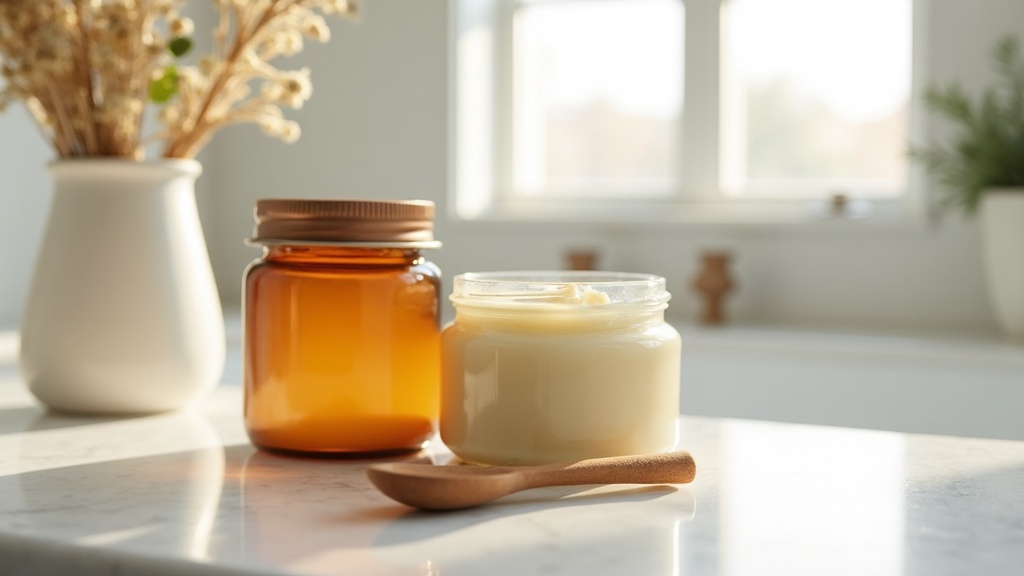
The Tallow Skin Barrier Movement (And Why It Actually Makes Sense)
If you've quietly switched from a drugstore moisturizer to a little glass jar of grass-fed beef tallow, you're not alone, and you're not being weird about it. Tallow has become one of the more interesting skincare stories of the past couple of years, and the reasoning behind it is solid.
Your skin barrier is essentially a fatty layer. It holds moisture in, keeps environmental irritants out, and regulates how your skin communicates with everything it touches. The fat profile that keeps it healthy, primarily oleic acid, palmitic acid, and stearic acid, maps almost directly onto the fatty acid composition of beef tallow. That's not a coincidence. Ancestral humans were in contact with animal fats constantly, and our skin evolved in that context.
Compare that to a typical commercial moisturizer. PEG compounds, dimethicone, petroleum derivatives. These sit on the skin surface and create the feeling of moisture without actually reinforcing the barrier. Tallow does something different: it has a real chance of being recognized by your skin's own biology.
The tallow skincare market hit $277 million globally in 2026, and TikTok has been driving a lot of that growth. But this isn't just trend-chasing. The underlying logic is legitimate. You made a smart call. The issue isn't your tallow. The issue is what's happening before the tallow ever touches your face.
What Meridian's Water Actually Contains (And What It Does to Your Skin)
Water in Meridian and across the Treasure Valley comes primarily from the Boise River system and the Snake River Plain aquifer. Both sources run through geology that is naturally rich in dissolved calcium and magnesium. The result is water that typically tests between 15 and 22 grains per gallon (GPG), which puts it squarely in the "hard" to "very hard" category on the standard scale. Anything above 7 GPG is considered hard. Most of Meridian's water is roughly double that.
Here's what that means for your skin. When hard water contacts tallow, a specific chemical reaction occurs. The calcium and magnesium ions in the water bind with the fatty acids in the tallow, along with any surfactants from cleansers, and form insoluble compounds. The technical term is calcium soap or lime soap, and it doesn't rinse away cleanly. It deposits as a thin film on your skin surface.
That mineral film does a few things, none of them good. It physically blocks pores and creates a barrier between your tallow and your actual skin. It raises the pH of your skin surface, which disrupts the acid mantle, the slightly acidic protective layer your skin maintains naturally. And it interferes with the precise lipid absorption process that makes tallow worth using in the first place.
You're not imagining it if your results have been underwhelming. The water is actively working against the product.
The Routine That's Working Against Itself
Picture a typical morning for a tallow skincare user in Meridian. You wake up, splash your face with tap water. Those 15 to 22 GPG of dissolved minerals hit your skin and begin depositing immediately. You pat dry, but the mineral residue stays. Then you apply your tallow balm.
The tallow contacts that calcium film first. Some of it reacts with those mineral ions and forms the insoluble compound described above. What doesn't react tries to penetrate, but it's working through an obstructed surface. The absorption is partial at best.
If any of these sound familiar, hard water may be what you're dealing with. Tallow sitting on top of the skin rather than absorbing, feeling greasy an hour after application. Pores looking more visible after washing than before. Skin feeling tight and stripped right after cleansing, even though you're not using a harsh cleanser. A faint chalky or filmy feeling on your face after tap water dries. Needing to apply more tallow than you expected to feel any effect.
These aren't signs that tallow doesn't work. They're signs that your water is undermining it at the first step. The tallow never gets a clean surface to work with.
What Soft Water Does for Your Tallow Results
A water softener works through a process called ion exchange. Hard minerals, calcium and magnesium, pass through a resin bed and get swapped out for sodium ions, which don't form those insoluble soap compounds. What comes out of your tap is water that plays well with fatty acids instead of fighting them.
With soft water, tallow fatty acids reach the skin surface without interference. The skin's acid mantle can maintain its natural pH without mineral disruption. Absorption actually happens the way it's supposed to. That tight, stripped feeling after washing tends to disappear because you're no longer leaving a mineral film on your skin.
There's also a practical side: when tallow absorbs properly, you use less of it. That $40 balm lasts longer when it's actually doing its job rather than reacting away on your skin surface. The water softener isn't an upgrade to your skincare routine, it's the foundation layer. Everything else you're applying builds on what your skin's surface looks like after washing.
People who switch to soft water and then return to their tallow routine often describe the difference as significant. The product feels like it absorbs within minutes rather than sitting on top. Skin texture improves more consistently. The results match what they were expecting when they started the switch to natural skincare.
The Idaho Water Reality in Summer 2026
Idaho entered 2026 with near-record low snowpack across much of the state. The Boise area activated Stage 2 Conservation under its Drought Emergency Ordinance in July 2026. Canyon County farmers have seen water allotments reduced as the agricultural season has progressed. These aren't distant concerns for water quality; they're local conditions affecting what comes out of Treasure Valley taps right now.
When surface water from the Boise River is stressed and aquifer draw increases to compensate, mineral concentrations in groundwater can intensify. The Snake River Plain aquifer already carries a high mineral load from the regional geology. Summer drought conditions tend to concentrate that further.
The Treasure Valley has hard water regardless of drought. That's a year-round baseline. But summer 2026 is an especially relevant moment to actually test what's in your water, because conditions are more variable than usual. If your water hardness was at the lower end of that 15 to 22 GPG range earlier this year, it may be trending higher now.
Frequently Asked Questions
Does hard water really affect how tallow absorbs into skin?
Yes, and the mechanism is chemical, not just anecdotal. Calcium and magnesium ions in hard water react with the fatty acids in tallow to form insoluble calcium soap deposits on the skin surface. These deposits block the skin's pores and create a physical barrier that prevents tallow's fatty acids from penetrating. If you're washing with hard water before applying tallow, you're laying down a mineral film that the tallow then has to get through, and a lot of it can't.
I use tallow and my skin still feels dry after washing. Is hard water the cause?
It's a strong possibility, especially in Meridian and the broader Treasure Valley. Hard water disrupts the skin's acid mantle, the slightly acidic protective layer that helps skin retain moisture. Mineral deposits left on the skin after washing also interfere with the skin barrier's normal function. The result can feel like dryness or tightness even when you're applying a rich product like tallow. Testing your water hardness is the first step to knowing for sure.
How hard is the water in Meridian and Boise, Idaho?
Water in Meridian and the Treasure Valley typically tests between 15 and 22 grains per gallon (GPG). The standard scale classifies anything above 7 GPG as hard, and above 10.5 GPG as very hard. Most of Meridian's water supply falls well into the "very hard" range. This is a function of the regional geology: water drawn from the Snake River Plain aquifer and the Boise River system picks up dissolved calcium and magnesium as it moves through limestone and other mineral-rich rock formations.
Will a water softener affect the rest of my clean beauty routine?
Across the board, yes, and mostly in positive ways. Natural cleansers, oils, and botanical serums all perform better in soft water because they don't have to compete with mineral interference. You'll typically need less product to get the same or better results. Soft water also allows your skin to stay closer to its natural pH, which means the other products in your routine are working with your biology rather than against a minerally disrupted surface. For anyone invested in a clean beauty routine, water quality is a foundational variable worth addressing.
Find Out What's in Your Meridian Water
If your tallow routine isn't delivering the results you expected, the answer might be flowing from your faucet. TrueWater Idaho offers a free water quality test for Treasure Valley homeowners: no pressure, just real numbers on what's in your water.