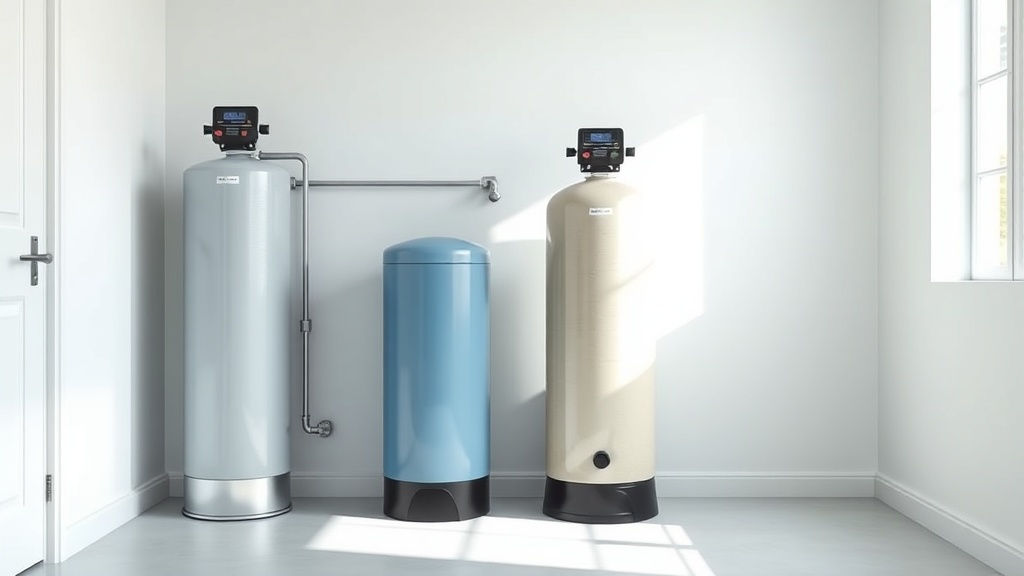
Walk into any home improvement store in Boise or browse Amazon for five minutes and you will find salt-free water conditioners marketed as the smarter, cleaner, maintenance-free alternative to traditional water softeners. The marketing is polished. The claims sound reasonable. And for most Idaho homeowners dealing with 8 to 15 grains per gallon of hardness, the reality is that salt-free systems simply do not deliver what they promise.
This is not a knock on any one brand. It is an honest look at the science behind both technologies and what the difference actually means for your home in the Treasure Valley.
How Salt-Based Ion Exchange Actually Works
A traditional water softener uses a process called ion exchange. Inside the resin tank, thousands of tiny resin beads carry a negative charge. Calcium and magnesium ions, which are the minerals that cause hardness, carry a positive charge. As your water passes through the resin bed, calcium and magnesium stick to the beads and sodium ions are released in their place.
The result is water that has been genuinely softened. The hardness minerals are gone. Your soap lathers easily. Your skin does not feel tight after a shower. There is no scale building up inside your water heater or dishwasher. When the resin becomes saturated with calcium and magnesium, the system backwashes itself with a brine solution, regenerating the resin and flushing the hardness minerals down the drain.
This is the technology that has been working reliably in homes since the 1950s. It is not glamorous, but it is proven.
How Salt-Free Conditioners Actually Work
Salt-free systems, often called water conditioners or descalers, use a process called Template Assisted Crystallization (TAC). The hardness minerals are not removed from the water. Instead, calcium and magnesium are converted from an ionic form into tiny microscopic crystals. In theory, these crystals flow through your pipes without sticking to surfaces as readily as the ionic form does.
That is all it does. No salt. No regeneration cycle. No brine discharge. And no actual reduction in water hardness.
If you test your water before and after a salt-free conditioner, the hardness reading will be identical. You still have 10 GPG of hardness coming out of the tap. The minerals are just in a different form.
What Salt-Free Conditioners Can and Cannot Do
The honest answer is that salt-free conditioners do have a use case, but it is much narrower than the marketing suggests.
What they can do:
- Reduce the rate at which new scale forms on pipes and surfaces in moderately hard water
- Provide some scale protection for appliances in areas with hardness below 7 GPG
- Operate without salt, electricity, or a drain connection
What they cannot do:
- Remove hardness minerals from your water
- Make your skin feel softer after a shower
- Eliminate spots on dishes or glasses
- Prevent soap scum buildup in your tub or shower
- Protect appliances at the same level as true softening
The Boise area runs 6.6 to 10 GPG. Meridian sits at 8.4 GPG. Rural well water in the Treasure Valley often tests at 15 to 25 GPG or higher. Salt-free technology starts losing effectiveness above 7 GPG according to independent water treatment research. At Idaho hardness levels, most homeowners will not notice a meaningful difference in the symptoms they were hoping to fix.
The Skin and Hair Question
One of the most common reasons Idaho homeowners look into water treatment is dry skin and hair that feels brittle or stripped after washing. This is a direct result of calcium and magnesium interfering with how soap and shampoo work on skin and hair.
A salt-based softener eliminates this entirely. The minerals are gone. Your soap rinses clean. Many people describe their first shower with softened water as feeling slippery, which just means soap is actually rinsing off instead of leaving a residue.
A salt-free conditioner will not change how your water feels on your skin. Because the hardness minerals are still present, the same interaction with soap still happens. If dry skin and hair are driving your decision, a salt-free system is not the right tool.
Who Might Actually Benefit from Salt-Free
There are situations where a salt-free conditioner makes sense. If you are on a sodium-restricted diet for medical reasons and cannot add any sodium to your drinking water, a conditioner removes that concern. If your source water tests below 5 GPG, the scale reduction benefits may be adequate. If you want scale protection for a single appliance like a tankless water heater in a vacation cabin, a point-of-entry conditioner may be appropriate.
For the average Meridian or Boise homeowner dealing with the symptoms of hard water, the honest answer is that a salt-free system will leave most of those symptoms in place.
Cost Comparison Over Five Years
Salt-free conditioners are often marketed as lower cost because they do not require ongoing salt purchases. The math deserves a closer look.
A quality salt-based softener for an Idaho home typically runs $1,200 to $2,000 installed. Salt costs average $15 to $30 per 40-pound bag, with most homes going through 10 to 20 bags per year. That is $150 to $600 annually in salt. Over five years, total cost including salt runs roughly $1,950 to $5,000.
A quality salt-free conditioner runs $800 to $2,500 installed. No ongoing salt cost, but the media inside needs to be replaced every three to five years, typically at $200 to $400. Over five years, total cost is $1,000 to $2,900.
The pricing overlaps. But if the salt-free system does not actually solve the problem at Idaho hardness levels, you have spent money on something that does not work and still need to address the underlying issue.
The Honest Recommendation for Idaho Homes
If your home is on city water in Meridian, Boise, Eagle, Nampa, or anywhere else in the Treasure Valley, your hardness is almost certainly in the 7 to 15 GPG range. At that level, a salt-based ion exchange softener is the technology that will actually fix the symptoms you are experiencing.
If you are on a private well in Canyon County or rural Ada County, your hardness could be 15 to 25 GPG or higher. At that level, only salt-based softening will provide meaningful results.
There is nothing wrong with wanting a low-maintenance system. A properly set up salt-based softener with a large brine tank only needs salt added every two to three months. It is not a significant burden.