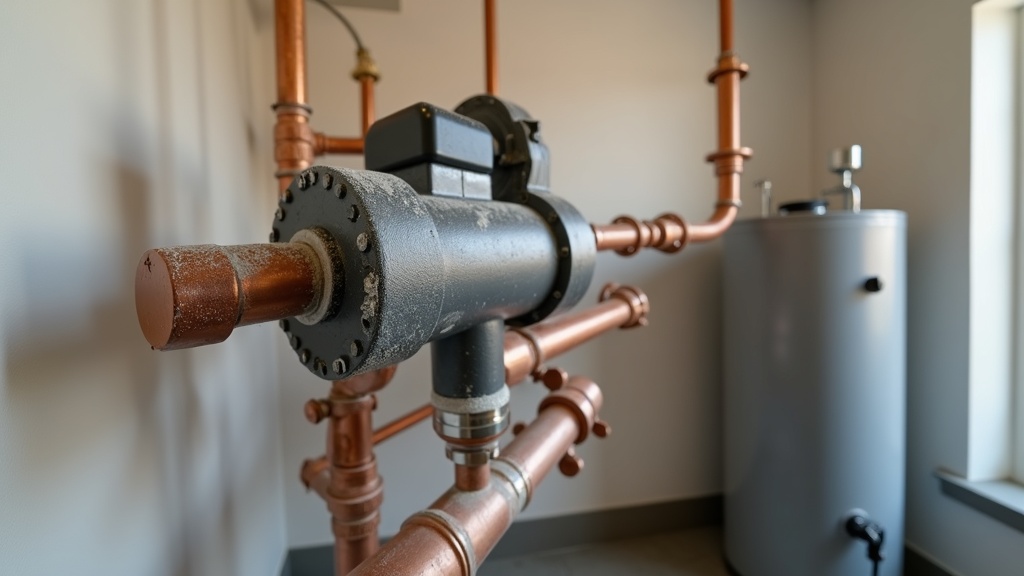
In July 2026, Boise City Council passed a Drought Emergency Ordinance after the city's water demand climbed to nearly four times its winter baseline. Lawns, gardens, and cooling systems are all pulling from the same supply, and that surge has a secondary effect most homeowners do not think about: concentrated minerals. When reservoir levels drop and usage spikes, the hardness of Treasure Valley tap water increases, and your hot water recirculating pump is one of the first pieces of equipment to feel it. If your pump has already been running hard through the summer months, the scale building up inside it right now may be shortening its life by years. This article breaks down exactly why that happens, what it costs you, and how to stop the cycle for good.
What a Recirculating Pump Actually Does (and Why Idaho Homes Love Them)
A hot water recirculating pump keeps a small, continuous loop of hot water moving through your supply lines so that when you turn on the tap, you get warm water in seconds instead of waiting 45 to 90 seconds for the cold water sitting in the pipes to flush out. In a region like Treasure Valley, where homes tend to be spread out and plumbing runs can be long, that wait time without a recirculating pump is genuinely painful in the morning.
The pump itself is a compact device, typically installed at the water heater or at the farthest fixture, and it runs either continuously or on a timer or temperature sensor. The moving parts are simple: an impeller spins to push water through a narrow chamber, and the whole assembly relies on tight tolerances between the impeller, housing, and seals to maintain flow and pressure. Those tight tolerances are exactly what makes the pump vulnerable to hard water.
We install and service recirculating systems throughout Boise, Meridian, Eagle, and Nampa, and the consistent feedback from homeowners is the same: they love the convenience, and they hate how often the pumps seem to wear out.
The Hard Water Problem: Treasure Valley's Numbers
Hardness is measured in grains per gallon (gpg). The USGS classifies water above 7 gpg as hard, and anything above 10.5 gpg as very hard. The national average sits around 7 gpg. Treasure Valley is not average.
Boise municipal water tests consistently between 10 and 15 gpg. Meridian, drawing from a different mix of wells, runs even higher at 12 to 17 gpg. Eagle and the areas further east in the valley are in a similar range. That means Treasure Valley homeowners are dealing with water that is, in some cases, more than twice as hard as the national average. The minerals responsible are primarily calcium carbonate and magnesium, which are harmless to drink but highly reactive when water is heated.
Heat accelerates mineral precipitation. When hot water cycles continuously through a recirculating pump, the pump housing, impeller, and internal passages are exposed to warm, mineral-laden water for hours every day. Over weeks and months, calcium carbonate deposits layer onto every internal surface. This is the same process that turns your showerhead white and crusts your faucet aerators, just happening in a pump you cannot see.
How Scale Destroys a Recirculating Pump: The Failure Sequence
Scale damage does not happen all at once. It follows a predictable sequence, and understanding it helps you catch problems before the pump seizes entirely.
First, scale narrows the internal passages. The pump was designed to move water through a specific channel diameter, and as mineral deposits accumulate on the walls, that channel shrinks. The motor has to work harder to push the same volume of water, drawing more electricity and generating more heat in the process.
Second, scale reaches the impeller. The impeller spins at high speed in very close proximity to the pump housing. Even a thin layer of calcite on either surface changes the clearance tolerances the manufacturer engineered into the unit. The impeller starts to drag rather than spin freely, which accelerates wear on the bearings and shaft seal.
Third, the shaft seal fails. This is usually the first component to give out in a hard water environment. Once the seal cracks or deforms under the stress of scale-induced drag, water begins to migrate into the motor housing. At that point, you are weeks or days from complete pump failure, not months.
Finally, the pump seizes or burns out. The motor overheats, the impeller locks up against scale buildup, or water intrusion shorts the motor windings. In our experience servicing homes across Meridian and Boise, a recirculating pump in untreated hard water can reach this stage in as little as six months of heavy use. In a household where the pump runs continuously rather than on a timer, failure can come even faster.
What Early Failure Actually Costs You
Let us put real numbers on this. A basic recirculating pump replacement, parts only, runs $150 to $350 for a standard under-sink or water heater model. A higher-end variable-speed or smart pump can run $400 to $680 in parts. Add professional installation in the Boise metro area, and a full replacement typically falls between $1,800 and $3,200 depending on accessibility and whether any associated fittings or valves need replacement at the same time.
If your pump is failing every two to three years instead of lasting the 10 to 15 years it should, you are absorbing that cost multiple times over. A homeowner in Meridian who replaces their pump every two years spends $3,600 to $6,400 per decade on a device that should have been a one-time purchase followed by minimal maintenance.
Beyond the pump itself, there are secondary costs. Increased energy consumption from a struggling motor shows up in your electric bill. Plumbing service calls for diagnosis add up. And there is the inconvenience factor: when a recirculating pump fails mid-winter, you are back to cold morning showers while you wait for a service appointment.
The Drought Connection: Why Summer 2026 Is a High-Risk Season
Boise's Drought Emergency Ordinance is a useful reminder of something that happens every summer in Treasure Valley, just usually without the official declaration. Seasonal demand peaks as outdoor irrigation, cooling, and landscaping pull enormous volumes of water through the municipal system. Reservoir levels and aquifer pressures respond accordingly.
When supply tightens and the same amount of calcium and magnesium is dissolved in a smaller volume of water, effective hardness increases. The water coming out of your tap in July and August is measurably harder than what ran through your pipes in February. That timing matters because summer is also when recirculating pumps run longest, often cycling more frequently to keep up with household hot water demand from showers, dishwashers, and laundry.
Harder water plus longer pump run times equals a faster accumulation of scale inside your pump housing. If your pump was already marginal before summer, a drought season like 2026 may be what pushes it over the edge.
Warning Signs Your Pump Is Already Struggling
You do not need a pressure gauge or a plumber to spot early signs of scale damage. Watch for these indicators:
- Hot water takes noticeably longer to arrive at fixtures than it did when the pump was new
- A low grinding or humming sound coming from the pump housing that was not there before
- The pump runs but you can hear or feel that water flow through the line is weak or intermittent
- White or tan crust has formed around the pump connections, unions, or nearby fittings
- Your electric bill has crept up without any obvious change in household usage
- The pump runs hot to the touch, noticeably warmer than it has in the past
- You hear the pump clicking on and off more frequently than its timer or thermostat settings would suggest
Any one of these signs warrants a closer look. Two or more together usually means scale damage is already underway and you are measuring time to failure in months, not years.
The Fix: How a Water Softener Changes the Equation
A properly sized whole-home water softener removes the calcium and magnesium ions before they ever reach your recirculating pump. The ion exchange process swaps hardness minerals for sodium ions, and the result is soft water that simply does not precipitate scale when heated. No scale means no narrowed passages, no impeller drag, no premature seal failure.
The impact on pump lifespan is substantial. We consistently see recirculating pumps in softened homes reach their full manufacturer-rated service life of 10 to 15 years. The same pump model in an unsoftened Meridian home with 14 gpg water may need replacement in two to four years.
Beyond the pump, softened water extends the life of your water heater, dishwasher, washing machine, and every faucet and valve in the house. The softener pays for itself through reduced appliance replacement costs, lower energy bills from appliances running at their designed efficiency, and eliminated service calls for scale-related repairs.
If you are considering your options, our page on water softener installation in Boise covers system sizing, salt types, and what the installation process actually looks like. For homeowners in the northern part of the valley, we also have current testing data on Meridian water hardness levels that can help you understand exactly what your system is dealing with.
One practical note: if you already have a recirculating pump showing early signs of scale damage, have it inspected before installing a softener. In some cases, a pump that has been running in hard water for years will need replacement alongside the softener. Soft water will not reverse existing mineral deposits inside the pump housing, though it will prevent any new accumulation from forming.
Frequently Asked Questions
How long does a recirculating pump last in Idaho's hard water?
In Treasure Valley's untreated hard water, a recirculating pump can seize or burn out in as little as six months under heavy use. More commonly, homeowners see pump failures every two to four years. With a whole-home water softener removing the mineral load, the same pump should reach its full manufacturer-rated service life of 10 to 15 years. The difference is not a small margin; it is the difference between a disposable appliance and a long-term investment.
What are the signs that hard water is damaging my recirculating pump?
The five most reliable indicators are: longer hot water wait times at your fixtures even though the pump is running; a grinding or humming noise from the pump housing; the pump cycling on and off more frequently than its settings would require; white or tan mineral crust forming around the pump connections or nearby fittings; and an unexplained uptick in your monthly electric bill. An energy spike often goes unnoticed because it is gradual, but a pump working against scale restriction draws measurably more current than one running clean.
How much does it cost to replace a recirculating pump in Boise?
Parts alone range from $150 to $680 depending on the pump model and whether you are going with a basic timer-controlled unit or a smart variable-speed system. Full replacement with professional installation in the Boise metro area typically runs $1,800 to $3,200 once you account for labor, any associated fitting or valve replacements, and system testing. If you are replacing a pump that failed early due to hard water and you do not address the root cause, you should plan to absorb that cost again in two to four years.
Does Boise's hard water really cause pump failures faster than other cities?
Yes, and the gap is significant. The national average water hardness is around 7 gpg. Boise municipal water runs 10 to 15 gpg, and Meridian well water is often 12 to 17 gpg. That means Treasure Valley homeowners are running water through their recirculating pumps at roughly twice the mineral concentration that homeowners in cities like Portland or Seattle experience. Scale accumulation inside the pump is directly proportional to water hardness, so Idaho pumps are operating under conditions that accelerate wear at a rate most national maintenance guides do not account for.
Will the Boise drought ordinance make my hard water problems worse?
Yes, in two ways. First, drought conditions reduce available water volume while the same minerals remain in supply, which increases the effective concentration of hardness minerals in the water reaching your home. Second, summer demand peaks mean recirculating pumps run more hours per day, especially in households with higher hot water usage. More run time in harder water equals faster scale accumulation. The July 2026 drought ordinance is a signal that these conditions are already present. If your pump is a few years old and has never had soft water running through it, this summer is a reasonable time to have it inspected.
Protect Your Recirculating Pump
A free water test shows you exactly what your plumbing is up against. No pressure, no sales pitch. Just your numbers.