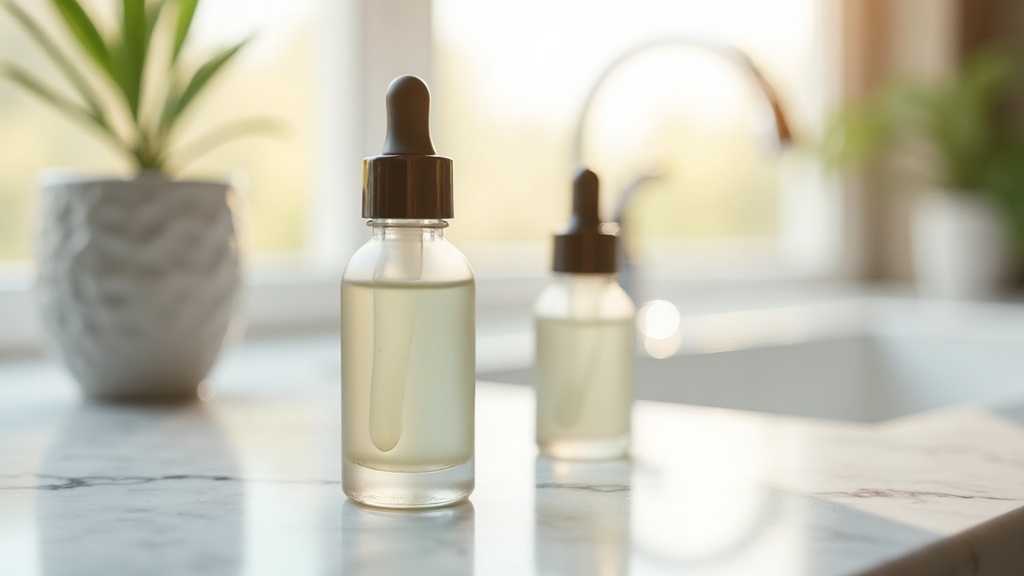
If you have been anywhere near skincare content in the past year, you already know about peptides. They are everywhere, from your dermatologist's recommendation list to the before-and-after videos flooding TikTok and Instagram. GHK-Cu, Argireline, Matrixyl, Syn-Ake. Copper peptides, signal peptides, neurotransmitter peptides. The category has exploded, and for good reason: the science behind topical peptides is genuinely solid, and the results people are seeing are real.
Bottles run anywhere from $40 to $150 each, and people are layering two or three of them into their routines without blinking. The premise is simple: peptides are short chains of amino acids that signal your skin to produce collagen, improve elasticity, and repair the barrier. They are small enough to penetrate skin and smart enough to trigger biological responses. It is not hype. It is biochemistry.
So here is the part nobody in the skincare world talks about. You can buy the best peptide serum on the market, apply it meticulously every morning, and still see mediocre results. Not because the product is bad. Because of what happens before the serum ever touches your skin.
What Peptides Actually Do (and Why They Are Everywhere)
Topical peptides work by mimicking signals your skin already understands. GHK-Cu, for example, is a copper-binding peptide that your body naturally produces. As you age, levels drop, and collagen synthesis slows with it. A well-formulated GHK-Cu serum essentially reminds your skin to keep doing the job it was already built to do.
Argireline works differently. It is often called "Botox in a bottle" because it partially inhibits the muscle contractions that create expression lines, relaxing the appearance of forehead and eye area wrinkles without a needle. Matrixyl (palmitoyl tripeptide-1 and palmitoyl tetrapeptide-7) focuses on collagen and elastin production, while Syn-Ake mimics the effect of temple viper venom to smooth out dynamic lines.
The research behind these ingredients is genuinely strong, and that is why dermatologists are recommending them. But peptides are also fragile. They are sensitive to pH, temperature, and the environment they land in. That last part is where Boise-area water comes in.
The One Thing Nobody Talks About Before Applying Peptides
Your skin has what is called an acid mantle: a thin, slightly acidic film that sits on the surface with a pH of about 4.5 to 5.5. It is part of your skin barrier, keeping moisture in and bacteria out. Peptide serums are formulated to work at this pH. The chemistry depends on it. At the right pH, peptide molecules are stable, they bind to receptors, and they do their job.
When you wash your face, you temporarily disrupt the acid mantle. Your skin recovers, usually within 30 to 60 minutes. But here is the catch: what you wash your face with matters. If you are rinsing with water that has a pH of 7.5 to 8.5 (which hard water typically does), you are leaving your skin in an alkaline state. Apply a peptide serum right after, and you are working against the product's own chemistry from the jump.
Hard water also leaves a physical residue. Dissolved calcium and magnesium stay on your skin after water evaporates, forming a thin mineral film between your face and anything you apply. That film blocks the ingredients you paid good money for from reaching the skin cells they are meant to treat. Read more about how hard water accelerates skin aging for the full picture.
What Boise Hard Water Does to Your Skin Before Serums Even Hit
Boise city water typically runs between 7 and 13 grains per gallon (GPG). That puts most city zones solidly in the "hard" to "very hard" range. If you are in Meridian or on a private well, the numbers go higher. Well water in the Treasure Valley can reach 12 to 17 GPG, and some properties run even higher depending on which aquifer they are pulling from.
For context: water below 1 GPG is considered soft. Anything above 7 GPG is hard. Above 10.5 GPG, it is classified as very hard. Most of the Treasure Valley sits at or above that threshold for at least part of the year.
Splash Boise tap water on your face and towel dry, and you are not starting clean. You are starting with a mildly alkaline, mineral-coated surface that changes how your cleanser lathers, how your toner performs, and how deeply your peptide serum penetrates. Dermatologists increasingly point to tap water quality as an underappreciated factor in skincare results. If your serums are not delivering what the before-and-afters promised, your water is worth testing.
The Drought Factor: Boise Water Is Running Harder Right Now
This summer, Boise's drought emergency ordinance has pushed the city to draw more heavily from aquifer sources, which carry a higher mineral load than surface water. That means Boise tap water is running slightly harder right now than it does in a typical summer.
It is not dramatic, and the water is still safe to drink. But if your skin has felt drier than usual or your serums seem less effective than they were a few months ago, the water supply shift is worth factoring in.
A simple water hardness test gives you the actual GPG number for your home address, so you are not guessing.
Frequently Asked Questions
Does hard water affect peptide serums?
Yes. Hard water leaves calcium and magnesium deposits on skin that raise skin pH and create a physical barrier that reduces how well peptide molecules penetrate. Boise city water runs 7 to 13 GPG, and Meridian well water can reach 17 GPG, both high enough to noticeably affect serum absorption. If you are spending $80 or more on a peptide product and not seeing results, your water quality is one of the first things worth testing.
How hard is Boise tap water?
Boise city water typically runs between 7 and 13 grains per gallon depending on the zone and season. Meridian and areas on well water can run 12 to 17 GPG. During drought conditions like the summer of 2026, the city draws more from aquifer sources, which tend to carry higher mineral loads than surface water. A free water test gives you the exact number for your home address.
What is the acid mantle and why does hard water disrupt it?
The acid mantle is a thin, slightly acidic film on the surface of your skin with a pH of about 4.5 to 5.5. Peptide serums are formulated to work at this pH. Hard water has a pH of 7 to 8.5, which temporarily raises your skin pH after washing. That shifted pH makes the skin surface less hospitable for peptide activity, reducing both absorption and effectiveness. Your skin naturally re-acidifies within 30 to 60 minutes, but most people apply their serums immediately after washing.
Will a water softener help my skincare routine?
Yes. A water softener removes the calcium and magnesium that cause hard water. Many Boise and Meridian homeowners report noticeably softer skin, better lather from cleansers, and more visible results from their skincare products within weeks of installing a softener. It is one of those changes that affects every shower, every face wash, and every product you apply, so the cumulative effect adds up faster than most people expect.
Want to Know How Hard Your Water Actually Is?
We test Boise and Meridian water for free. No pressure, no sales pitch. Just real numbers so you know what you're working with.