How Irrigation Built the Treasure Valley (And Why Your Water Is So Hard)
Published May 20, 2026 • 5 min read
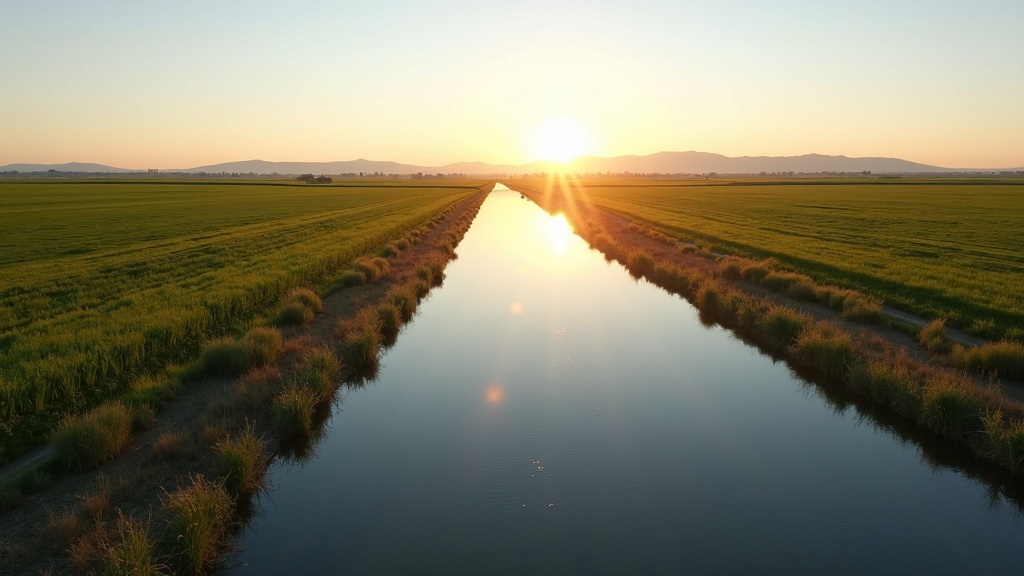
If you caught the America 250 series on Boise State Public Radio this spring, you may have heard the May 4th episode about the New York Canal. It told the story of how a group of East Coast investors showed up in 1882, looked at a sagebrush desert south of the Snake River, and decided to gamble everything on a ditch. That gamble turned into the Treasure Valley you live in today. But there is a piece of the story that nobody tells on public radio: the same irrigation system that made this place livable is also the direct reason your tap water leaves white crust on your faucets.
This is not a coincidence. It is geology. And once you understand the connection, the hard water problem in Boise, Meridian, and Nampa makes a lot more sense.
Before the Canal, This Was a Desert
Before 1882, the Snake River Plain was a cold desert. The Shoshone-Bannock people had lived along the river bottoms and seasonal routes for thousands of years, but the open benchlands between the river and the foothills were covered in sagebrush, bunchgrass, and volcanic rock. The soil was deep and nutrient-rich from ancient lava flows, but without consistent water, nothing grew at scale.
Early settlers could grow crops in the river bottoms, but the real agricultural prize, those wide flat benches now filled with subdivisions and farm fields from Nampa to Eagle, sat dry and untouched. The Snake River ran right past all of it, carrying more water than anyone could use. The problem was getting that water uphill and spread across the land.
The volcanic basalt beneath the valley floor was already doing something remarkable. Rainwater and snowmelt had been percolating through it for millennia, slowly filling a massive underground aquifer. But the scale was nothing like what was about to come.
New York Money, Idaho Dirt: The 1882 Canal Gamble
The New York Canal Company was formed in 1882 by investors who had never seen Idaho. They financed the excavation of a canal that would divert water from the Snake River and carry it across the high benchland south of the Boise River. The project was ambitious enough to bankrupt the original company. Construction stalled. The canal sat half-finished.
The federal government stepped in. Under the Reclamation Act of 1902, the Bureau of Reclamation took over and finished the job. Arrowrock Dam opened in 1915 and became the tallest dam in the world at the time. By then, the New York Canal was fully operational, pulling water from Lucky Peak and carrying it through a 41-mile main channel that fanned out into hundreds of miles of lateral ditches.
The America 250 episode on Boise State Public Radio brought this history back into focus this spring, and rightly so. Without the canal, there is no Caldwell, no Nampa, no Meridian as we know it. The entire Treasure Valley agricultural economy, now worth over a billion dollars annually, runs on water that the canal system delivers.
How 41 Miles of Canal Became 165,000 Acres
The New York Canal is the backbone, but the system it feeds is enormous. The Boise Project, managed by the Bureau of Reclamation, delivers water to roughly 165,000 acres across Ada, Canyon, and Elmore counties. Three major reservoirs, Arrowrock, Lucky Peak, and Anderson Ranch, store snowmelt from the mountains and release it through the canal network on a schedule that has governed valley life for over a century.
Dozens of irrigation districts, including the Boise-Kuna Irrigation District, the Nampa and Meridian Irrigation District, and the New York Irrigation District, manage the lateral ditch networks that carry water from the main canal to individual farms and fields.
This system is why you can buy Idaho potatoes, Idaho onions, and Idaho dairy products. It is also why the Snake River Plain Aquifer became one of the most productive groundwater systems in the western United States.
The Part Nobody Talks About: What Irrigation Does to Your Water
Here is the bridge that the history books skip. When irrigation water spreads across those basalt benchlands and soaks into the ground, it does not just sit there. It percolates slowly downward through layers of volcanic rock, picking up minerals as it goes. Basalt is rich in calcium and magnesium. As water moves through it over months and years, it dissolves both.
That mineral-laden water recharges the Snake River Plain Aquifer, which supplies roughly 95 percent of Idaho's drinking water. By the time it reaches a municipal well in Meridian or Boise, it has traveled through decades worth of volcanic filtration. The water is clean and safe. It also carries 8 to 15 grains per gallon (GPG) of dissolved hardness minerals, which puts most Treasure Valley cities solidly in the "very hard" category.
Meridian typically comes in around 12 to 17 GPG. Nampa and Caldwell run similar numbers. Boise proper ranges from 10 to 15 GPG depending on the source well. For context, the USGS classifies anything above 10.5 GPG as very hard.
So the white buildup on your showerhead and the spots on your dishes are not a sign that something is wrong with your water system. They are a direct consequence of 140 years of irrigation history. The canal that built the Treasure Valley is also the reason your water softener is working overtime. You can read more about how Boise's water source developed in our Boise water source history article, and see how hardness levels compare city by city in our Treasure Valley water quality city comparison.
2026 Update: The Canal System Is Under Pressure
The same irrigation infrastructure that defines the valley is now facing serious stress. A multi-year drought across the Snake River Basin has drawn down reservoir storage, and the Idaho Department of Water Resources issued curtailment orders in May 2026, restricting junior water rights holders across several districts. Farmers on the lower end of the priority system are getting less water than they need.
At the same time, the Bureau of Reclamation announced an $81.5 million rehabilitation project for aging sections of the Boise Project canal network. Sections of concrete lining installed in the mid-20th century are failing, and water loss through seepage is significant. The modernization project will reduce losses and extend the system's lifespan, but it is a reminder that the infrastructure holding all of this together is old.
Population growth adds another layer. Treasure Valley is one of the fastest-growing metros in the country. More homes mean more municipal water demand from the same aquifer that irrigation has been recharging for a century. If irrigation patterns change due to drought or curtailment, aquifer recharge rates could shift over time. Our 2026 Idaho drought and home water quality article covers how these pressures affect what comes out of your tap.
What This Means for Your Home Today
The hard water in your home is not going anywhere. It is a feature of the geology and hydrology of this valley, reinforced by over a century of irrigation. That does not mean you have to live with the consequences: scale buildup in water heaters, shortened appliance lifespans, dry skin, dingy laundry, and soap that never fully lathers.
A quality water softener system installed for a Treasure Valley home typically runs between $2,500 and $4,500, including installation. It will extend the life of your water heater, dishwasher, and washing machine, and most homeowners notice the difference in their skin and hair within the first week.
If you are not sure what your hardness level actually is, a free water test is the right starting point. Hardness can vary by neighborhood and well source, so knowing your specific number helps you choose the right system size.
Find Out What's in Your Water
We test water in Boise, Meridian, Nampa, Eagle, Caldwell, and surrounding Treasure Valley communities. No pressure, no obligation.