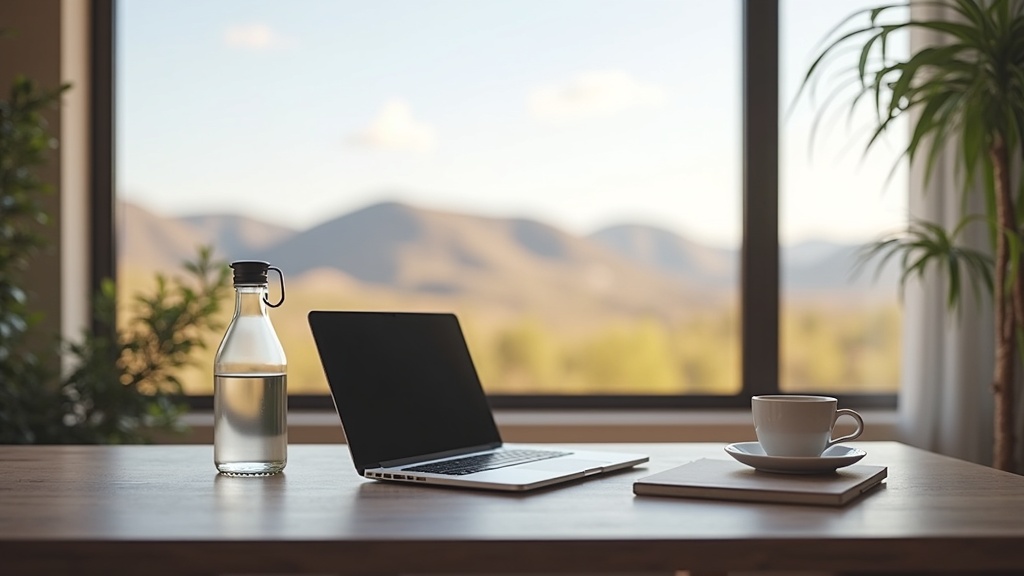
The 2026 Home Office Optimization Playbook (And What It Gets Right)
Walk through any productivity subreddit or watch a "my home office setup" video and you will see the same checklist: a wide-format ultrawide monitor, an ergonomic chair that costs more than your first car, acoustic panels on the wall, maybe a few trailing plants for that biophilic design energy everyone is talking about. The recommendations are not wrong. Research from the Human Spaces report found that incorporating natural elements into workspaces boosted productivity by 15%. Studies on ergonomic seating consistently show fewer repetitive strain injuries and lower fatigue over long work sessions.
In 2026, the home office conversation has matured. People are not just buying gear anymore. They are thinking about light temperature, air quality, ambient sound, and how the physical environment shapes their cognitive output. The biophilic workspace movement, which brings nature indoors through plants, natural materials, and daylighting, has moved from fringe design theory to mainstream productivity advice. It is genuinely useful.
But there is one input that almost nobody puts on the list. It is not a gadget. It does not have an affiliate link. And it has more direct impact on how your brain performs at 2:00 PM than any desk accessory you can buy.
What Productivity Experts Keep Leaving Off the List
Here is the thing nobody is saying: what you drink at your desk matters as much as what you sit in.
Your brain is approximately 75% water by mass. It is not a metaphor. It is physiology. And the research on dehydration and cognitive performance is more specific than most people realize. A 2% drop in body water levels, the kind of mild dehydration that develops quietly over a morning of focused work, measurably impairs working memory, reduces attention, and slows reaction time. A separate study published in the journal Frontiers in Human Neuroscience found that even a 1.36% fluid deficit increased the perceived difficulty of cognitive tasks. The tasks did not get harder. The brain just experienced them as harder.
In a clinical study, drinking water before a cognitive task improved reaction time by up to 14% compared to participants who did not. That is not a rounding error. That is the difference between a sharp afternoon and a foggy one.
The question is not whether hydration matters for focus. The research settled that. The question is why so many remote workers end most days mildly dehydrated without realizing it. And the answer, at least here in the Treasure Valley, usually starts at the tap.
Why Hydration Habits Break Down at Home
When you worked in a traditional office, there was usually a water cooler. Filtered, cold, consistently available. You walked past it. You filled a cup. You did it without thinking.
At home, most people rely on tap water. And here in the Boise metro and Meridian, that tap water is sourced primarily from Idaho groundwater. Idaho groundwater is high in naturally occurring calcium and magnesium, which makes it hard water. Treasure Valley municipal water typically reads in the moderately hard to very hard range, often between 10 and 17 grains per gallon depending on your city and neighborhood.
Hard water is not dangerous. But it has a characteristic taste. People describe it as flat, slightly chalky, or faintly metallic. It is not offensive enough to complain about, but it is just noticeable enough that you reach for your glass a little less often. You choose coffee instead. Or you just forget.
This is not a scare tactic. It is a practical observation. If your water does not taste great, you drink less of it. And if you drink less of it, you spend your workday operating at a mild cognitive deficit that no standing desk can fix.
What Treasure Valley Water Actually Contains
Idaho draws approximately 95% of its water supply from groundwater aquifers. For Treasure Valley residents, that means water that has traveled through geological formations rich in calcium and magnesium carbonate deposits. That mineral content is what makes the water hard.
Municipal water in cities like Boise, Meridian, Nampa, and Eagle is treated and tested regularly by the Idaho Department of Environmental Quality (DEQ) and local utilities. Annual water quality reports are publicly available and worth reading. They tell you what is in your water and at what levels.
For homeowners on private wells, the situation is different. Private well water receives zero regulatory oversight. You are responsible for testing it yourself. And without testing, you genuinely do not know what is in it. Hardness, iron, nitrates, and other compounds can vary significantly from one well to the next, even within the same neighborhood. If you are in a rural area outside Meridian or Eagle and relying on a private well for your home office water supply, a water test is not optional. It is the only way to know what you are actually drinking.
You can learn more about how Treasure Valley water hardness varies by area in our guide to water softener costs in Meridian, Idaho.
The Practical Fix: Make Your Home Office Water Work For You
The goal here is simple: make water the easiest, most appealing thing to reach for during your workday. Here are the options, in order of investment:
- Filtered pitcher (low cost, low friction): A quality carbon filter pitcher removes chlorine taste and can reduce some mineral content. It is a meaningful improvement over unfiltered tap and costs under $50. The tradeoff is that it does not remove hardness minerals, so you still get some of the flat, chalky taste profile.
- Countertop or under-sink reverse osmosis unit (mid-range): RO filtration removes hardness minerals, chlorine, and a wide range of contaminants. The water tastes genuinely clean and neutral. Most home office users who switch to RO report drinking noticeably more water, almost without trying.
- Whole-home water softener (full solution): A softener addresses hard water at the source, before it reaches your tap, your coffee maker, your dishwasher, or your humidifier. Soft water protects appliances, prevents mineral buildup on fixtures, and delivers consistently better-tasting water from every faucet in the house. It is the most comprehensive approach and, for Treasure Valley homes with significant hardness, often the most cost-effective over time.
The right choice depends on your water hardness level, your home setup, and your budget. That is exactly what a free water test helps you figure out. It gives you the actual numbers so you can make a practical decision, not a guess.
If you are curious what a softener system typically costs for a Meridian or Boise home, our TrueWater blog covers pricing, installation timelines, and what to ask before you buy.
FAQ: Home Office Hydration and Water Quality
Find Out What Is Actually in Your Water
If you are working from home in the Treasure Valley and curious whether your tap water is affecting your focus, a free water quality assessment is the most direct way to find out. We come to you, test your water on site, and walk you through what the numbers mean. No sales pressure. Just real information about what is coming out of your tap.