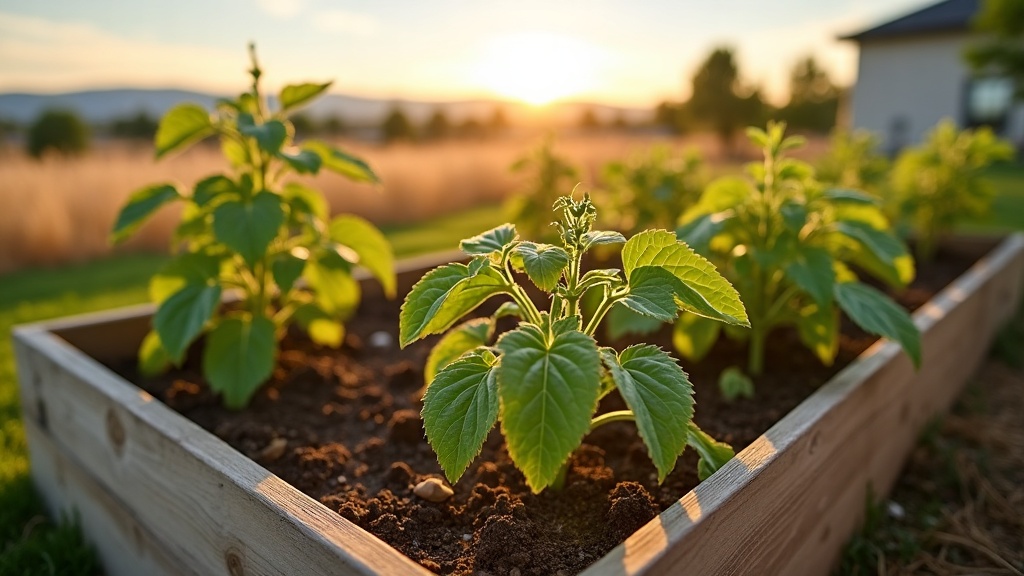
July in the Treasure Valley. Temperatures pushing triple digits. You have walked out to your garden, turned on the hose, and done everything right. Your tomatoes are yellowing anyway. Your roses look limp by noon. Your raised beds are struggling no matter how carefully you water. Something is still wrong.
Heat alone does not explain why plants look sick even after watering, why new leaves emerge pale and stunted, or why adding shade and fertilizer changes nothing. In Boise, the missing variable tends to come out of the tap.
Before adding more fertilizer or adjusting your schedule again, it is worth understanding what your water actually does to soil over time.
Your July Garden Is Supposed to Struggle. But Not Like This
Every Boise gardener knows the July slump. Heat stress is real. Tomatoes drop blossoms when temperatures stay above 95 degrees. Roses go semi-dormant. Hydrangeas wilt by afternoon even with morning water. Some amount of summer struggle is normal, and most healthy plants bounce back with consistent care.
The red flag is when plants do not recover. You water thoroughly, temperatures drop overnight, and your plants still look the same the next morning. Yellowing spreads instead of stopping. New growth comes in pale. Tomatoes that should be setting fruit look like they gave up. That pattern is not heat stress. That is a nutrient problem.
Boise moved to Stage 2 water restrictions in April 2026, limiting irrigation to two days per week for most residential properties. That means many gardeners are already rationing. Watering more often is not the solution. If the problem is in your soil chemistry, more water will not fix it. It may actually make things worse.
The Symptoms Every Boise Gardener Recognizes (And Misreads)
There is a specific symptom pattern that shows up in Treasure Valley gardens every summer, and most gardeners misread it as heat damage, overwatering, or pest pressure. Here is what to look for:
- Interveinal chlorosis: The leaf body turns yellow while the veins stay green. This is the clearest sign of iron deficiency and it looks nothing like simple heat stress or overwatering.
- Leaf tip burn: The edges and tips of leaves go brown and crispy, starting with younger leaves.
- Stunted new growth: New leaves emerge small and pale instead of full and dark green.
- Persistent symptoms: You add shade, you water more, you spray for pests, and nothing changes.
Tomatoes, roses, and hydrangeas are the most sensitive plants in a typical Boise garden. All three naturally prefer slightly acidic soil in the 6.0 to 6.5 pH range. When soil conditions drift outside that window, they show the symptoms above first, often before less sensitive plants show anything at all.
If your tomatoes are yellowing between the veins in July and you cannot trace it to a clear cause, the problem is most likely in your soil. And the cause of that soil problem may be your water.
The Problem Might Be the Water Itself, Not the Heat
Boise tap water runs between 10 and 13 grains per gallon of hardness. The USGS classifies anything above 10.5 gpg as "very hard." That hardness comes from calcium and magnesium dissolved in the water. These minerals are not harmful to drink, but when you irrigate with hard water season after season, something gradual happens in your soil.
Each watering cycle deposits carbonate ions into the soil. Over a full growing season, those deposits accumulate and push your soil pH alkaline. Iron does not become unavailable to plants because it disappears from the soil. It becomes unavailable because your soil pH climbs above 7.0 or 7.5, and at that point iron chemically locks out of the root zone even when it is physically present. Your plant starves for a nutrient that is sitting right next to it, locked away by chemistry.
This condition is called iron chlorosis, and the symptoms match exactly what was described above: yellow leaves with green veins, stunted new growth, plants that do not respond to extra water or shade. Research from the USU Extension iron chlorosis guide confirms that alkaline soil consistently blocks iron uptake in sensitive landscape plants. UMass extension research adds that irrigation water with alkalinity above 150 mg/L reliably drives soil pH up over a single growing season, causing exactly this kind of micronutrient lock-out.
Optimal irrigation water sits between pH 5.0 and 7.0, with alkalinity between 30 and 60 ppm. Boise tap water routinely exceeds both thresholds. Every gallon you use to water is nudging your soil in the wrong direction.
Why Treasure Valley Gardens Are Especially Vulnerable
The Treasure Valley's geology makes this worse than average. The region sits on limestone bedrock overlaid with volcanic ash soils, both contributing to naturally mineral-rich groundwater. Hardness ranges from 10 to 17 gpg across Ada County depending on your neighborhood.
The 2026 drought has added another layer. Idaho recorded its lowest snowpack in decades. Boise activated Stage 2 restrictions months earlier than typical, and Ada County sits at D3 to D4 drought classification. Less mountain runoff means less dilution, concentrating minerals further in the groundwater supply.
The result is a double hit for Boise gardeners: rationing under Stage 2 restrictions while each gallon carries a heavier mineral load than in a normal year. The alkalinity accumulation that takes two full seasons in a wet year is happening in one in 2026.
What Actually Works for Boise Gardeners
Once you know what you are dealing with, most of these problems are fixable. Here is the order of operations:
- Test soil pH first. A basic test kit costs under $20. Target 6.0 to 6.5 for vegetables and roses. Above 7.0 to 7.5, alkalinity is likely already locking out nutrients.
- Short-term iron fix. Iron chelate in the FeEDDHA form works even in alkaline soil, where standard iron sulfate breaks down before plants can absorb it. Apply as a soil drench to address symptoms while you correct the underlying cause.
- Sulfur amendments. Agricultural sulfur gradually acidifies soil and can bring pH back into range over several weeks. Follow label rates for your soil type.
- Collect rainwater for acid-loving plants. Hydrangeas, blueberries, and azaleas all prefer soft, slightly acidic water. Even a small barrel off a downspout is a free, low-mineral source during a drought year.
- Switch to drip irrigation. Drip is exempt from Boise's Stage 2 restrictions, delivers water directly to root zones, and reduces mineral deposition on the soil surface compared to overhead sprinklers.
- Consider treating the water source. Salt-based softeners add sodium, which is not ideal for garden soil. For outdoor irrigation, reverse osmosis or a template-assisted crystallization conditioner reduces mineral scale without the sodium trade-off.
Know your exact water hardness number before your next planting season. That single data point tells you how aggressively to manage soil pH. See our 2026 Boise Water Quality Report for the full breakdown on Treasure Valley tap water, and our 2026 Idaho Water Softener Cost Guide if you are weighing treatment options.
Frequently Asked Questions
Why are my tomato leaves turning yellow in July when I water them every day? +
Can hard water really change my garden soil over time? +
What plants in my Boise garden are most at risk from hard water? +
Does the 2026 drought make the hard water problem worse for Boise gardens? +
Is a water softener good for garden irrigation? +
What Is Really in Your Boise Water?
TrueWater Idaho offers free in-home water hardness tests for Treasure Valley homeowners. Before your next planting season, know your exact gpg number and which plants in your garden are most at risk. One 20-minute test tells you more than a summer of troubleshooting. Call us at (208) 968-2771 or schedule your free test online.