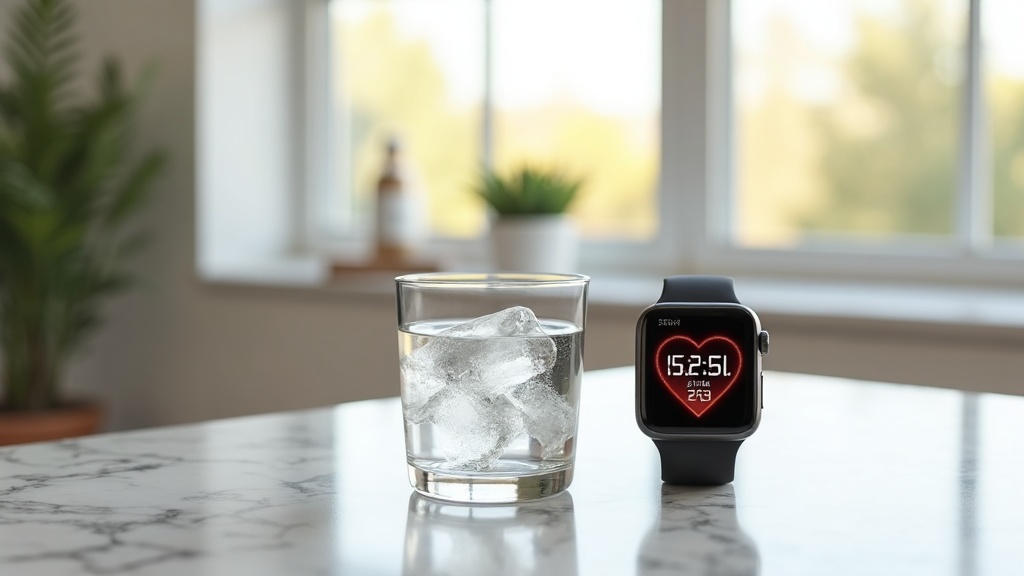
You wake up, reach for your wrist, and check the number before you even check the time. Your recovery score is sitting at 68. Medium. You spent the night tracking HRV, sleep stages, and skin temperature, all feeding into an algorithm that tells you how hard to push today. You adjust your workout, skip the heavy lifting session, and plan to hit your water intake goal so tomorrow's score climbs back up.
This is life in Boise's fitness-forward neighborhoods, from Eagle to the North End to the new subdivisions spreading across Meridian. Treasure Valley residents have fully bought into the data-driven health stack. Wearables are everywhere, and for good reason. But there is a variable that none of these devices account for, and it may be quietly pulling your numbers in the wrong direction.
Your tracker does not know what is in your water.
What Your Wearable Actually Tracks
Modern fitness trackers have become genuinely impressive tools. Heart rate variability measures how well your autonomic nervous system is recovering from stress. Sleep staging algorithms detect when you cycle through light, deep, and REM sleep. Strain and readiness scores synthesize multiple data points into a single daily recommendation. Some devices even flag signs of illness before you feel sick.
Most also include hydration reminders. They track how many ounces you log, ping you when you fall behind, and factor hydration compliance into your recovery calculation.
Here is the gap: these devices track hydration volume, not hydration quality. They know how many glasses you logged. They have no idea what was in them.
The One Variable None of Them Measure
Water quality is a broad term, but for most Treasure Valley households it comes down to three things: hardness (calcium and magnesium mineral content, measured in grains per gallon), chloramines (the disinfectant Boise adds to treated water), and total dissolved solids (TDS, a catch-all for everything suspended in your water).
Hardness is the one most people notice first, even if they cannot name it. It is the chalky residue on your shower door. The film on your dishes. And, relevant to this conversation, it is the slightly metallic, mineral taste that makes your tap water less appealing than a bottle of filtered water from the gym.
That taste aversion is where the problem starts.
Boise's Water Reality in 2026
Boise city water typically runs between 7 and 13 grains per gallon (GPG), varying by zone and season. Meridian water hardness is notably higher, ranging from 8.4 to 17 GPG across service areas. Private well owners in the broader Treasure Valley regularly test above 17 GPG.
The 2026 drought has added a new wrinkle. The Canyon County drought emergency, combined with Boise's own drought ordinance, has reduced aquifer recharge this summer. When less snowmelt and rainfall replenish the groundwater, mineral concentrations rise as water levels drop. If your household baseline was established last fall, your water may be harder now than the reading you remember. Meridian residents who installed softeners in 2025 may notice their systems regenerating more frequently as the mineral load increases.
According to USGS water hardness data, anything above 7 GPG is classified as hard water, and Idaho's Snake River Plain aquifer consistently produces readings in that range and well above it.
How Hard Water Undermines Your Recovery Score
The connection is not direct. Hard water does not poison you. What it does is create a subtle, compounding problem that your tracker sees without being able to explain.
First, taste aversion. Water in the 10-17 GPG range often has a mineral flavor that people find unappealing. You may hit your daily ounce goal, but you do it partly through flavored drinks, coffee, or protein shakes, not plain water. The American College of Sports Medicine hydration guidelines emphasize that cellular hydration for athletic recovery requires adequate plain water intake, and substitutes do not always deliver the same benefit. Your tracker counts the ounces. It does not know the source.
Second, mineral competition. Calcium in hard water competes with magnesium absorption at the cellular level. If you supplement magnesium (widely used for sleep quality and muscle recovery), creatine, or electrolyte powders, you are mixing those supplements with water that may already be calcium-heavy. The return on your supplement stack can diminish when your water is working against absorption rather than with it.
The end result is that your HRV trends down, your deep sleep stages shorten, and your recovery score stagnates, all without an obvious explanation. The tracker flags the symptom. It has no mechanism to trace it back to your water.
What Boise High-Performers Are Actually Doing
The performance-focused Boise community has started treating water treatment as part of the health optimization stack, right alongside sleep trackers, cold plunge protocols, and supplement routines. The logic is simple: if you are spending $300 a year on a wearable and another $200 on supplements, and your water is undermining both, the math on a water softener starts to look reasonable.
A water softener removes the calcium and magnesium load that creates the taste aversion. When the water tastes neutral and clean, hydration compliance improves. You actually drink more of it because it does not taste like anything. Many Meridian and Eagle residents report that their wearable recovery scores stabilized or improved in the weeks after installation, not because the softener is magic, but because the taste barrier was gone and they were finally drinking enough plain water.
For renters or those not ready for a full system, a countertop reverse osmosis filter at the kitchen sink addresses the taste and mineral load for drinking water specifically.
A standard water softener in the Treasure Valley typically costs $2,500 to $4,500 installed, depending on system size and your home's water usage. That is a one-time investment compared to the monthly outlay on supplements, recovery tools, and wearable subscriptions. If you want to explore the options, the water softener options for Boise homes guide covers the main system types and what to look for.
Start with a free water test. Know your actual GPG number before making any decision. That data point is the one your wearable cannot give you.
Find Out What's Really in Your Boise Water
TrueWater Idaho offers free water testing across the Treasure Valley. No pressure, no commitment. Just real data so you can make an informed decision about your health optimization stack.