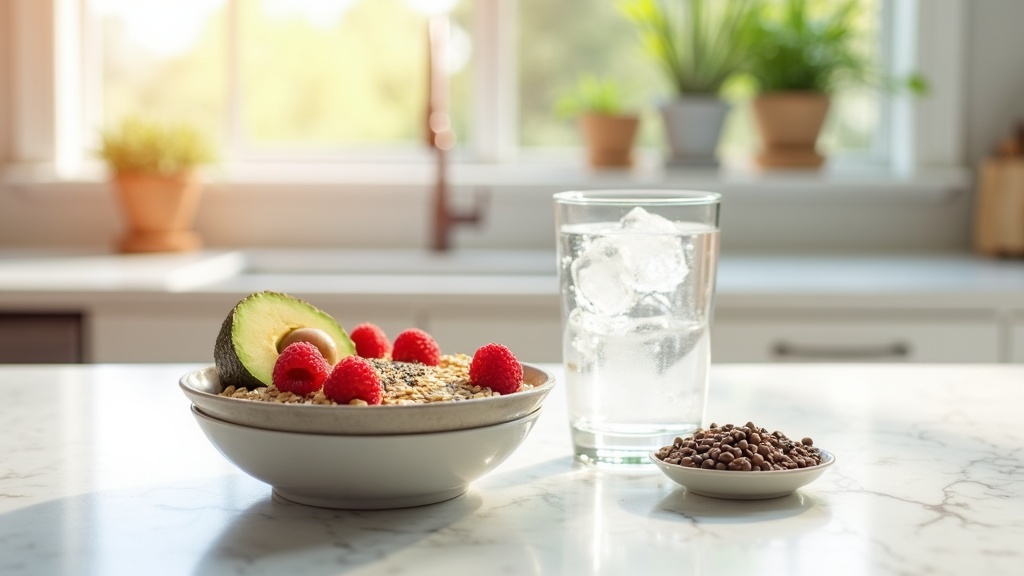
If you have been anywhere near TikTok or health content in 2026, you have heard the term. Fibermaxxing is the push to eat 30 to 50 grams of fiber per day, well above the national average of around 15 grams. The idea is simple: more fiber means better digestion, steadier blood sugar, lower cholesterol, and a gut microbiome that actually works. Influencers are stacking psyllium husk, chia seeds, lentils, and oats into every meal. Search volume for the term has tripled since January.
The results people are reporting are real. Fiber is one of the most evidence-backed nutrition tools available, and most Americans are genuinely under-eating it. If you are trying to clean up your diet this summer, adding more fiber is a smart move.
But here is the part that is not showing up in the viral videos: fibermaxxing without enough water is a guaranteed path to bloating, cramps, and constipation. And if you live in Boise or Meridian, your tap water might be quietly working against you.
What Is Fibermaxxing and Why Is Everyone Doing It Right Now?
Fibermaxxing is not a new science. It is an old idea with a new name and a much louder megaphone. Dietary fiber has two forms. Soluble fiber dissolves in water and slows digestion, which stabilizes blood sugar and feeds beneficial gut bacteria. Insoluble fiber adds bulk to stool and speeds transit through the colon. Both types are essential, and most people are running low on both.
The 2026 version of this trend has people tracking their fiber grams the way a previous generation tracked macros. The targets are ambitious: 30 grams is the floor, and many practitioners aim for 40 to 50. Common sources include:
- Psyllium husk (7g per tablespoon)
- Chia seeds (10g per ounce)
- Lentils and black beans (15g per cup)
- Oats (4g per half cup)
- Raspberries and avocados
- Broccoli, artichokes, and leafy greens
The goal is a thriving gut microbiome, better energy, and more consistent digestion. For most people, those outcomes are achievable. The catch is always the water.
The One Thing Every Dietitian Warns: Fiber Needs Water to Work
Every reputable nutrition source says the same thing. The American Dietetic Association, the Mayo Clinic, and virtually every registered dietitian who covers gut health are consistent on this point: increasing fiber intake without increasing water intake causes problems. The fiber has to hydrate and expand to do its job. Without enough water, it sits, compacts, and creates the exact opposite of what you are going for.
Soluble fiber absorbs water to form a gel-like substance that slows digestion in a useful way. If you do not drink enough, that gel never forms properly. Insoluble fiber needs water to help bulk move through the colon smoothly. Without it, you get harder stool and slower transit. The irony of fibermaxxing without hydration is that you can end up more constipated than when you started.
The general recommendation when eating 30 to 50 grams of fiber per day is at least 80 to 100 ounces of water daily. In Idaho's summer heat, that number goes up. If you are exercising, working outdoors, or spending time in the sun, you need more. Most people are not hitting 64 ounces, let alone 100.
Why Treasure Valley Tap Water Fights Against Your Fiber Goals
Here is where local water quality becomes part of the conversation. Hydration compliance is not just about willpower. It is also about whether your water tastes good enough to actually drink.
Boise tap water typically measures between 10 and 13 grains per gallon of hardness. Meridian comes in higher, often between 12 and 17 grains per gallon. For context, water above 7 grains per gallon is classified as hard, and anything above 10.5 is very hard. The Treasure Valley sits solidly in that upper range.
Hard water is not dangerous. But it has a distinct taste: flat, slightly chalky, sometimes with a mineral aftertaste that lingers. It is the kind of taste that makes you reach for something else, or just not drink as much as you should. If water tastes mildly unappealing, most people unconsciously reduce how much they drink over the course of a day. When you are trying to hit 80 to 100 ounces, that matters.
You can read more about what drives hardness levels in the Treasure Valley in our guide to hard water in Boise and Meridian.
Signs Your Water Is Working Against Your Fibermaxxing Routine
If you have been eating more fiber and not getting the results you expected, your water might be part of the problem. Watch for these patterns:
- You are eating 25 to 40 grams of fiber per day but still feel bloated or backed up
- You find yourself avoiding plain water in favor of sparkling water, juice, or other drinks
- You refill your water bottle less than you intend to throughout the day
- You notice scale buildup on faucets, showerheads, and appliances (a visible sign of high hardness)
- Your skin feels dry or tight after showering, which correlates with the same mineral load affecting your water's taste
The bloating and constipation you associate with a high-fiber diet are often a water problem in disguise. You can have the best diet in the world and still underperform if you are not hydrating well enough to support it.
The Fix: Remove the Taste Barrier, Remove the Hydration Barrier
The most direct solution is to make your water taste better. When water is clean, soft, and neutral on the palate, people drink more of it without thinking about it. That is not a sales pitch; it is just how human behavior works. You naturally reach for things you enjoy.
A whole-home water softener removes the dissolved calcium and magnesium that cause hardness. The result is water that feels different immediately: softer, cleaner, without the chalky aftertaste. Most households in the Treasure Valley report a noticeable increase in how much water they drink within the first week of softening, simply because the taste barrier is gone.
For drinking water specifically, pairing a softener with an under-sink reverse osmosis system takes it a step further. RO removes additional dissolved solids and produces genuinely neutral, clean-tasting water. If you have been buying bottled water because you dislike your tap water, that comparison gives you the reference point for what you are missing.
If you want to understand your options and what a water softener system costs in the Treasure Valley, our water softener buying guide for Boise homeowners covers the specifics.
Canyon County Drought Update: What It Means for Your Home Water
One more layer worth knowing about: 2026 has been a dry year across southern Idaho. Canyon County has seen reduced water allotments for agricultural users, and the City of Boise has implemented conservation ordinances to manage reservoir levels. The drought is concentrated enough that Canyon County farmers are losing water rights this season.
What does this have to do with your kitchen tap? When water levels drop in the Snake Plain Aquifer and Treasure Valley groundwater systems, the remaining water spends more time in contact with calcium and magnesium-bearing rock before it is pumped up. More contact time means higher mineral concentration. Some Treasure Valley residents are seeing slightly harder water in summer 2026 than in previous years, particularly in Nampa and Caldwell.
If your water has seemed a little different lately, this is likely why. A simple hardness test can confirm what you are working with right now, rather than relying on averages from prior years.
Frequently Asked Questions
Find Out What's in Your Boise Water
A free water hardness test takes 15 minutes and tells you exactly what you're working with. No pressure, no sales pitch. Just answers.