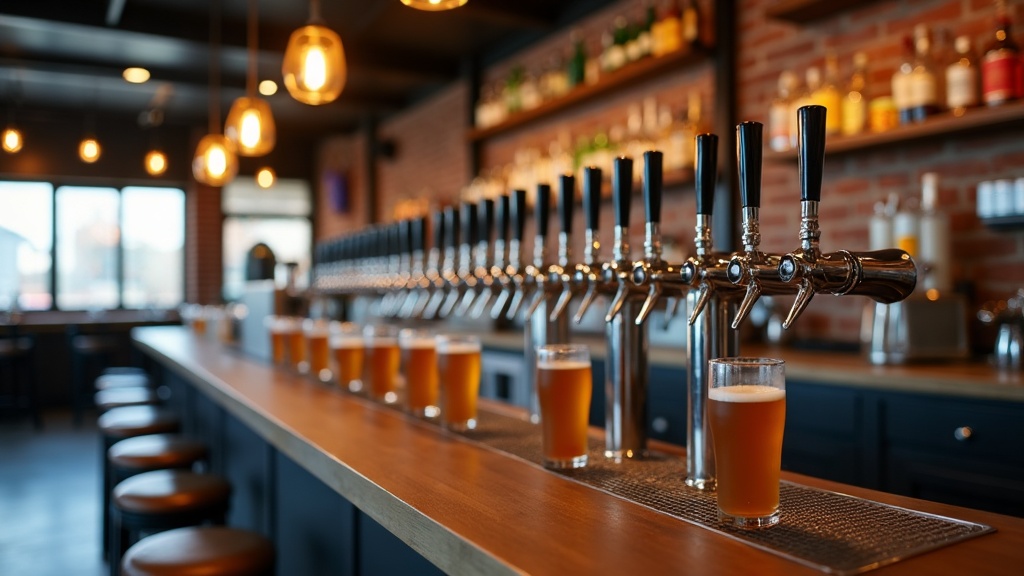
Idaho's craft beer scene has quietly become one of the most exciting in the Pacific Northwest. The state now has nearly 100 breweries, roughly four times the number from just over a decade ago. In Boise, names like Payette Brewing, Sockeye Brewing, and Boise Brewing have built loyal followings not just from locals but from visitors who drive in specifically for the product. The Treasure Valley has developed a genuine beer culture.
And that culture keeps getting more sophisticated. In 2026, craft beer drinkers are paying attention to things they ignored five years ago: consistency across batches, the specific character of a brewery's flagship style, and whether a local product actually tastes like it should. People read tap room menus like they read wine lists. They notice when something is off.
But there is one ingredient that shapes the final product more than anything else, and most home brewers never think to question it. Water.
Beer Is 90% Water. Act Like It.
Beer is approximately 90 to 95 percent water by volume. Everything else, the hops, the grain, the yeast, is working within the chemical environment that water creates. The minerals dissolved in your water, specifically calcium, sulfate, chloride, and bicarbonate, directly shape the beer's flavor, its clarity, its mouthfeel, and how bitter it finishes.
This is not a new discovery. Some of the most famous regional beer styles in the world developed specifically because of local water chemistry. Burton-on-Trent in England sits on sulfate-rich groundwater, which is why it became the home of the English IPA: sulfate sharpens hop bitterness and creates the crisp, dry finish those beers are known for. Pilsen in the Czech Republic has exceptionally soft, mineral-poor water, which is exactly why the pilsner style originated there. Dublin's water is high in bicarbonate, which buffers the acidity of roasted malt and helped create the dry Irish stout profile.
The water did not just influence the beer. In many cases, the water made the style possible at all.
What Boise's Water Actually Contains
Boise and Meridian tap water runs between 10 and 17 grains per gallon in hardness, putting it solidly in the hard to very hard range. The water picks up calcium, magnesium, and bicarbonate as it moves through Idaho's geology. If you have noticed white scale on your faucets or spots on your glassware after washing, you are looking at those same minerals.
For certain beer styles, this profile is genuinely useful. Dark ales, stouts, English bitters, and malty amber ales can work well with hard water because the minerals add body and the higher bicarbonate buffers roasted grain acids. The water and the style can work in the same direction.
For other styles, it creates real problems. Light lagers, pilsners, American wheat beers, and delicate session beers depend on clean, neutral water that does not compete with the flavor. Brew a pilsner with unmodified Boise tap water and you will likely end up with harsh bitterness, a chalky finish, and muted malt character. The bicarbonate fights the recipe at every step.
Why Professional Breweries Treat Their Water First
Payette, Sockeye, Boise Brewing. These are not operations that leave water to chance. Commercial craft breweries almost universally treat their water before it touches a single grain.
The standard approach is to start with reverse osmosis water, which strips the source water down to near-zero mineral content. From there, brewers add precise amounts of specific salts, calcium chloride, gypsum, lactic acid, based on the profile each style requires. An IPA gets one water build. A German-style lager gets a completely different one. Every recipe starts with the same neutral canvas.
This is how consistent flavor is achieved batch to batch. The City of Boise even ran a "Pure Water Brew Boise" pilot with local breweries using highly treated reclaimed water. The participating brewers were enthusiastic about it precisely because ultra-pure water gave them total control over mineral additions, which is the professional standard. When you control the water, you control the outcome.
What This Means for Home Brewers in the Treasure Valley
If you are homebrewing with straight Boise tap water and getting inconsistent results, water chemistry is worth investigating. A pilsner or American lager brewed with unmodified Boise tap water tends to finish harshly bitter or chalky in a way that does not improve no matter how clean your fermentation is. The water, not your process, is often the variable.
Hoppy IPAs are more forgiving. Sulfate actually helps hop-forward styles by accentuating crispness and bitterness. But the high bicarbonate in Boise water still needs to be addressed, usually with a small acid addition, before the hop character reads the way it should.
The same principle extends beyond brewing. Hard water affects how pasta cooks, changes how bread dough behaves, and mutes the extraction in tea and coffee. What is happening in your kettle at the kitchen stove is the same chemistry affecting your homebrew.
What You Can Do About It
For homebrewing specifically, an under-sink reverse osmosis system is the right starting point. RO water gives you a neutral base, and you build the water profile you need by adding measured amounts of brewing salts. Total control, repeatable results.
For general household water quality, the two-part approach works well in the Treasure Valley: a whole-house water softener handles scale, protects appliances, and improves how water feels on your skin and hair. A separate RO unit at the kitchen tap covers drinking water and cooking where mineral-free is the goal.
If you are not sure what your water actually contains, a water test is the logical first step. You cannot make good decisions about treatment without knowing your baseline. TrueWater Idaho offers free water tests throughout the Treasure Valley. The test takes about 20 minutes in your home, covers the key parameters including hardness, and there is no pressure attached.
The professionals at Payette and Sockeye already know their water down to the parts per million. Now you can too. Call (208) 968-2771 to schedule your free test, or visit our pricing guide to see what a whole-house solution typically costs in Idaho.
Find Out What Is in Your Water
Free in-home water test for Boise, Meridian, Eagle, Nampa, and surrounding Treasure Valley communities. Takes 20 minutes. No obligation.