Why Treasure Valley Residents Are Asking About Water Quality Right Now
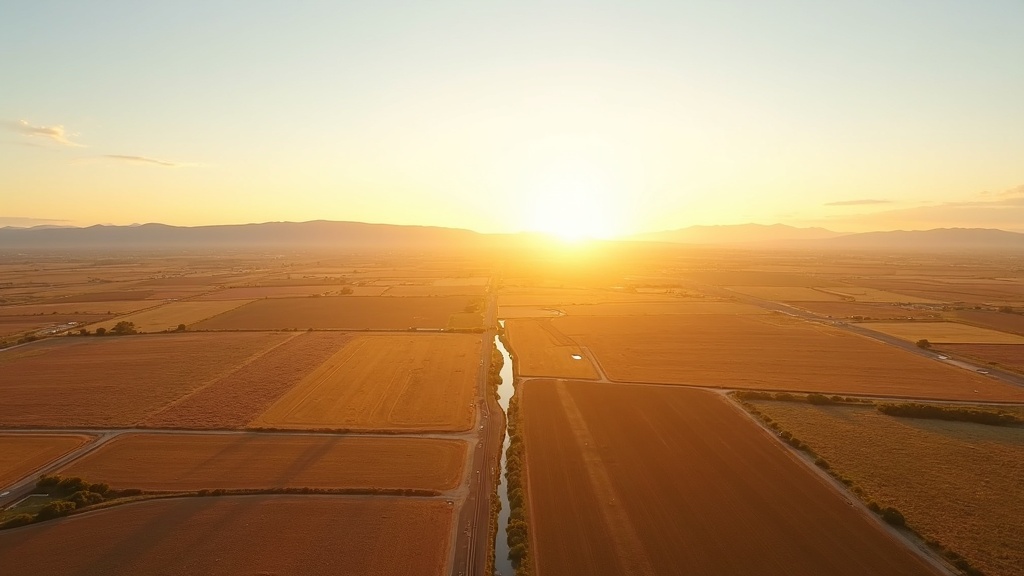
If you have been following local news this summer, you already know the drought situation in Canyon County is serious. A drought emergency declared in April 2026 is still active as of July, with irrigation allotments slashed and the Snake River running four to five feet below its normal level. KIVI TV reported in July 2026 that farmers across the region are facing significant financial losses as the emergency stretches into what should be peak growing season. The 2025-2026 winter was the driest on record since 1934, and that low snowpack is now making itself felt at every tap in the valley.
The City of Boise has activated a formal Drought Emergency Ordinance, asking residents to reduce outdoor water use. Nampa has entered Stage 1 water conservation. And because aquifers across Ada and Canyon Counties are being drawn harder than in wetter years, the dissolved mineral content in both city water and private wells is under more stress than usual. What that means practically: the water coming out of your faucet in 2026 may be harder and more concentrated in certain contaminants than what a two-year-old test result would show.
This guide covers every major Treasure Valley city, explains the geology driving your hardness numbers, walks through Canyon County well water risks in detail, and gives you honest guidance on treatment options. Whether you are in a new Meridian subdivision or on a rural well near Caldwell, here is what you need to know.
Why Treasure Valley Water Is So Hard: The Geology Behind It
Hard water is not a plumbing problem or a utility failure. It is geology. The Snake River Plain sits on top of ancient volcanic basalt and limestone formations. As groundwater moves through those rock layers, it picks up calcium and magnesium along the way. By the time that water reaches a treatment plant or a private well, it is already carrying a heavy mineral load.
The Water Quality Association (WQA) defines water above 7 grains per gallon (gpg) as "hard." Anything above 10.5 gpg is "very hard." Every major city in the Treasure Valley falls in the 10 to 18 gpg range, which puts the entire region firmly in the "very hard" category according to USGS water hardness classifications. Idaho ranks among the hardest water states in the western US by WQA standards.
Hardness is expressed in grains per gallon (gpg) or milligrams per liter (mg/L). Divide mg/L by 17.1 to convert to gpg. Your city's Consumer Confidence Report lists hardness as calcium carbonate in mg/L, so the conversion matters when comparing your report to the data below. During drought years, municipal systems draw more heavily from groundwater, which is harder than surface water, meaning 2026 hardness readings are running higher in some areas than prior years.
City-by-City Water Hardness Data: Boise, Meridian, Eagle, Nampa, Caldwell, Star, and Kuna
Here is what we see across the major Treasure Valley cities based on municipal water quality reports and our own in-home testing data.
Important: Every city listed below exceeds the WQA "hard water" threshold of 7 gpg. Most fall in the "very hard" category (above 10.5 gpg). These numbers reflect typical ranges; your tap result may differ based on your neighborhood, plumbing age, and current drought conditions.
- Boise (city water): 10 to 15 gpg. Boise draws from a blend of Boise River surface water and groundwater. The drought ordinance now in effect is shifting that blend toward more groundwater, which can push hardness toward the higher end of that range. We published a full 2026 Boise water quality report with detailed contaminant breakdowns.
- Meridian (city water): 12 to 17 gpg, among the highest in Ada County. Meridian relies primarily on groundwater wells with no surface blending, which means less natural dilution of dissolved minerals. Rapid population growth is also stressing existing supply capacity.
- Eagle (city water): 14 to 18 gpg, the highest hardness range of any major Treasure Valley city. Residential development in North Eagle continues to pull from the same aquifer at increasing rates. Eagle homeowners see some of the most significant scale buildup and appliance wear in the valley.
- Nampa (city water): 11 to 15 gpg. Nampa is currently in Stage 1 water conservation. As a Canyon County city, Nampa's groundwater source shares risk characteristics with the rural wells in the surrounding area.
- Caldwell (city water): 12 to 16 gpg. Some Caldwell neighborhoods are served by older distribution infrastructure. The city's proximity to active agricultural zones in Canyon County adds a nitrate watch context that other Ada County cities do not face to the same degree.
- Star (city water): 13 to 17 gpg. Star has been the fastest-growing city in Idaho, and that growth is creating real capacity pressure on a relatively small water system with limited blending options.
- Kuna (city water): 13 to 17 gpg. Similar profile to Star; smaller system with less flexibility to blend down hardness levels.
For a deeper look at hardness damage and what these numbers mean for your home specifically, our complete hard water guide for Boise covers the mechanics in detail.
Canyon County Well Water: A Different Risk Profile
If you are on a private well in Canyon County, you are dealing with a fundamentally different situation than city water customers. There is no treatment plant between the aquifer and your tap. Whatever is in the groundwater is what you are drinking, cooking with, and bathing in.
In March 2026, the Idaho Department of Water Resources issued a five-year moratorium on new groundwater permit applications in southern Canyon County, a direct acknowledgment that the aquifer is being drawn faster than it recovers. That pressure has implications beyond just supply: heavier pumping concentrates dissolved minerals and contaminants because there is less water volume to dilute them.
Well water hardness in Canyon County commonly runs 15 to 25+ gpg, well above the city water ranges above. But hardness is not the only concern. The Idaho DEQ and IDWR monitoring programs have documented several additional contaminants in the area:
- Nitrates: Canyon County is an active agricultural area, and nitrate contamination from fertilizer runoff has been documented in the Lower Boise/Canyon County corridor by DEQ. The Sunnyslope area has been specifically called out in state data. Nitrates above 10 mg/L are unsafe for infants and can pose risks for pregnant women.
- Uranium: State monitoring has found that approximately 20% of wells sampled in Ada and Canyon Counties exceed the federal maximum contaminant level (MCL) of 30 parts per billion. Uranium occurs naturally in the Snake River Plain geology; this is not an industrial contamination issue, but the health risk is real and well owners have no automatic protection against it.
- Arsenic and fluoride: Both have been documented above safe levels in pockets of Canyon County, particularly in areas with older well casings or wells that draw from deeper aquifer layers.
For more detail on what Canyon County well owners face, see our Canyon County well water testing guide for 2026. The core takeaway: annual testing is not optional for well owners. During drought years, it is essential. A test result from 2023 or 2024 does not reflect what is in your water right now.
What Hard Water Does to Your Home: Costs Most People Ignore
We hear versions of the same comment from customers across the valley: "I knew the water was hard, but I didn't realize what it was costing me." Hard water damage is slow, cumulative, and tends to hide inside appliances where you cannot see it.
- Water heaters: Scale buildup on heating elements and tank interiors forces the heater to work harder to reach the same temperature. U.S. Department of Energy data indicates a properly sized water softener can restore 30% or more of water heater efficiency lost to scale.
- Appliance lifespan: Dishwashers, washing machines, and coffee makers all accumulate internal scale. Studies have found appliance lifespan reductions of 30 to 50% in very hard water households compared to households with treated water.
- Cleaning product waste: Hard water requires two to three times more soap, detergent, and shampoo to achieve the same lather as soft water. That cost adds up weekly across every household product you buy.
- Skin and hair: Calcium and magnesium displace the natural oils in skin and hair. Dry skin, brittle hair, and eczema flare-ups are common complaints we hear from Treasure Valley homeowners, particularly those in Eagle and Meridian where hardness runs highest.
Our estimate for the average Idaho home: hard water adds $500 to $800 per year in excess energy costs, cleaning product waste, and accelerated appliance wear. That figure does not include early appliance replacement when scale damage becomes irreparable.
Water Treatment Solutions by Problem Type
The right treatment depends on what is actually in your water. Here is an honest breakdown by problem type.
For hard water across all Treasure Valley cities:
- Salt-based ion exchange softener: The gold standard for hardness above 10 gpg. A point-of-entry softener replaces calcium and magnesium ions with sodium, delivering consistently soft water to every tap and appliance in the house. This is what we recommend for virtually every Treasure Valley home.
- Salt-free conditioners: These condition water rather than removing hardness minerals. They can reduce scale at lower hardness levels, but their effectiveness drops significantly above 12 gpg. We are honest with customers when a salt-free conditioner is a reasonable fit and when it is not. For most Treasure Valley cities, it is not sufficient on its own.
- Combination systems: For homes on chlorinated city water, pairing a softener with a carbon filter addresses both hardness and the taste/odor issues that come with chlorine residual. A common setup for Boise and Meridian households.
For Canyon County well water with multiple contaminants:
- Whole-house filtration: When testing reveals hardness combined with nitrates or uranium, a multi-stage whole-house system is typically required. A softener alone does not address nitrates or uranium.
- Reverse osmosis (RO) at the kitchen tap: RO is the most effective point-of-use solution for nitrates and uranium in drinking water. It does not protect the whole house, but it protects the water you cook with and drink.
- UV sterilization: Adds a layer of protection against biological contamination for rural well users, particularly those in areas with older well casings or near agricultural drainage.
A note specific to 2026: water quality can shift during drought conditions faster than annual utility reports can capture. A test you had done before the drought began may not reflect what is in your water today. Our free water test at your tap gives you current data, not system averages from last year.
Our water softener buying guide for Boise 2026 covers sizing, brand comparisons, and what to watch for when evaluating bids from local installers.
How to Read Your Water Quality Report
Every municipality must publish an annual Consumer Confidence Report (CCR) under the EPA's Safe Drinking Water Act. Boise, Meridian, Nampa, Caldwell, Eagle, Star, and Kuna all publish these. Find yours on the city utilities website. Key things to look for: hardness (listed as calcium carbonate in mg/L, divide by 17.1 to get gpg), TDS, chlorine residual, and any MCL violations. One important caveat: the CCR is a system average taken at the treatment plant. Your tap result can vary based on your neighborhood's pipe age and your position in the distribution line. An in-home test gives you what is actually coming out of your faucet, not a system-wide estimate.
If you are on a private well, there is no CCR. Annual private testing is the only way to know what you are working with.
Frequently Asked Questions
What is considered hard water in Idaho?
The Water Quality Association classifies water above 7 grains per gallon (gpg) as hard. Every major Treasure Valley city, including Boise, Meridian, Eagle, Nampa, Caldwell, Star, and Kuna, tests above that threshold. Most fall in the 10 to 18 gpg range, which the USGS classifies as "very hard." Idaho consistently ranks among the hardest water states in the western US.
Is Canyon County well water safe to drink?
It depends on your specific well. State monitoring has found that roughly 20% of Ada and Canyon County wells exceed the federal uranium limit of 30 parts per billion. Nitrate contamination from agricultural runoff is documented in areas like Sunnyslope. Arsenic and fluoride have also been detected above safe levels in pockets of the county. Well owners should test annually, and more frequently during drought years like 2026 when aquifer concentrations can shift faster than normal.
Does the drought affect city water hardness?
It can. When reservoir and surface water levels drop, municipal systems often pull a higher percentage of their supply from groundwater. Groundwater tends to be harder than surface water because it has been in contact with mineral-bearing rock longer. The 2026 drought followed the driest winter since 1934, and some Treasure Valley residents are noticing harder water than they experienced in previous years. A current in-home test reflects conditions right now, which older utility reports may not capture.
What is the best water treatment for Meridian or Eagle homes?
Both cities run in the 12 to 18 gpg range, which calls for a salt-based ion exchange water softener at point of entry. Salt-free conditioners are not effective at these hardness levels. A whole-house softener sized to your household usage is the most practical solution. We recommend starting with a free in-home water test so you know the exact gpg at your tap before choosing a system and size.
How do I get my water tested in the Treasure Valley?
TrueWater Idaho offers a free in-home water test for Treasure Valley residents. Call (208) 968-2771 or schedule online at truewateridaho.com. We test at your tap, not from a system average, and provide a written results summary with treatment recommendations based on what we actually find. No obligation, no pressure.
Get Your Free Treasure Valley Water Test
The only way to know what is actually in your water is to test it at your tap. TrueWater Idaho provides free in-home water testing for all Treasure Valley cities and Canyon County well water.