If you live in Bridgetower or you are shopping for a home in northwest Meridian, you have probably noticed the chalky film on your faucets, the spotty residue on your shower glass, or the way your soap never quite lathers the way it should. That is hard water doing what hard water does. And in this part of Meridian, it is worth understanding exactly what you are dealing with, because the stakes for your plumbing, your appliances, and your wallet are real.
Here is what we know, and what Bridgetower homeowners should be paying attention to in 2026.
Two Bridgetowers, One Water System
There is a naming confusion worth clearing up first, because we hear it from homeowners regularly.
When people say "Bridgetower," they usually mean one of three distinct communities:
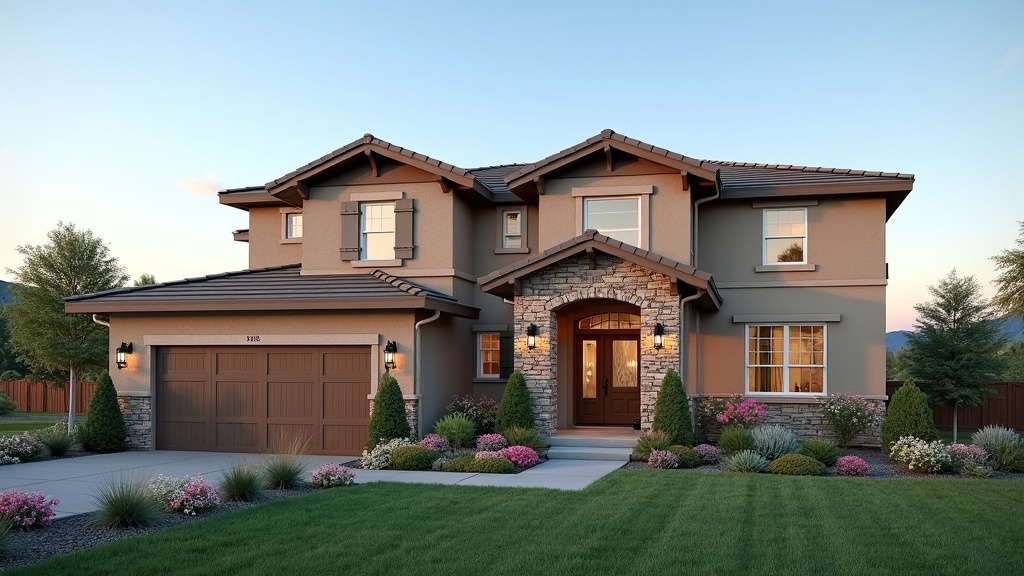
Bridgetower is the original neighborhood in northwest Meridian, built between roughly 2002 and 2017. It has the signature stone bridge entry, Mediterranean architectural style, and HOA dues of around $270 per quarter. Homes run from about $500K into the $1M+ range. These are resale-only at this point.
Bridgetower West sits adjacent and is still actively building. The Berkeley Building and Fairbourne phase are among the current development areas, with multiple builders involved. Average new home prices are around $800K.
Bridgetower Crossing is a separate community entirely, located in south Meridian rather than northwest Meridian. It was built in the late 2000s through 2010s, with homes in the $475K to $600K range and a lower HOA of $325 per year.
All three neighborhoods share something important: they draw water from the same source, the City of Meridian's distribution system, which is fed entirely by the Eastern Snake Plain Aquifer. So while the neighborhoods differ in price point, age, and location, the water chemistry story is largely the same.
Where Bridgetower's Water Actually Comes From
Meridian is one of the few cities in the Treasure Valley that uses 100% groundwater. There is no surface water blend here, which is different from Boise, where the city mixes aquifer water with Boise River water depending on the season.
Meridian's system is fed by 25 city wells, according to the 2025 Water Master Plan released in February of that year. The city draws entirely from the Eastern Snake Plain Aquifer, one of the largest freshwater aquifers in the country. The aquifer runs deep under the Snake River Plain and naturally picks up dissolved minerals, primarily calcium and magnesium, as water moves through layers of basalt and sediment over centuries.
That mineral pickup is why Meridian's water is hard. It is not a treatment failure or a contamination event. It is simply the geology of the region expressing itself in your tap water.
Northwest Meridian, where Bridgetower and Bridgetower West sit, tends to draw from wells with slightly higher mineral concentrations than parts of the city closer to the river corridor. That matters when you are calculating what hard water will cost you over time.
How Hard Is Bridgetower's Water, Exactly?
The city average for Meridian water hardness comes in around 8.4 GPG (grains per gallon), or roughly 143 parts per million. That puts it in the "hard" category on the standard water hardness scale, which begins at 7 GPG.
In northwest Meridian specifically, we typically see levels trending a bit higher than the city average. Readings in the 10 to 14 GPG range are not unusual for this part of the distribution system.
There is also a 2026 factor worth knowing about. Idaho declared a drought emergency in April 2026 following the second-warmest winter on record since 1896. Low snowpack means the aquifer is being drawn harder to meet demand. When water tables drop and draw rates increase, mineral concentrations in the water naturally rise. Water that tested at 8.4 GPG in 2024 may be measuring higher in current 2026 test cycles, though updated city-wide figures will follow in the next annual report.
For Bridgetower homeowners, this means the hardness numbers on paper may actually understate what is running through your pipes right now.
What Hard Water Is Doing to Bridgetower Homes Right Now
Hard water is not a health hazard for most people, but it is a slow and steady financial drain on every home it runs through. Here is where the damage shows up.
Water heaters. Scale buildup inside your tank is the most expensive consequence of hard water. As calcium deposits accumulate on heating elements and tank walls, the unit has to work harder to heat the same amount of water. A layer of scale just 1/8 inch thick forces the heater to use about 30% more energy to do its job. More critically, a water heater that should last 12 to 15 years typically drops to 6 to 8 years of service in hard water conditions. Replacing a unit early is a $600 to $1,500 cost that treated water could have prevented.
Pipes and fixtures. Over time, scale deposits narrow the interior diameter of pipes, reducing flow and pressure. Faucet aerators clog. Showerheads lose pressure. Valves in dishwashers and washing machines wear faster. None of this happens overnight, but in a home built in 2005 or 2010 that has run hard water for two decades without treatment, the cumulative wear is measurable.
Appliances. Dishwashers, washing machines, and coffee makers all suffer accelerated wear from scale. Glassware comes out of the dishwasher cloudy. Clothing washed repeatedly in hard water feels stiff and fades faster. These are quality-of-life issues, but they also represent ongoing costs.
Skin and hair. Hard water does not rinse soap and shampoo fully, which is why your skin can feel tight or dry after a shower, and why hair can look dull. This is a comfort issue more than a health one, but it is one of the first things homeowners notice.
The 10-year math. We estimate that running untreated hard water through a Treasure Valley home costs between $8,000 and $18,000 over ten years when you account for shortened appliance lifespans, higher energy bills, extra detergent and cleaning products, and early plumbing repairs. A whole-home water softener installed in Bridgetower typically runs $2,500 to $4,500. The math on treatment pays for itself relatively quickly.
The 2025-2026 Water Picture: What Official Reports Show
Meridian's water meets all Safe Drinking Water Act standards. The city publishes an annual water quality report, and the 2024 report confirms compliance across all regulated contaminants. You can review the current report directly at the Meridian city water quality page.
That said, compliance with federal standards does not mean your water is free of concerns. The Environmental Working Group (EWG), which applies more conservative health guidelines than the EPA, identifies 8 contaminants detected in Meridian's water supply, with 4 of those exceeding their advisory thresholds. The primary concerns are chlorination byproducts, specifically total trihalomethanes and haloacetic acids, which form when chlorine used to disinfect the water reacts with organic material. These are common in chlorinated municipal systems nationwide.
The 2025 Water Master Plan provides useful context for the long-term infrastructure picture. Northwest Meridian is one of the fastest-growing corridors in the city, and the plan acknowledges the pressure that population growth is placing on the water system. Infrastructure is being planned and expanded, but in the near term, the wells serving Bridgetower and Bridgetower West are working harder than they were five years ago.
Combined with the April 2026 drought declaration, this creates a situation where Bridgetower homeowners have good reason to get a current water test rather than relying solely on annual report averages.
Treatment Options for Bridgetower Homeowners
The right solution depends on what you are trying to solve.
Whole-home water softener. This is the most common and most effective solution for hard water in Meridian. A salt-based ion exchange softener removes the calcium and magnesium that cause scale, extending appliance life and eliminating the buildup on fixtures and glass. Installed cost in Bridgetower typically runs $2,500 to $4,500 depending on the home's size and water usage. This is what we recommend as the foundation of any treatment plan here.
Salt-free water conditioner. Conditioners do not remove minerals but alter their structure so they are less likely to form scale. They require no salt, no electricity, and minimal maintenance. They are a reasonable option for homeowners who want reduced scale without the ongoing salt cost, though they are generally less effective than softeners in high-hardness conditions.
Reverse osmosis system. An RO system installed at the kitchen sink provides high-quality drinking and cooking water by filtering out dissolved solids, including the chlorination byproducts flagged by EWG. We often recommend pairing a whole-home softener with an under-sink RO unit; one handles the scale and appliance protection, the other handles drinking water quality.
Combined approach. For newer Bridgetower West homes with high-end appliances and long expected ownership timelines, a combined softener-plus-RO setup offers the most comprehensive protection and the best return on investment over time.
For existing Bridgetower homes with older plumbing, we also recommend a simple sediment pre-filter to catch any particulate before it reaches the softener resin.
If you are comparing approaches, our article on Paramount Meridian water quality covers similar ground for another northwest Meridian neighborhood. And if you want context on how Meridian compares to the rest of the Treasure Valley, our Boise water quality report for 2026 breaks down those differences.
Free Water Testing in Bridgetower
If you are not sure what your water is actually testing at right now, the most useful thing you can do is get it tested. City averages are useful context, but they are averages. Your specific address, your home's plumbing age, and the current draw conditions all affect what is actually coming out of your tap.
We offer free in-home water testing for Bridgetower, Bridgetower West, and Bridgetower Crossing homeowners. We will test your water hardness, check for common contaminants, and walk you through what the numbers mean for your home specifically. No pressure, no obligation.
Call us at (208) 968-2771 or reach out through truewateridaho.com to schedule. We are local, we know the Meridian water system well, and we will give you a straight answer about what your water needs, and what it does not.