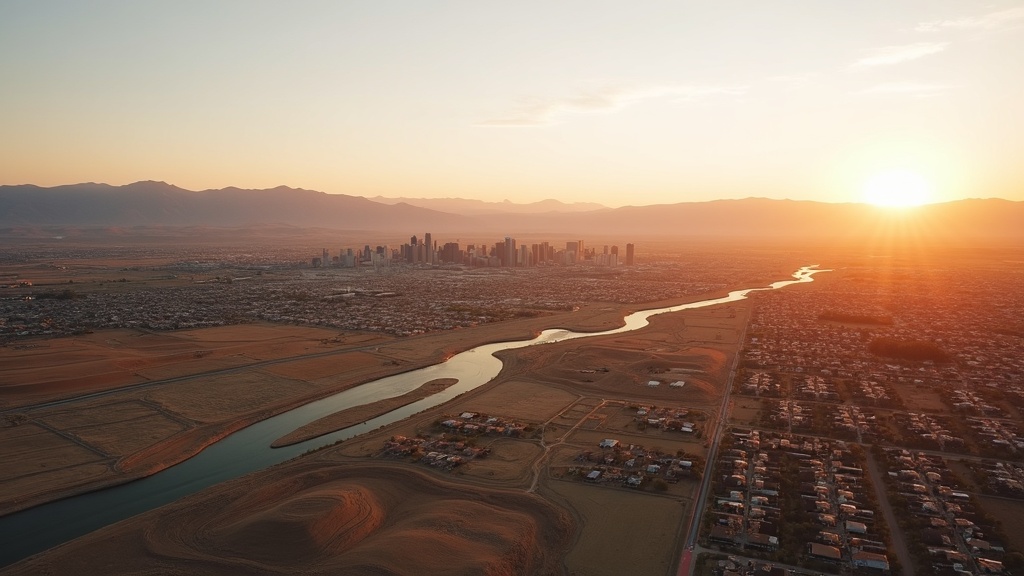
Idaho Just Declared a Drought Emergency, and the Treasure Valley Is Feeling It
On April 13, 2026, Governor Brad Little declared a statewide drought emergency across all 44 Idaho counties. It was not a surprise to anyone who had been watching the snowpack numbers. By April 1, the mountains that feed the Treasure Valley's water supply had recorded their lowest snowpack on record, capping what was already the second-warmest winter since 1896. The Snake River basin is projected to run short by roughly 181,600 acre-feet this season. That is not a rounding error. That is a serious, measurable shortfall with real consequences for farms, cities, and the aquifers that sit underneath Boise and Meridian.
For most Treasure Valley residents, the drought conversation has centered on irrigation restrictions, river flows, and agriculture. Those concerns are legitimate. But there is another layer to this that gets less attention: what drought conditions do to the water that comes out of your tap at home.
One Million People by 2040: What Rapid Growth Does to a Water System
Idaho's drought declaration did not arrive in a vacuum. The Treasure Valley is in the middle of one of the most aggressive growth cycles in the American West. The metro area is on track to cross one million residents by 2040, and that growth is not slowing. New subdivisions are going in across North Meridian, Southeast Boise, and Eagle at a pace that water infrastructure was not originally designed to handle.
Municipal water systems are built with capacity projections that take years, sometimes decades, to update. When demand grows faster than those projections, you end up with a system under strain: pressure fluctuations across the network, new miles of pipe that need to stabilize, and older pipes in established neighborhoods carrying more load than they were built for. The City of Boise and SUEZ Water Idaho are managing this as well as any utility can, but the math is straightforward. More people drawing from a fixed and currently shrinking supply means more stress on every part of the system.
Municipal water costs are also rising faster than tax revenue can offset them. Infrastructure upgrades, treatment improvements, and expanded capacity all carry price tags that ultimately land on homeowners. As those systems stretch, individual homes become more responsible for the quality of water they actually receive, not just what leaves the treatment plant.
What Stressed Water Sources Mean for Mineral Content
Here is where the drought and growth story connects directly to your home. When reservoir levels drop and aquifer recharge slows, the same minerals and dissolved solids that were always present in the water become more concentrated. Less water volume, same mineral load. The math is simple, and the result shows up in your pipes, your appliances, and your water heater.
The Treasure Valley already draws from water sources that naturally carry high mineral content. The Snake River Plain aquifer, which feeds much of the region's groundwater, runs through volcanic basalt geology that is rich in calcium and magnesium. Those are the primary minerals that cause hard water. Under normal conditions, Boise tap water tests at 10 to 15 grains per gallon (gpg). Meridian, which relies more heavily on groundwater, typically runs 12 to 17 gpg. Both sit well above the 7 gpg threshold where water softening starts making practical sense for most households.
During drought years, those numbers can shift upward. Less dilution from snowmelt, slower aquifer recharge, and deeper draws from wells all contribute to higher mineral concentration in the water that eventually reaches your tap. You can read more about how Boise's water sources have shifted over time in our Boise water source history overview.
What Boise-Area Homeowners Are Seeing Right Now
If you have noticed more white residue on your faucets lately, more spots on glasses coming out of the dishwasher, or water that tastes a little different than it did a year ago, you are not imagining it. We have been hearing from more homeowners in Meridian and Southeast Boise about exactly these kinds of changes over the past several months.
Hard water at elevated levels is not a health crisis. Your water is still safe to drink. But it does work on your home quietly and consistently. Water heaters lose efficiency as scale builds on the heating element. Washing machines and dishwashers wear faster. Showerheads clog. Soap does not lather as well. Over time, the cost of hard water shows up in your utility bills and your appliance replacement cycle, not in one dramatic moment.
New construction in Meridian and Nampa brings an additional wrinkle. Newly installed pipe systems often take a year or two to stabilize, and in that window, water quality at the tap can vary more than it will once the system settles. If you moved into a new neighborhood in the past couple of years, your water chemistry may not yet reflect its long-term baseline. Our city-by-city Treasure Valley water quality comparison breaks down what residents in different areas are typically working with.
The honest answer to "what is in my water right now" is: we do not know without testing it. The numbers above are typical ranges, not guarantees. Your specific block, your home's plumbing, your proximity to a water main, and the current drought conditions all affect what actually comes out of your tap.
Frequently Asked Questions
Know What Is Actually in Your Water
Drought years and growth pressures are real. Your water quality right now is a data question, not a guessing game. We test homes across the Treasure Valley at no charge, no obligation. You get the actual numbers for your address.