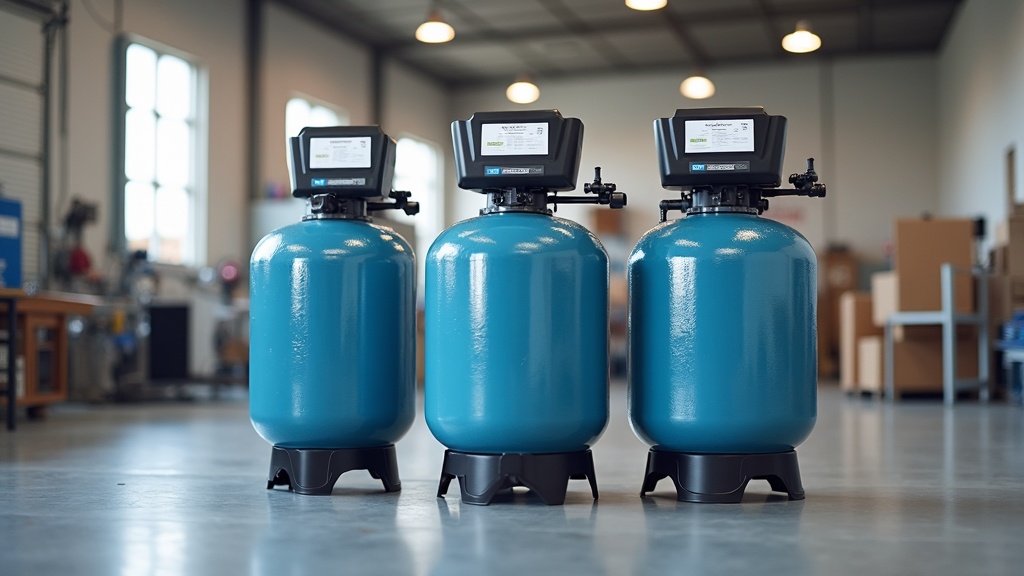
If you have lived in Boise, Meridian, Eagle, or anywhere else in the Treasure Valley for more than a season, you have probably noticed the white film on your faucets, the spots on your dishes, or the way your soap never quite lathers the way it should. That is hard water doing what hard water does. We work with homeowners across the valley every week, and the question we hear most often is a straightforward one: which water softener is actually worth buying in 2026?
This guide walks through what makes Treasure Valley water hard, how to read the numbers, what to look for in a softener, and what honest installation costs look like in the Boise area. We are not here to push a particular brand. We are here to help you make a well-informed decision for your home and your family.
Why Is Boise Water So Hard?
Boise and the surrounding Treasure Valley sit on top of a network of aquifers fed by snowmelt from the Boise and Sawtooth mountains. As water moves through layers of limestone, chalk, and dolomite rock, it picks up calcium and magnesium carbonate. By the time it reaches your tap, it is carrying a substantial mineral load.
Boise city water typically measures between 10 and 15 grains per gallon (gpg). Meridian, which draws from a different part of the aquifer system, often runs higher at 12 to 17 gpg. Eagle and Nampa fall in a similar range depending on the specific zone and time of year.
A March 2026 study out of Boise State University flagged a trend that water professionals in the valley have been watching closely. Rapid population growth combined with reduced snowpack is increasing groundwater demand across southern Idaho. When aquifer levels drop, the remaining water moves through more rock per unit volume before it is pumped, which concentrates mineral content further. In practical terms, that means Treasure Valley water hardness may trend upward in coming years rather than down. You can read more about Idaho groundwater conditions through the Idaho Department of Environmental Quality and the USGS Idaho Water Science Center.
What Does GPG Actually Mean?
Grains per gallon is the standard unit water treatment professionals use to measure hardness. One grain equals roughly 17.1 milligrams of calcium carbonate per liter. Here is a simple reference scale:
- 0 to 3.5 gpg -- Soft. No treatment usually needed.
- 3.5 to 7 gpg -- Moderately hard. Some minor scaling possible.
- 7 to 10.5 gpg -- Hard. Scaling on fixtures, reduced appliance efficiency.
- 10.5 gpg and above -- Very hard. This is where most of Boise and Meridian fall.
At 12 to 17 gpg, Meridian water sits solidly in the very hard category. That level of mineral content shortens water heater life, clogs showerheads, and leaves calcium deposits on every surface water touches regularly.
Signs You Probably Need a Water Softener
Hard water announces itself in a number of ways around the house. If several of these sound familiar, a softener is worth serious consideration:
- White or yellowish scale buildup around faucets, showerheads, and the base of your toilet
- Spots and film on dishes and glassware even after running the dishwasher
- Soap and shampoo that does not lather well and leaves a residue on skin or hair
- Stiff, scratchy towels and laundry that fades faster than it should
- A water heater that is less than ten years old but already running less efficiently
- Frequent clogs or reduced flow in your plumbing fixtures
These are not cosmetic annoyances. Scale buildup inside pipes and appliances is a measurable source of energy waste and premature equipment failure. Research has documented that water heaters operating in hard water conditions can lose significant efficiency within just a few years of installation.
Types of Water Softeners: Salt-Based, Salt-Free, and Dual Tank
The market has three main categories, and each has a different operating principle. Understanding the difference helps you match the right system to your household.
Salt-Based Ion Exchange Softeners
This is the traditional and most effective method for truly softening water. The system runs your water through a resin tank filled with negatively charged beads. Calcium and magnesium ions, which carry a positive charge, stick to those beads. Sodium ions from the salt brine take their place in the water. The result is genuinely softened water with a measurably lower mineral content.
Salt-based systems work well in Boise and Meridian precisely because hardness levels are high enough that strong treatment makes a real difference. The trade-off is that you need to keep the brine tank stocked with salt pellets and run periodic regeneration cycles. Modern demand-initiated systems only regenerate when needed, which reduces salt and water consumption compared to older timer-based models.
Salt-Free Conditioners (Template-Assisted Crystallization)
Salt-free systems do not remove minerals from the water. Instead, they change the physical structure of calcium and magnesium ions so they are less likely to stick to surfaces. The minerals are still present; they just form microscopic crystals that pass through your plumbing rather than adhering to pipes and fixtures.
These systems require no electricity, no salt, and produce no brine discharge. They are a reasonable fit for households with moderate hardness or situations where a salt-based system is not practical. At Meridian hardness levels of 12 to 17 gpg, many homeowners find that salt-free conditioning reduces scale noticeably but does not eliminate it entirely. For severe hardness, a salt-based system tends to deliver more consistent results.
Dual Tank Systems
A dual tank system uses two resin tanks that alternate service. While one is treating water, the other regenerates. The practical benefit is uninterrupted soft water around the clock, which matters in larger households or homes with high peak-hour water demand. These systems carry a higher upfront cost but are a strong fit for families of five or more in hard-water areas like Meridian or Nampa.
For a more detailed comparison specific to Treasure Valley conditions, see our guide on water softeners vs. conditioners for Treasure Valley homes.
What to Look for When Buying a Water Softener in 2026
Beyond the system type, a few specifications matter when you are comparing options for a Boise-area home:
- Grain capacity: This is the amount of hardness minerals the resin tank can remove before it needs to regenerate. A family of four in Boise should look at systems rated between 32,000 and 48,000 grains. Higher hardness means you need more capacity or more frequent regeneration cycles.
- Demand-initiated regeneration: Look for systems that regenerate based on actual water usage rather than a fixed timer. This saves salt and reduces wastewater.
- NSF certification: NSF/ANSI Standard 44 applies to cation exchange water softeners. Certification means independent testing has confirmed the system performs as rated.
- Flow rate: Make sure the system can meet your household peak demand. A system with too low a flow rate will create noticeable pressure drops during high-use periods.
- Warranty terms: A quality system should carry at least a five-year warranty on the control valve and a ten-year warranty on the resin tank. Some manufacturers offer lifetime tank warranties.
We also recommend asking any dealer or installer about the specific resin media they use. Fine mesh resin performs better in water that contains iron in addition to hardness minerals, which is relevant in parts of the Treasure Valley where well water or older municipal lines introduce some iron content.
Water Softener Installation and Cost in Boise
We hear from homeowners who found a softener online for $800 and wonder why we quote higher. The honest answer is that the equipment cost is only part of the picture. Professional installation includes proper sizing, correct placement in your plumbing loop, setting up the drain line for regeneration discharge, configuring the control head for your specific water hardness, and verifying the system is working correctly before the technician leaves.
A quality water softener system typically runs $2,500 to $4,500 installed in the Boise and Treasure Valley market. The lower end of that range covers a single-tank salt-based system appropriate for a smaller home. The higher end reflects dual-tank systems, homes that require more complex plumbing work, or setups that combine softening with additional filtration for iron or sediment.
There are lower-priced options in the market. Some work acceptably. Many are undersized for Treasure Valley water hardness levels or use lower-grade resin that degrades faster. When comparing quotes, ask specifically about the grain capacity, the brand and grade of resin, and what the warranty covers. A system that fails in three years is not a bargain at any price.
If you are in Meridian and want to understand your specific options, our water softener cost guide for Meridian homeowners covers local considerations in more detail.
Maintaining Your Water Softener
A well-maintained softener in Boise will run reliably for 15 to 20 years. Maintenance is not demanding, but it does require some attention:
- Salt replenishment: Check your brine tank monthly. Most households in the Treasure Valley go through one 40-pound bag of salt every four to eight weeks depending on water usage and hardness. Keep the salt level above the water line in the tank.
- Salt bridges: Occasionally a hard crust forms above the water level in the brine tank, creating an air gap that prevents the salt from dissolving properly. Break up any bridge with a broom handle and check that salt is making contact with the water.
- Resin bed cleaning: Iron in the water can foul the resin over time. Using a resin cleaner product a few times per year helps maintain performance, especially if your water has any noticeable iron content.
- Annual inspection: Having a technician check the control valve settings, verify salt efficiency, and inspect the resin tank every year or two catches small problems before they become larger ones.
- Salt type: Use high-purity pellet or crystal salt rather than rock salt. Rock salt contains more impurities that can accumulate in the brine tank over time.
Modern systems with demand-initiated regeneration track your usage and regenerate only when needed. If you notice soft water performance declining between service visits, the first thing to check is whether the brine tank has enough salt and whether a salt bridge has formed.
Frequently Asked Questions
Not Sure What Your Water Needs?
We offer free in-home water tests across the Treasure Valley. No pressure, no sales pitch -- just real data about your water.