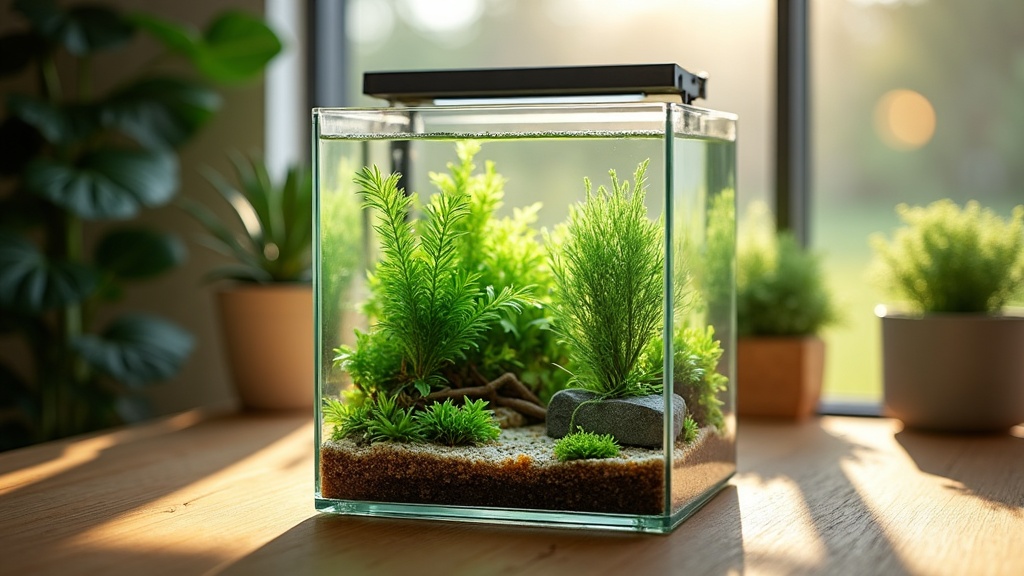
You set up the tank perfectly. You watched every YouTube tutorial. You let the water cycle for weeks, bought the good thermometer, picked out the fish carefully. And then, a few days in, they started dying. No obvious reason. Water looks clear. You tested for ammonia. Nothing. So what went wrong?
This is the question showing up constantly in aquarium forums right now, and it is no surprise. TikTok's aquarium community has exploded, with the hashtag sitting at over 15 billion views. Cherry shrimp tanks, planted nano setups, and betta bowls are everywhere. Beginners are getting into the hobby faster than ever, and they are running into the same invisible wall: their tap water is quietly working against them from day one.
Most of the tutorials they watched were made by hobbyists in Seattle, or Florida, or the UK, where the tap water chemistry is completely different. Nobody warned them about what comes out of the tap in Boise, Meridian, or the rest of the Treasure Valley. And that gap is costing people fish.
What Is Actually in Your Tap Water (It Is Not What You Think)
Here is the detail that catches most new hobbyists off guard: Treasure Valley tap water uses chloramine as its disinfectant, not plain chlorine. That distinction matters more than almost anything else in the hobby.
Chlorine evaporates. Leave a bucket of chlorinated water out overnight, run an airstone through it, and most of the chlorine offgasses within 24 hours. That old trick works fine in some cities. But Boise, Meridian, and most of the surrounding municipalities switched to chloramine because it is more stable and lasts longer in the distribution system. That stability is exactly what makes it dangerous for fish.
Chloramine does not evaporate. Not overnight. Not after a week. You cannot aerate it away. According to the EPA, chloramine remains active in water far longer than free chlorine, which is the whole point for water utilities. For aquarium fish, the lethal threshold starts at just 0.05 mg/L for fry and juveniles, and around 0.4 mg/L for adult fish. Your tap water can easily contain enough to cause stress, gill damage, or death, especially during a water change when a large volume of fresh tap water hits the tank at once.
The fix is straightforward once you know about it: use a dechlorinator that specifically says it neutralizes chloramine, not just chlorine. Products like Seachem Prime handle chloramine. A generic sodium thiosulfate dechlorinator does not. Check your bottle before your next water change.
Idaho's Hard Water Problem for Aquariums
Chloramine is the acute problem. Hard water is the slow burn.
Treasure Valley water comes primarily from the Eastern Snake Plain Aquifer, where it picks up calcium and magnesium as it moves through layers of limestone geology. By the time it reaches your tap, it is carrying a significant mineral load. Here are the actual numbers:
- Meridian: 8.4 GPG / 143 mg/L
- Garden City: 10.0 GPG / 170 mg/L
- Boise: 6.6 GPG / 113 mg/L
For context, water above 7 GPG is generally considered hard. Meridian sits above that threshold, and Garden City is pushing into very hard territory. You can see how different cities across the region compare in our full Treasure Valley water quality city comparison.
The pH situation compounds this. Hard water from limestone geology tends to be alkaline, and Treasure Valley tap water typically runs between 7.8 and 8.4 on the pH scale. That is fine for some fish. For others, it is outside their survivable range.
The Fish and Shrimp Most at Risk in the Treasure Valley
Not every fish struggles with hard, alkaline water. Livebearers like mollies, guppies, and platies actually do well in these conditions. African cichlids thrive. If your tank is built around those species, Treasure Valley tap water is reasonably compatible with proper dechlorination.
But a lot of the fish trending right now on TikTok and YouTube are soft-water, acidic-water species. Here is where the chemistry mismatch gets serious:
- Neon tetras: Prefer pH 6.0 to 7.0, soft water. Treasure Valley tap comes in at 7.8 to 8.4. That is well outside their comfort zone and will cause chronic stress over time.
- Cherry shrimp: Prefer pH 6.5 to 7.4 and are extremely sensitive to hardness fluctuations. Hard water affects their ability to molt properly, which can be fatal.
- Betta fish: Prefer pH 6.5 to 7.5. Boise tap at 6.6 GPG is borderline manageable, but Meridian water at 8.4 GPG regularly pushes bettas outside their preferred range.
- Discus: Require pH 6.0 to 6.5 and very soft water. Keeping discus on straight Treasure Valley tap water is extremely difficult and generally not recommended without significant water treatment.
If you are keeping any of these species and wondering why they seem stressed or are not thriving, water chemistry is the first place to look. Our 2026 Boise water quality report has detailed testing data if you want to get into the specifics for your neighborhood.
For local, in-person advice, Fish Aquariums and Stuff at 6112 W Fairview Ave in Boise is Idaho's largest dedicated aquarium store and a solid resource for Treasure Valley-specific questions. The Idaho Marine Aquarium Community (IMAC) also meets on the third Saturday of each month and connects hobbyists who have figured out how to work with local water chemistry.
What Treasure Valley Aquarium Hobbyists Actually Need to Do
The good news: none of this is insurmountable. Here is a practical starting point:
- Switch your dechlorinator. Use a product that explicitly neutralizes chloramine, such as Seachem Prime or similar. Read the label. Do not assume your current dechlorinator covers chloramine.
- Test your source water. Get a liquid test kit, not strips, and test your tap water's pH and hardness before it goes in the tank. Know your baseline.
- Match your fish to your water. If you are new to the hobby and want the easiest path, choose fish that tolerate or prefer hard, alkaline water. Livebearers, rainbow fish, and many cichlids are a natural fit for Treasure Valley tap.
- Use RO water for sensitive species. For cherry shrimp, neon tetras, discus, or any soft-water species, cutting your tap water with reverse osmosis or distilled water lets you dial in the chemistry your fish actually need. A 50/50 blend of RO and Meridian tap brings hardness down to a much more manageable level.
- Go slow on water changes. Large, fast water changes with unconditioned tap water are particularly risky in areas with high chloramine. Condition your water first, or use a drip method that gives the tank time to adjust.
Does Your Home Water Softener Help, or Hurt?
This one comes up a lot, and the short answer is: it does not help, and it can make things worse for aquariums.
A standard ion-exchange water softener works by trading hardness minerals (calcium and magnesium) for sodium. That solves the scale and soap lather problems in your home. But the water it produces is not better for fish; it is just a different kind of unbalanced. Elevated sodium levels stress fish and invertebrates, and softened water still contains chloramine. Many fish keepers who use softened water for their tanks see unexplained stress and health issues that trace back to sodium buildup over time.
For aquarium use, reverse osmosis filtered water is a much better starting point. RO removes hardness minerals, chloramine, and most other dissolved solids, giving you a clean baseline to build from. You then add back the minerals your specific fish need using products designed for aquarium chemistry. It gives you control that a water softener simply cannot.
If you are curious what your specific tap water contains and how it compares to what your fish actually need, a professional water test is the fastest way to get clarity.
Not Sure What's in Your Water?
TrueWater Idaho offers free water testing for Treasure Valley homeowners. Find out exactly what your tap water contains before your next fish tank water change.